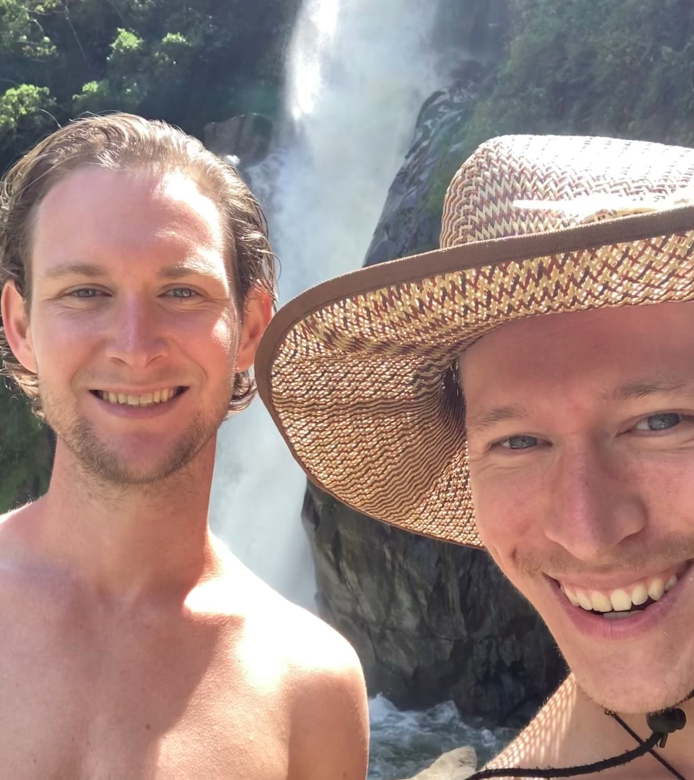
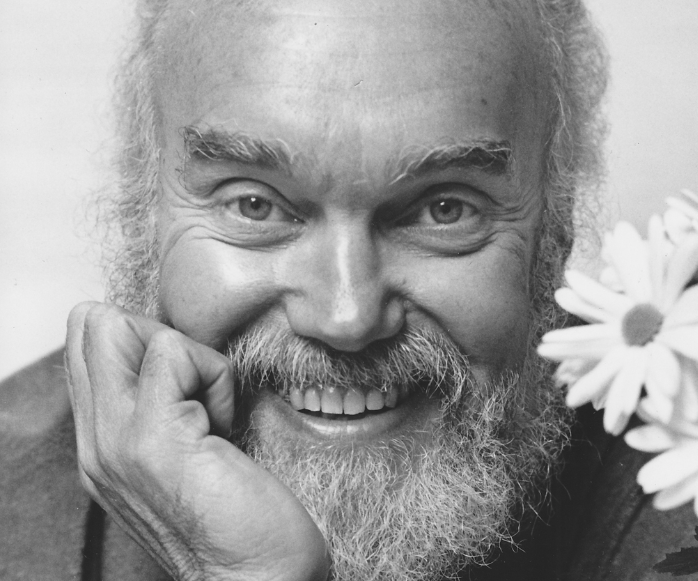
The flight to Ecuador wasn't all that long, but I had to fly over night, transferring through the Quito airport and that was a really exhausting experience. While waiting at the Lima Airport I remember seeing a guy wearing 3 Andean leather hats which made him stand out of the crowd a bit. Poor guy had spilled a cup of coffee near the airport Starbucks and I could tell he was tired from travelling. When I encountered him in Ecuador, he was lying flat on his back with his baggage piled alongside him, resting near the Quito check in gate of the planes headed for Cuenca. Meeting each other once more in the Ecuadorian airport, "en route" to meet our shuttle driver who would take us to the retreat. As it turned out, we're both Canadians who were headed to volunteer at the same retreat, so we decided to stick together from there on. Peter (San Pedro) has this kind of energy to him that helped me feel grounded and safe, even when he was struggling with things himself. Admittedly, it was brutal waiting at the Cuenca airport for 9 hours with nothing to do but drink coca tea and strike up conversation. If I hadn't been so exhausted from the overnight flight it's likely I would have enjoyed the wait a lot more. Peter and I ended up having a lot in common! Getting to know Peter throughout my time at Gaia was a very healing experience. He is an incredible yoga instructor, a talented collaborator on his soundscape audio project "Little Symphony" (seriously, look them up) and a really fun guy to hang out with whether it be in the gardens or after a tough ayahuasca ceremony.

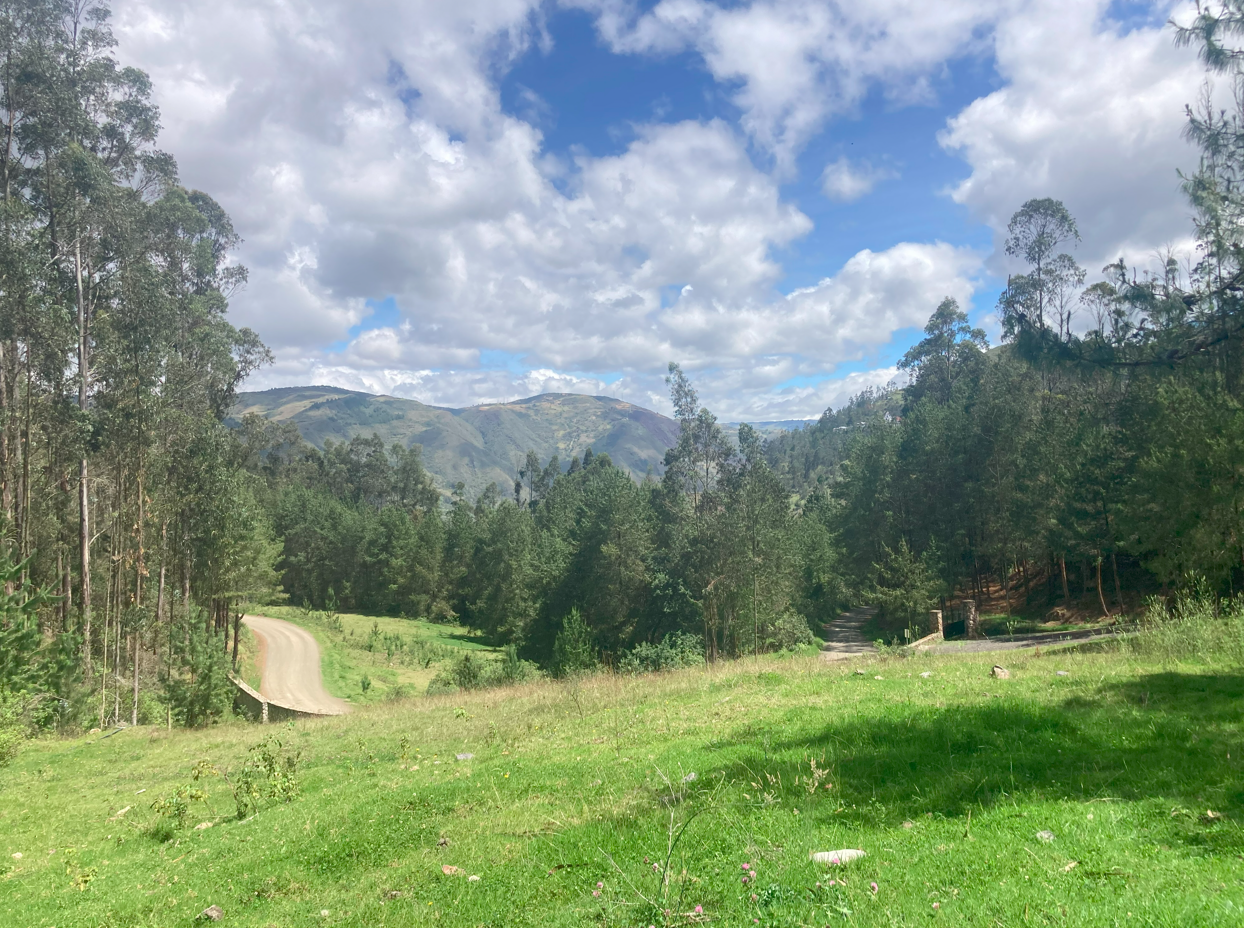
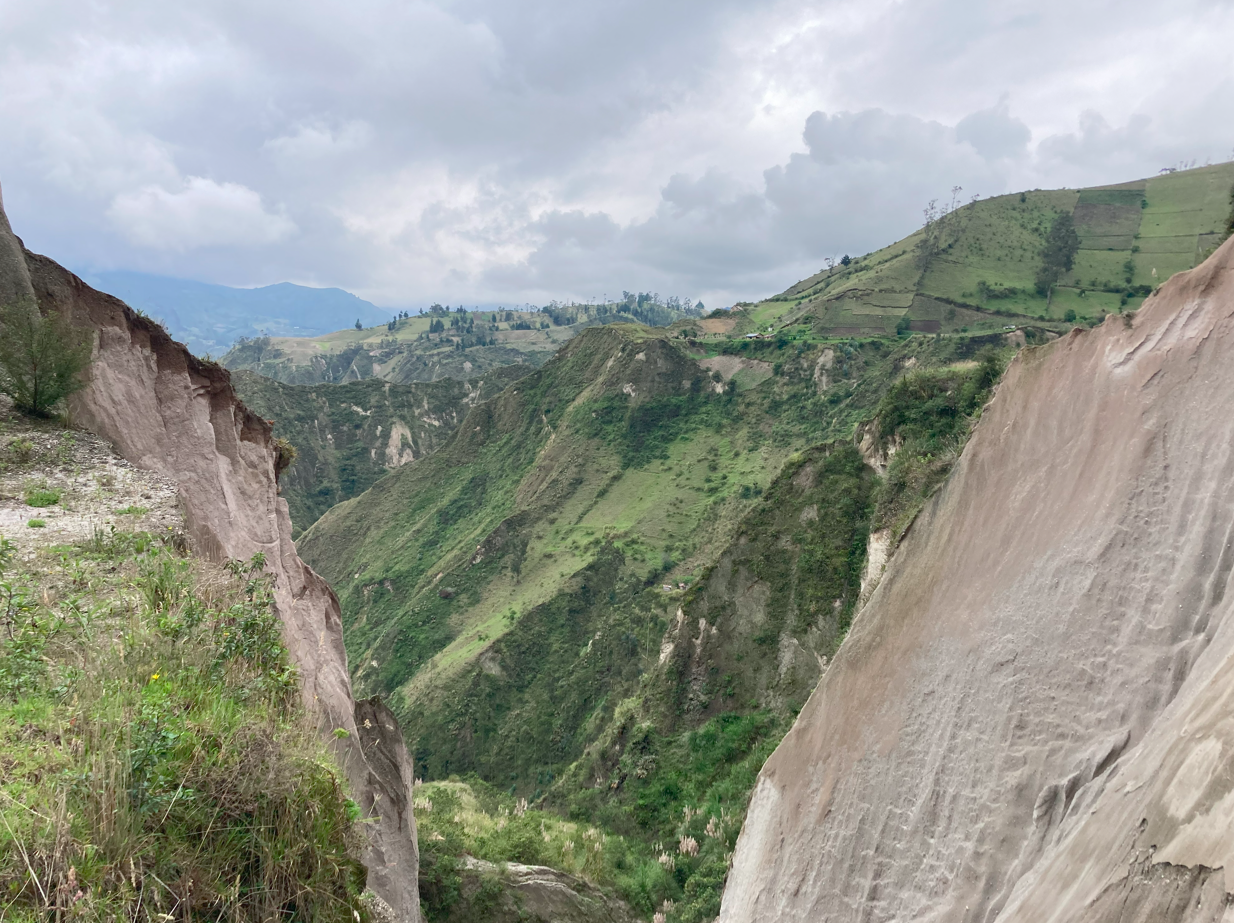
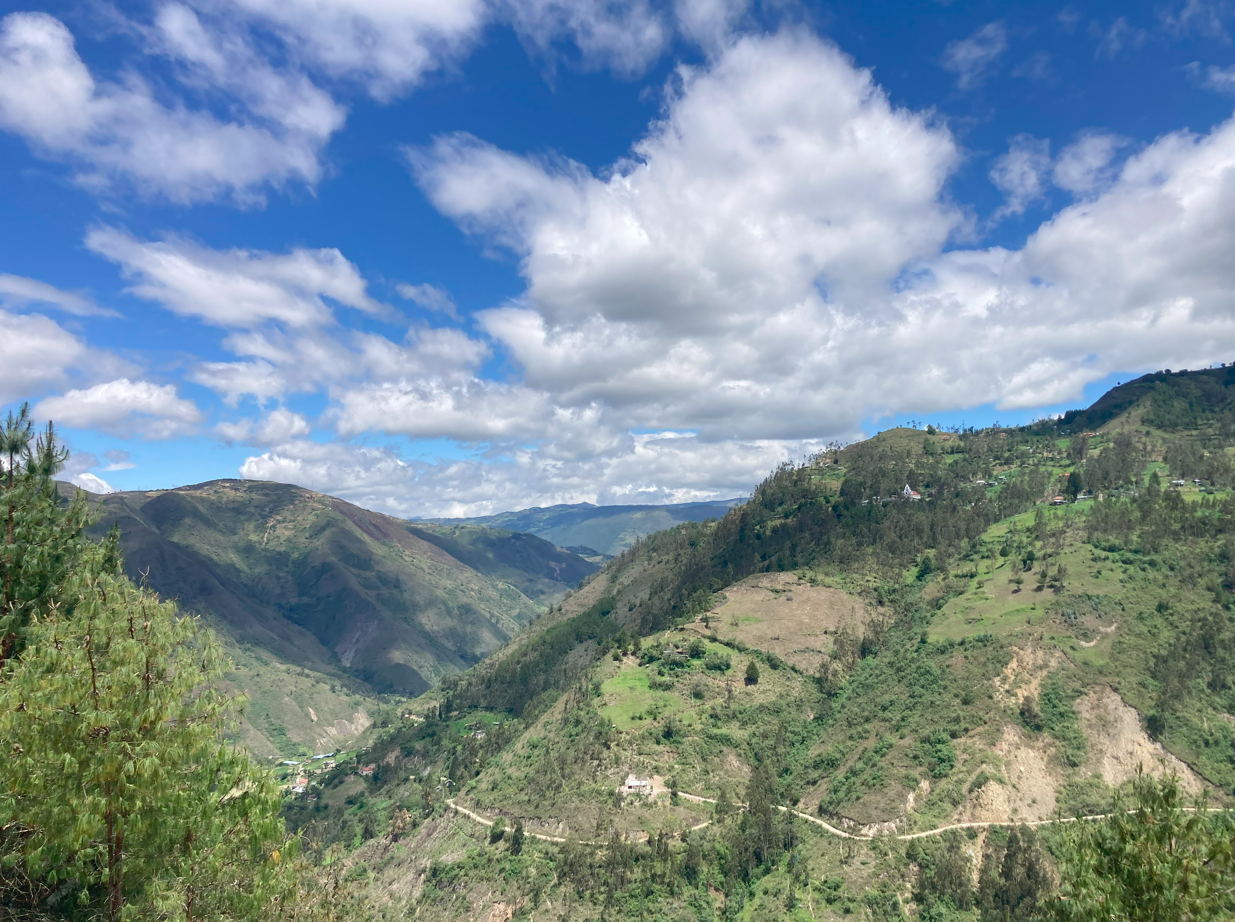
After meeting another volunteer who was waiting at the airport our taxi driver took our trio through the southern part of Cuenca and we gradually began to enter the foothills of the Andes mountains. What a spectacular sight it was, being surrounded by mountains that seemingly stretched on forever, not a speck of civilization for miles. The elevation was so high I was beginning to get nervous as the driver snaked around corners lined by steep cliffs, but he was also a professional and I could tell we were in good hands.
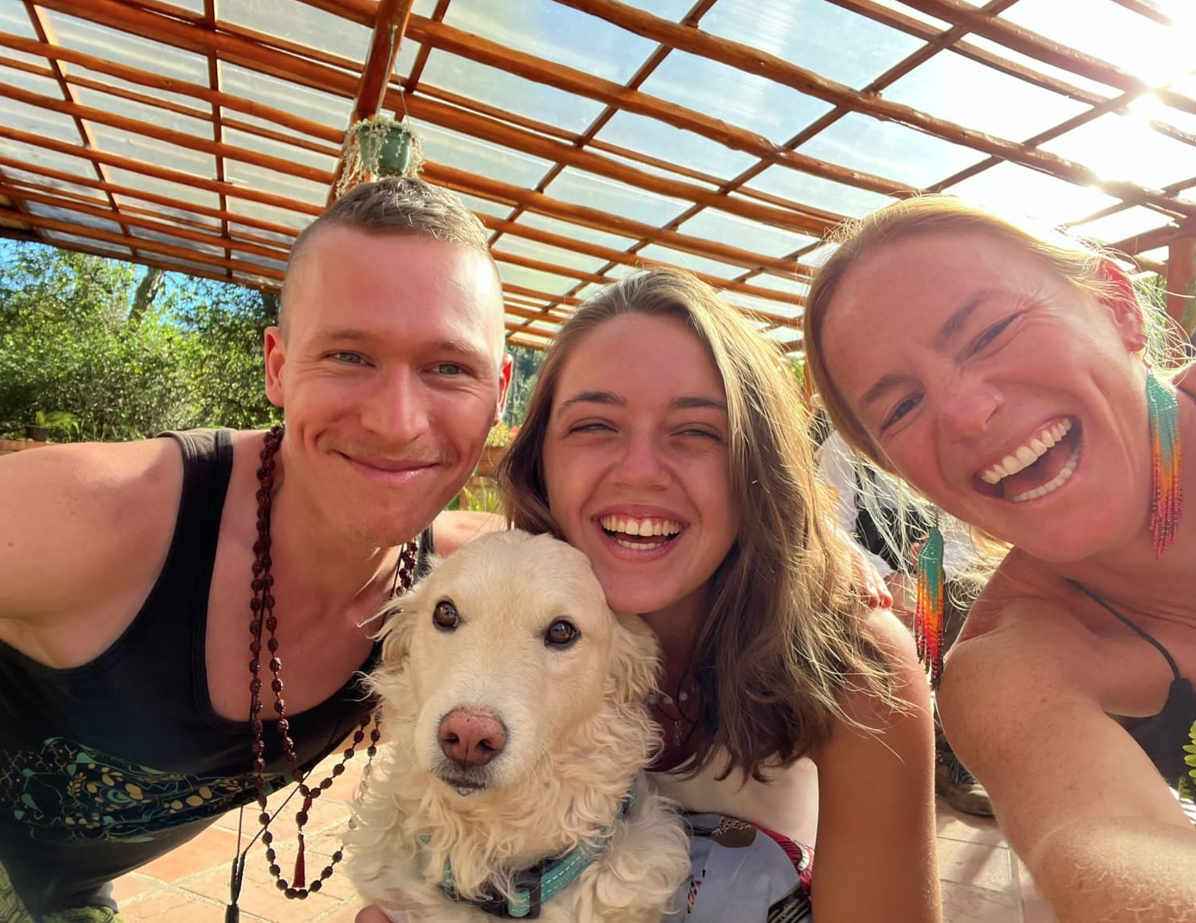
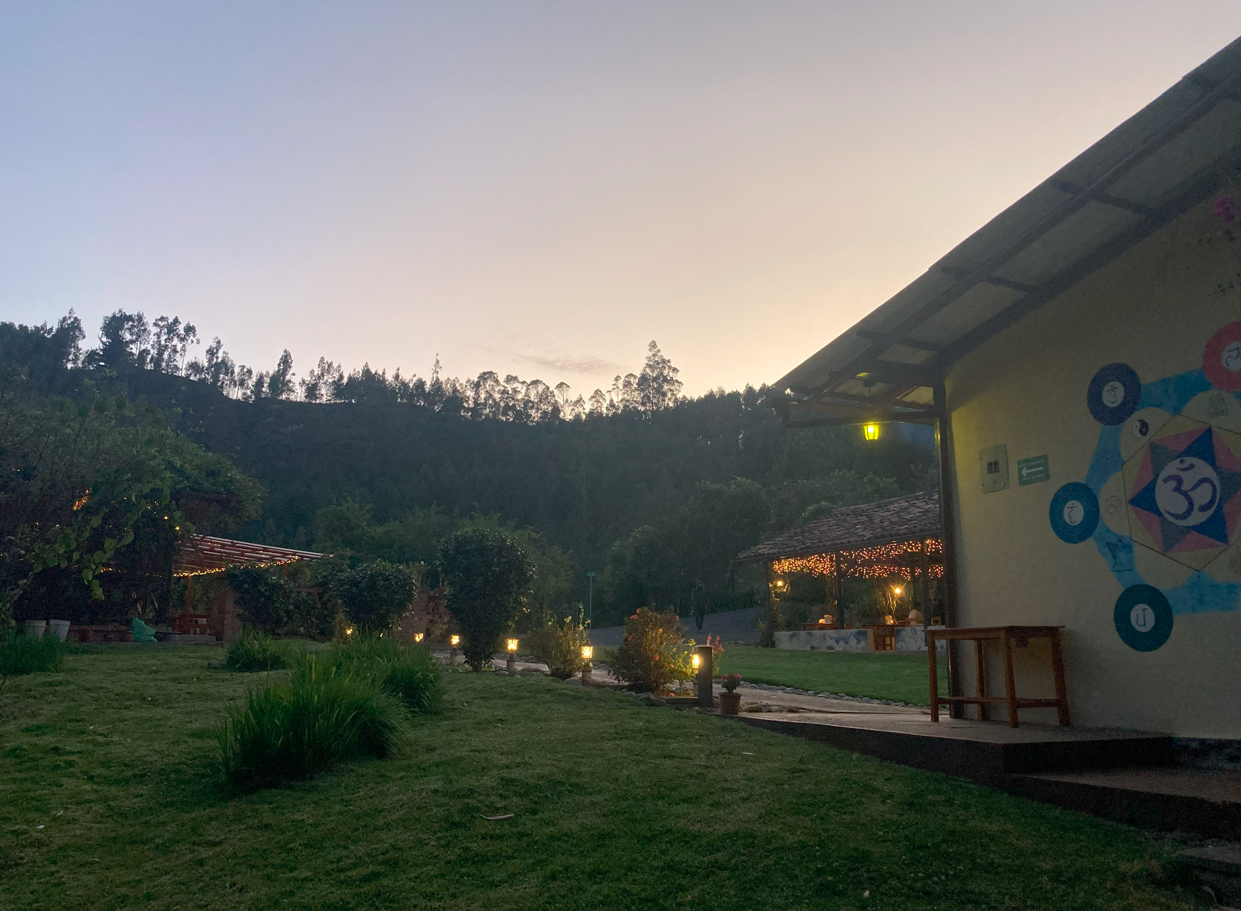
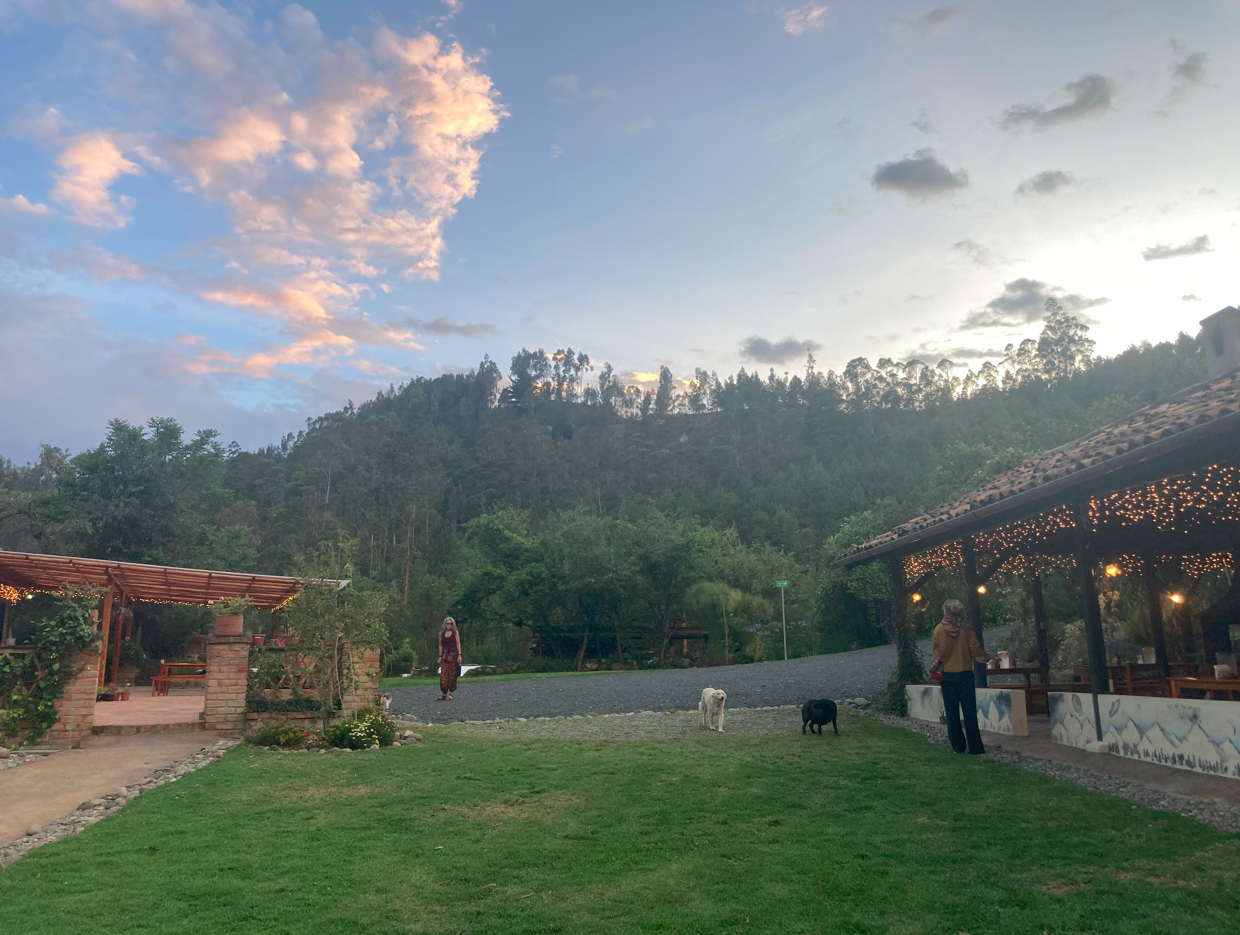
Gaia Sagrada is a massive stretch of farmland stretched along the side of an Andean foothill, with fields and forests that stretch on for miles. Our peaceful mountain was an Ecuadorian paradise, and felt deeply safe in more than one way. I felt like it would be a nice place but had no idea just how beautiful this retreat truly was. I joined the team pretty last minute, having signed up on a whim, hopeful that I had found a place I could feel safe and learn how to heal in a community. I found everything I was looking for and more. The areas surrounding Cuenca are remote enough where privacy is guaranteed, and yet, you can drive to town in about an hour. From the moment I'd arrived it felt like home, and it was exciting to be surrounded by a community of like-minded healers and adventurous men and women whom I soon began to refer to as "mi Familia de Sagrada" (My Sacred Family). We ate together, shared gender-based dorms, sang together, painted together, went on hikes, did yoga together, and sat in ceremony together usually as supports or other times as participants. But whether we were in ceremony or eating breakfast , being in that community was pure medicine.


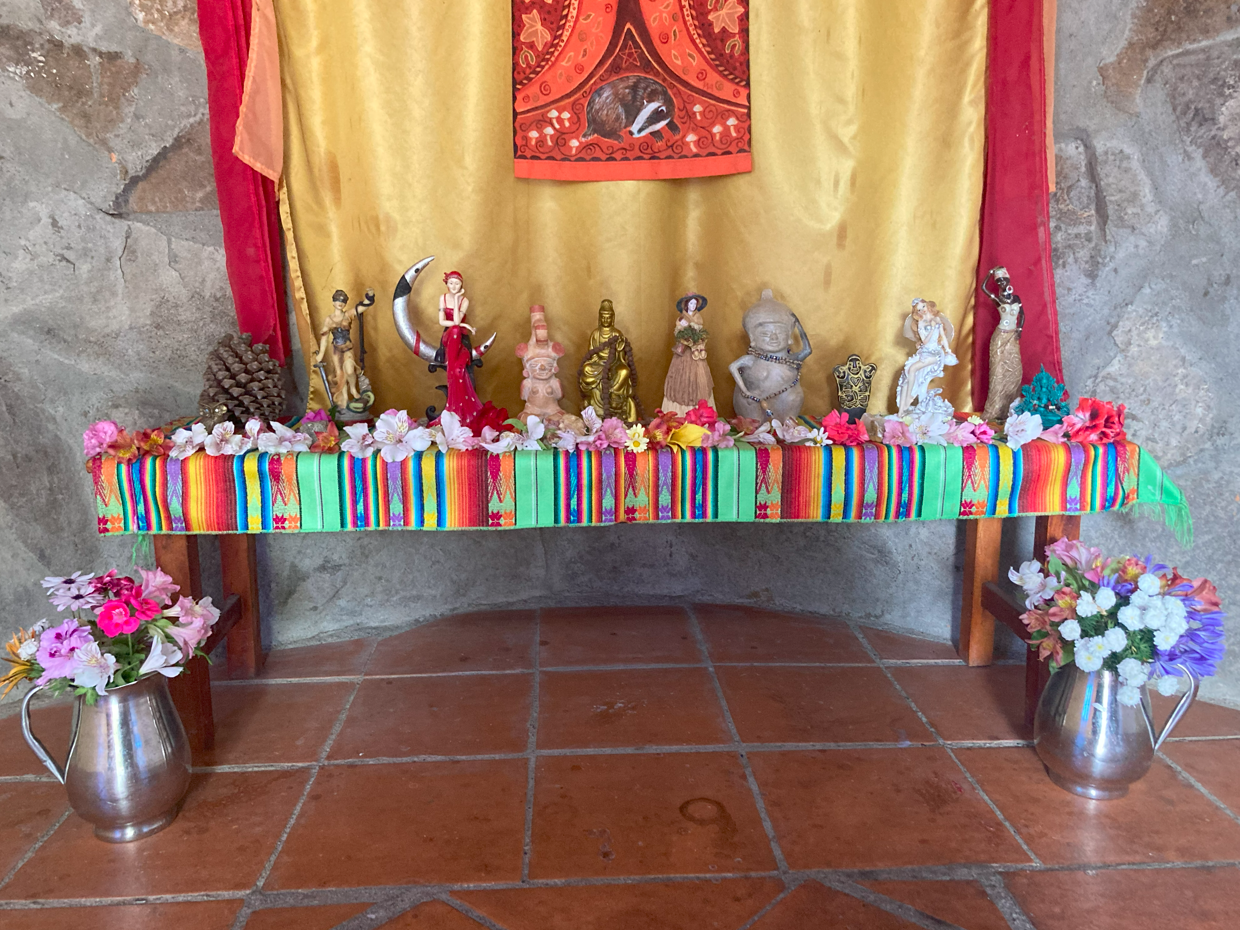
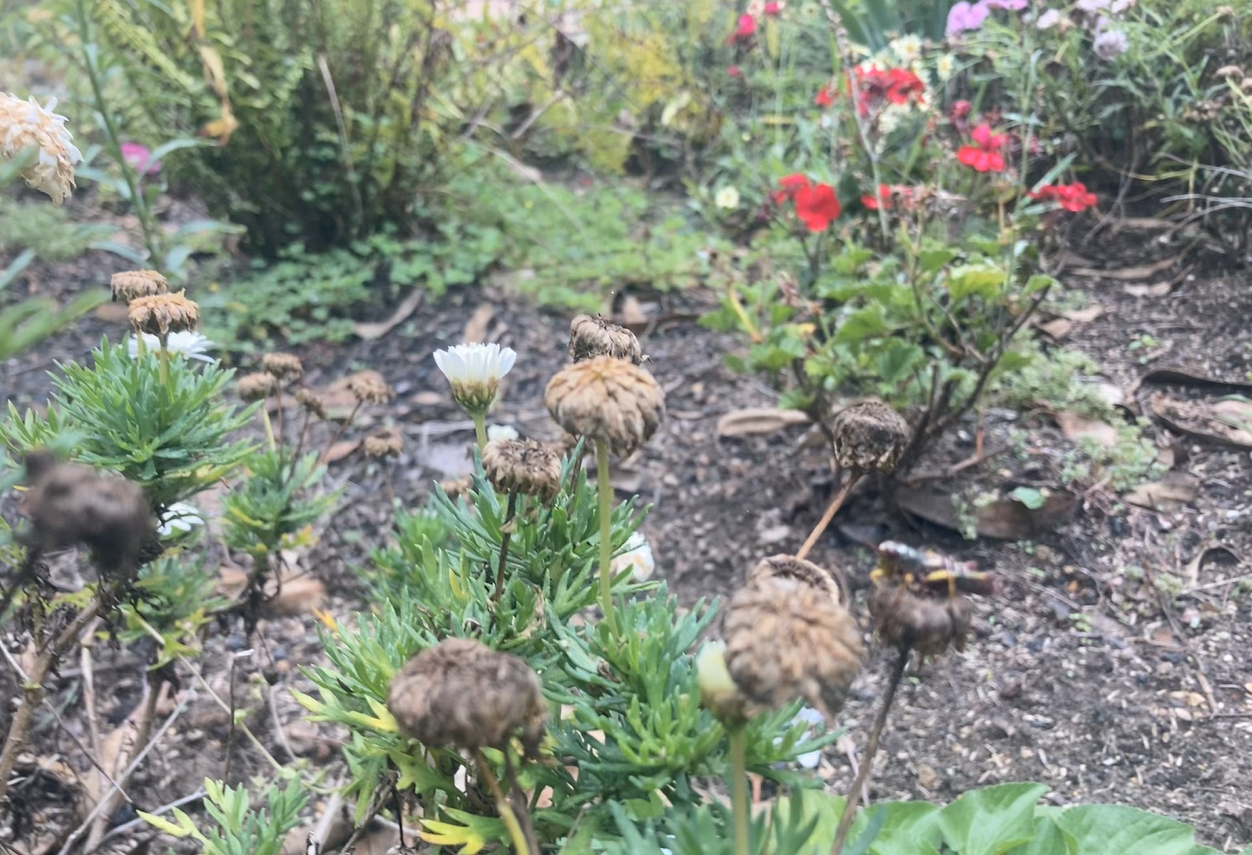
My very first assigned duty at Gaia was to pick flowers for the Goddess Temple. Now most of the jobs they assigned us for the work exchange were a lot more work than picking flowers, but I do believe everybody gets the chance to pick flowers at least once. My first thought is "I've never made a bouquet in my life, and this is going to seen by guests", so I was pretty nervous about messing it up. But after a couple hours of meditatively selecting flowers, and playing around with the bouquets to balance them out it felt deeply blissful and healing to spend so much time among their beautiful garden. I had a lot of fun beautifying the "Goddess Temple", tapping into my artistic expression combined with a kind of gentleness only picking flowers could foster. After spending so much drinking ayahuasca in Iquitos and feeling like I had to really harden my shell to get by some days, this was a much needed invitation to soften and it was a bonus that everybody loved my little flower bouquets!


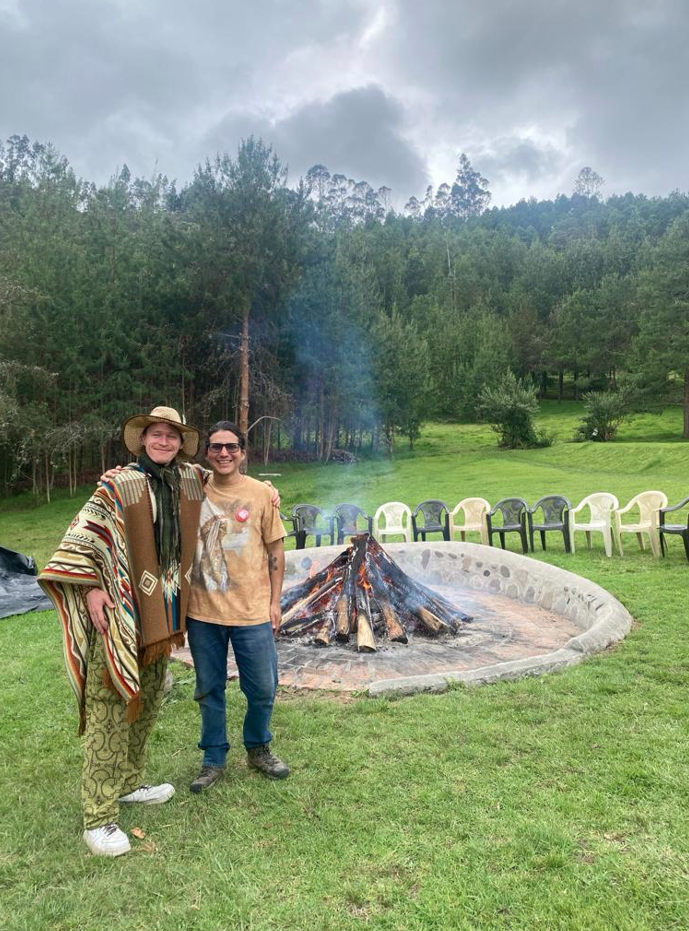
Meet Maestro Fernando, a loving father, a caring partner, an ethical and conscious healer, an integral keeper of traditional teachings, a highly skilled firekeeper and musician, as well as a humble and knowledgeable friend. When I consider the "Eagle and Condor flying as one", what this truly means and how this philosophy is embodied, I look to Fernando as a model for a compassionate and authentic bridging of the Northern and Southern traditions. My first interaction with Fernando was him modelling the importance of ethical practice of medicine, whether it's praying with tobacco or ayahuasca. To understand the responsibility we take on, that these medicines can easily do harm to the very people we are trying to support and demonstrated to myself how he prays, with care and love, like a parent for a child. Witnessing Fernando's dedication to service and demonstrating leadership within his community was a true honor. His compassion and warmth is felt by every person who finds their way to Gaia Sagrada. I will always remember the days of gate-keeping the Temazcal, sitting with him and praying to the land, to the birds (including the mighty Thunderbird) and thanking Creator for being apart of such profound and loving ceremonies. Bless you Tita Fernando, Aho Mitakuye Oyasin mi hermano.

I appreciate and love the maestros who sang for each ceremony, one of which I will never forget is Maestro Hermes. With the voice of an Argentinian angel, this man breathes life into the ceremonies with his profound expression of divine love through song. The ceremony firekeepers take on tremendous responsibility hauling red hot stones, building beautiful and tremendous sacred fires, maintaining the harmony of the ceremony, directing the flow with their medicine songs, being of service for 10 or more hours at a time. It takes an incredible amount of dedication to spirit, of passion for Madre Tierra, to sing with such vigor sweet songs of love and joy. I love and honor the Maestros Hermes, Fernando, Nico, Hector, and all the firekeepers who hold space with integrity and deep compassion. The songs they sing pray to the spirit of the hummingbird, to Grandmother Ayahuasca, to Grandfather San Pedro, to the ancestors of these lands and of Madre Selva, Mother Jungle. The songs sing to the plants, to Grandfather Sun and Grandfather fire, as well as praying for all those who attend ceremony. I had the privilege of sitting alongside my brothers and sisters as they tended the sacred flame, passing down traditions known since ancient times by allowing each of us to kindle and fan the sacred flame within our hearts. Gracias mi hermano Hermes, te amo (Thank you my brother Hermes, I love you)!

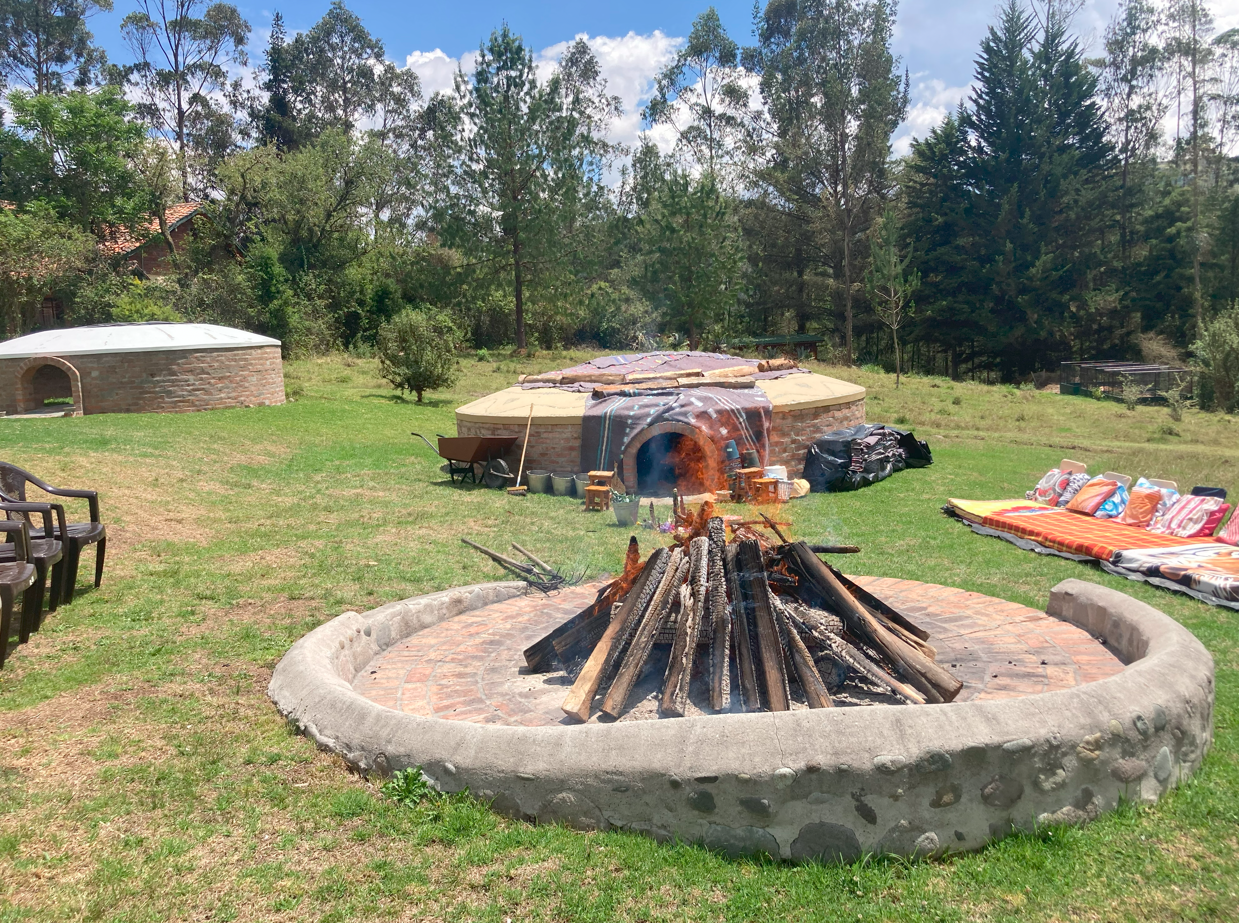
An ancient tradition that stems from the pre-Hispanic traditions of Mexico, the Temazcal (Nahuatl for "house of heat"), is a powerful healing ceremony where participants enter a sweat lodge space like the one in the photo and as a community you sit in the heat for sometimes 5 or 6 hours! This ceremony is intended to re-create the experience of being in the womb, alongside all your brothers and sisters, preparing to become reborn, breathing in the fresh air of the Andean mountains, hearing the birds, the frogs and the insects welcoming you into this world. The ceremony itself is a deeply transformative event, with the darkness, the heat, the scents of the medicines that burn on the red hot rocks, and of course the medicine songs which purify the space and open the heart.
It's beautiful to recognize the differences between the Coast Salish sweat lodge and the Ecuadorian traditions which incorporate different plant medicines, different songs and how different plants are used as ceremonial objects. However, the heart of the ceremony remains consistent, that we are all one beating heart, that through community and prayer we can overcome anything and to let Mother Earth, Madre Tierra, purify and cleanse our bodies and our spirits. After a day of fasting, drinking little to no water, we spent the Thanksgiving day and evening sitting in the lodge praying for everything, intentionally, holding that space with patience and reserve. Through fasting and sitting in Temezcal we learn about how much our desires and impulses pull us away from the needs of the spirit and how often ties we forget to give thanks for the gifts and teachings of the Great Spirit, how the privilege of drinking a sip of water is a divine gift. Viva la Temezcal, Gracias Maestra Veronica, Maestros Fernando y Hermes, y Maestra Mama Christine (Long live the Temezcal, thank you Maestra Veronica, Maestros Fernando, and Hermes, and Maestra Mama Christine)!


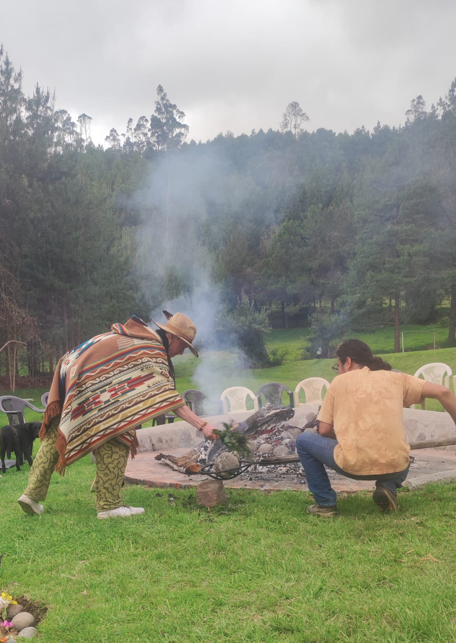
Learning how to support people in ceremony is one of the main reasons I came to volunteer at Gaia Sagrada and is not something I take lightly. One must look deep within themselves and be able to show up with divine integrity, resilience and a joyful grace to uphold the energy of ceremony. In the ceremonial maloka, we are all equals. This is challenging for many people from Western cultures to fully embody given we are so used to having authority figures or imbalances of power within our homes, our social groups or even spaces designed for healing. But understanding this also entails we aren't seen any less than a shaman, a deeply dedicated and seasoned facilitator, or are we in any way above or separate from the people we support. In the first photo I'm seen using a brush made from Eucalyptus leaves, cleaning the charcoal from the lava rocks before they enter the Temazcal. Assisting with duties such as this is an honor because these ceremonial duties are typically reserved for the firekeepers who have dedicated themselves to learning the traditional teachings, and have demonstrated their ability to show up with integrity in ceremony. Occasionally, a helper is given the privilege, and this is one of many times I was granted permission to offer my support.
When we say "Aho Mitakuye Oyasin", in the language of the Lakota , is a kind of promise to remember the divine nature we all embody (literally translating to Yes, we are all one). The connection to Mother Earth is distributed among every human being, the medicine is a gift from her to heal every person who walks with pain or suffering. So where learning the practical stuff, singing the songs, speaking the prayers to open the ceremony, praying with tobacco or other medicines, how to respect the teachings and traditions, ie. the "rules" of the ceremony are all valid, the underlying intention is everything. Every log you move, every herb you burn, every breath you take, every feeling that arises... these are all apart of the ceremony. You must remember how to pray with every action, and with a nobility and pride that honors your ancestors who witness you, and for the next 7 generations.
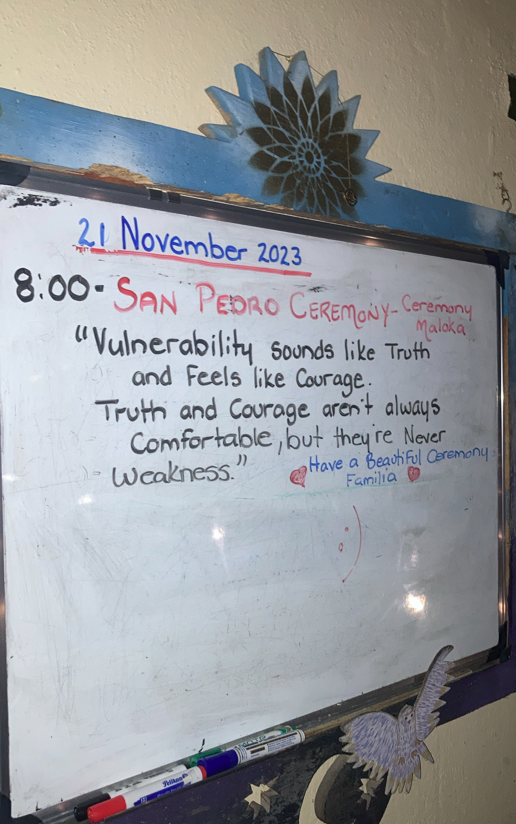
"Vulnerability sounds like Truth and feelings like courage. Truth and courage aren't always comfortable, but they're never weakness."
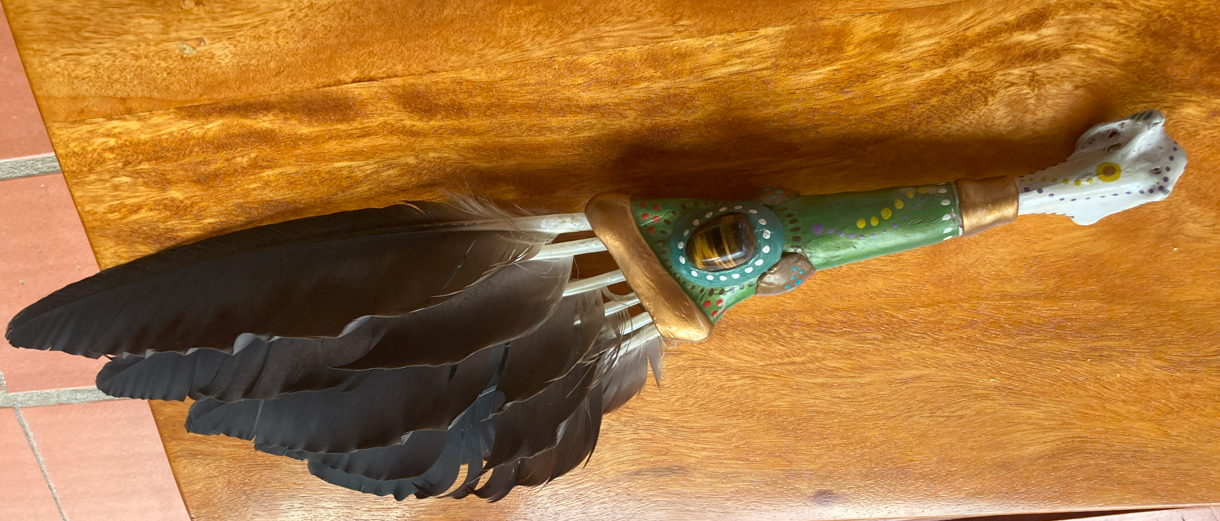
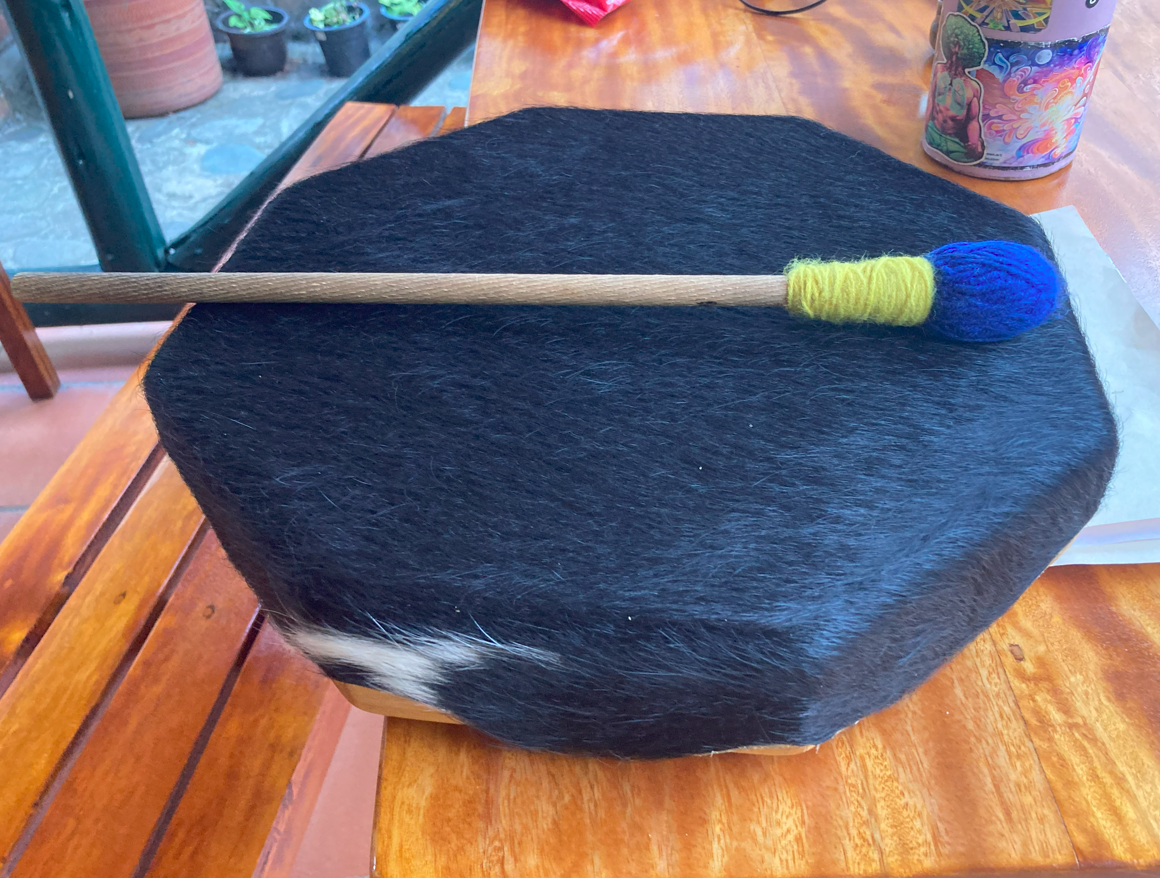
Below are ceremonial instruments, a feather fan used for "Limpias" or shamanic cleaning, and a frame drum, that rings out the heartbeat of Mother Earth.


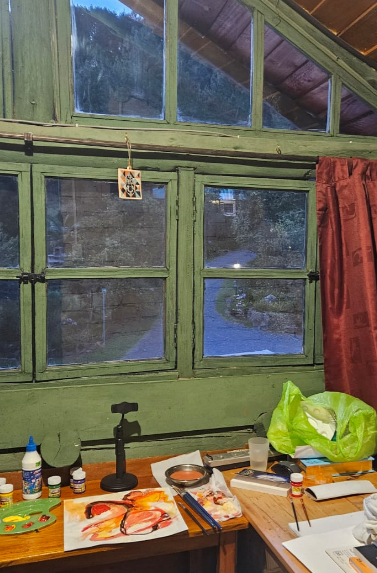
Throughout the course of my month of volunteering at Gaia Sagrada I hosted 2 group art workshops, 2 private art reflection spaces and dedicated numerous hours to painting either by myself or with mi famlia. Prior to doing these workshops at Gaia I had only ran a single art workshop and the circumstances of doing them out in Ecuador were vastly different than in Canada. But I decided long ago that this was a way I felt called to be of service, so I purchased the supplies in Iquitos and brought them to the retreat for this exact reason (and to paint a bit myself).
These workshops were a playground for the shy artist whom I felt just needed a little encouragement and a space to let themselves express freely and openly. Every single participant had sat with medicine often a night or two before they participated in my art workshops. It was a true honor to create a safe container for dozens of kindred spirits and spiritual seekers to explore the untapped realm of creative expression, whatever that looked like to them! I had set aside 1.5 hours per workshop but some art workshops went on for as long as 4-5 hours!
The private art sessions were always incredible, an intimate container for authentic emotion, exploring who we are and how the world has shaped us, ultimately becoming a collaboration space offering powerful energetic alchemy. Our inner children were being held in such a safe and authentic container that the medicine could trickle inward and reach even deeper and denser energy within our hearts and the creative process took over from there. In this creative exploration space we allow the passage of grief, the intense emotions of anger and sadness that result from the resurfacing of unhealed trauma, gently witnessing and channeling these raw emotions into expression.


As a trained counsellor, I fully understand the importance of keeping a well maintained self-care routine. However, when you are travelling South America and often staying up most the night to support plant medicine ceremonies, keeping your emotional wellness in tact becomes increasingly challenging.
Self-care is usually something I can keep track of through common indicators of emotional burn out, like grumpiness or problems sleeping, or noticing an increase in unhealthy coping mechanisms. But when you're working at a retreat you're required to be of service so consistently that you don't have the time to take care of yourself each day and emotional burn out is inevitable. So even with a strong self-care routine, I noticed how by my second retreat I was starting to become increasingly unsettled, stressed out, lethargic, and at times noticed that my attention would drift at vital times where I needed to be focused.
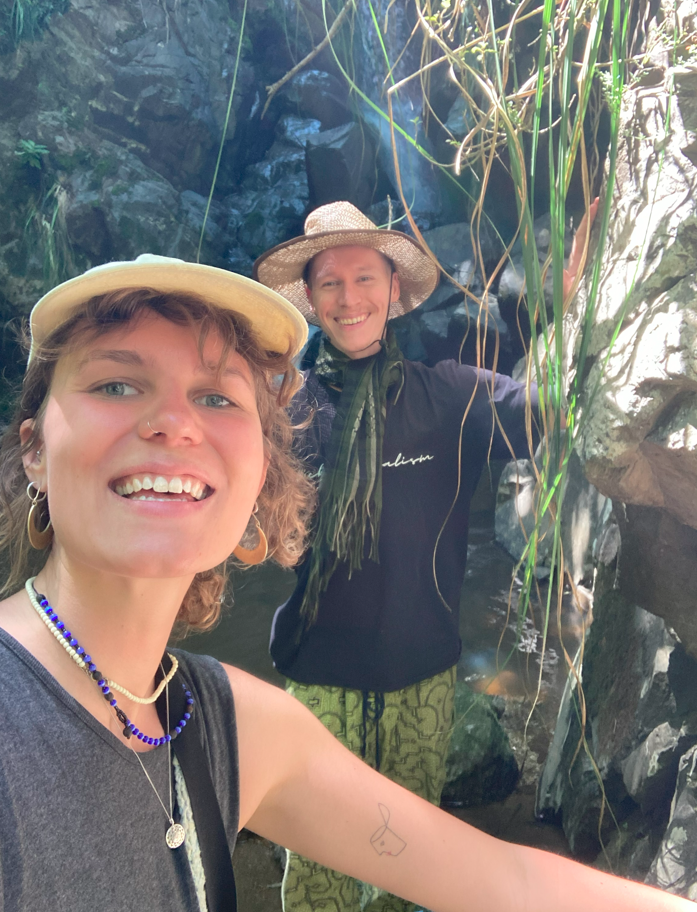
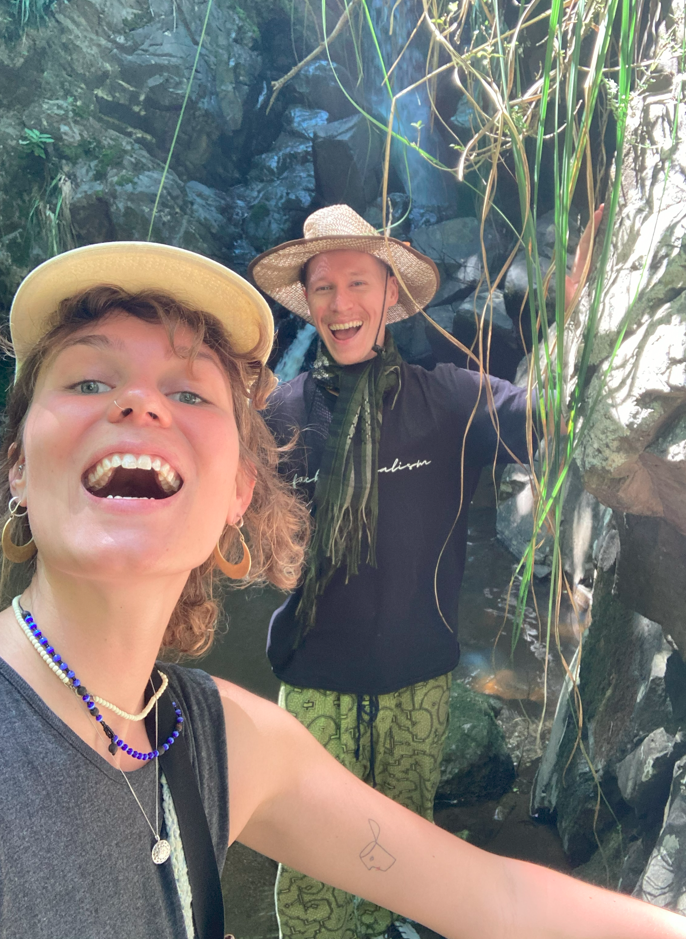
But there was always a way for me to return back to my center, whether it be talking with another volunteer, taking the space to relax at the hot tubs, getting in my morning yoga, going for walks to the nearby waterfall, sitting with the dogs/cats for extended periods, or taking naps on days where I knew I'd be working a late ceremony. The hard part was noticing the subtle drops in my mood or energy levels that were indicators of more severe emotional burn out. The lines became blurry sometimes on weeks where I was drinking medicine or consistently losing sleep (or both) and I started to confuse exhaustion with the very normal process of sitting with trauma that has surfaced and wasn't a problem exactly, but simply needed to be integrated.
In conclusion, no you can't do it all or expect yourself to be able to show up perfectly while undergoing the stages of post-ayahuasca integration. It's a messy process, and some of these weeks felt like months. So my advice would be this, if you're drinking plant medicine don't try and snap back to your regular lifestyle or expect yourself to be capable of big shifts right away. Be patient, and know that your growth will take place over time and in subtle, sometimes imperceivable shifts. Often times there will be days where you feel like you're going backwards, and it's important to remind yourself that it's all apart of the "cleaning process".


Between my first and second retreat I stayed at a hostel in Cuenca called "Malki" and here I met some very friendly locals! I met a kind soul named Aleida, who spoked perfect English and was from a neighbouring Ecuadorian city, travelling to Cuenca for a vacation. We spend the whole week going to "centro de historica" in the center of the city, or walking the streets nearby our hostel and I have a lot of fond memories spending time with her. My first encounter with Aleida was while I was practicing my Spanish with the hostel host, a very friendly Columbian man who doesn't speak English. She came over and introduced herself and I replied with my common self-criticism "sorry, my Spanish isn't very good", and she told me she could tell, which I laughed off. That night I was invited to the bar with her and a few of the other travelers whom all spontaneously decided to go drinking. I wasn't interested in going but Aleida said she really preferred having someone she could talk to/trust, a friend to look out for her, so I decided to come as a kind of chaperone.
After that night we spent a lot of time walking around Cuenca talking about life and her experience living in Ecuador, sometimes visiting downtown or cooking together back at Malki. It was interesting meeting somebody I felt so connected to even if we had only just met and live in such different cultures. The challenging reality was that we both knew we would never be able to pursue a lasting and meaningful relationship, or potentially even see each other again after that week so it was kind of magical being able to be fully present with experience we shared during our short time together.
I told her about my time volunteering at Gaia Sagrada and she found it kind of intriguing but also wasn't interested in drinking plant medicine herself and couldn't really understand why I'd travelled so far to participate in ceremonies. But to me that didn't matter, it felt deeply comforting to be accepted for who I am and I genuinely felt very emotionally safe spending time with her. I love the kinds of friendships where one person is just so authentic that it sets the tone for the other person to just be who they are. I believe that each of us, in different ways did this for each other. Overall, I felt more like myself during that week in Cuenca that I did for most of my time in Ecuador. It was a bit of an emotional rollercoaster for my "break time" in between retreats, but honestly... I wouldn't have it any other way.


The likelihood of emotional burnout volunteering at a plant medicine retreat, especially if you participate in ceremonies the week before, is demonstrably high. I did my best to avoid burning out, but I had given so much of myself in the first retreat that I knew something had to change. By my second retreat, after parting ways with Aleida, I had made a decision that I needed to say "No" more often. Which is honestly pretty challenging when you have the capacity to support people who are struggling to process some of their deepest traumas and you have to set boundaries for your own emotional wellbeing. Some days I would spend the entire day just talking with people, about whatever they needed to talk about or attending all the integration meetings which were optional to volunteers, just to listen and witness people talk about their ceremonies. As much as I enjoyed supporting them, I also had to sacrifice my much needed self care in order to attend these meetings or offer an ear to a distraught guest.
So I took more time to myself, often leaving guests to figure things out for themselves or find other guests to rely on, which ultimately isn't a bad thing. It took me a long time to find a balance within my routine and by the third retreat I noticed myself giving more than I ever thought possible, offering private sessions with art, facilitating the men's circle, cacao ceremonies, and helping with ceremonies more than I'd ever thought I could handle. I was testing my limits, finding my edge, and by the end of the last retreat it really showed. Through the connections I had made with others, the impact I'd made, and unfortunately, the unprocessed feelings that I wasn't able to make time for. By the second retreat I had began seeing a counsellor again who had helped, but talking about things just wasn't enough. I needed to release what was stored in my body from my own medicine retreat, and had been compounded over the intense emotional workload of being a facilitator at Gaia Sagrada.
Sometimes it wasn't even about the guests or their process, the emotions were simply just my own raw, unfiltered reactions to the difficulties I faced being a work exchange volunteer. Sometimes I was just fed up with the impracticality of it all, or the challenges of suppressing strong feelings I had towards others, not being able to resolve conflicts or fully express myself. I also felt creatively stifled, often being busy with full days of working, often working with coaching clients on my down time or helping guests process their experiences.
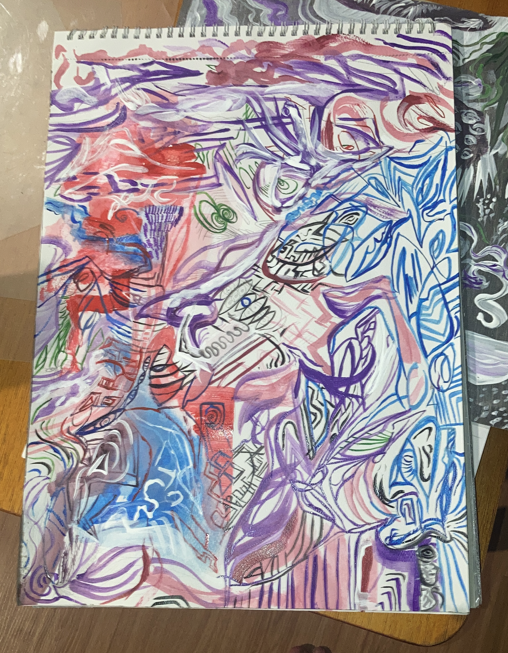
Painting or making music are the ways I tend to my inner child or process stuck emotions, so when I wasn't able to take the time to be creative my emotional and spiritual wellness gradually declined. But I also felt deeply fulfilled each day, the nature of how I was able to show up for others revitalized me and was often just motivating enough that I could bear the weight and keep myself optimistic through it all! The final photo is a piece I painted while I was on the third retreat, quite exhausted and wanting to paint to help decompress/integrate. I invited a couple other volunteers including Ryan and Micky to join me, we had an incredible time and produced some beautiful paintings! Both Ryan and my painting's are proudly hung inside the library/art gallery at Gaia Sagrada, Micky loved her piece so much she took it with her!


Maestro Namur, of the Shuar tribe, is a dearly beloved human who was the lead shaman for a ceremony where I drank medicine. From a small mountain village adjacent to the Northern Ecuadorian Amazon, his ceremonial practices and even his "icaros", reminded me a lot of the Shipibo traditions I'd experienced while in Iquitos. Each shaman had their own unique approach to holding ceremony, including different instruments, and different prayers in various languages (Spanish or Brazilian or sometimes Quechua). Namur had a unique way of introducing elements of what I'd consider "New Age Spirituality", using singing bowls, a Nepali "tin-sung", and a mystical sounding wind chime. Additionally, as a young shaman of 28, he had very relatable philosophies which he would speak openly, having a translator interpret into English.
But above all, there was something about the way he would chant and shake a chacalpa, or "leaf rattle" that I found deeply soothing and invocative of deeper visions. When I was an assigned helper for his ceremonies I would enjoy the long periods of silence after the medicine is drunk, where I would sit outside the maloka under the stars listening to the frogs ribbit, taking slow intentional puffs of mapacho, listening to the "twanging" of his long string instrument. Gradually he would begin to chant in what sounded almost "Shipibo", but was likely Kichwa or some other language from his Shuar traditions. I felt a deep sense of gratitude and pride to be among his presence, a powerful and humble shaman who had devoted himself to service and being in relationship with the plant spirits of the jungle. The process of becoming a Shuar shaman is intense, and involves many vision quests, intense diets/fasting and drinking strong plant medicines such as ayahuasca many, many times.


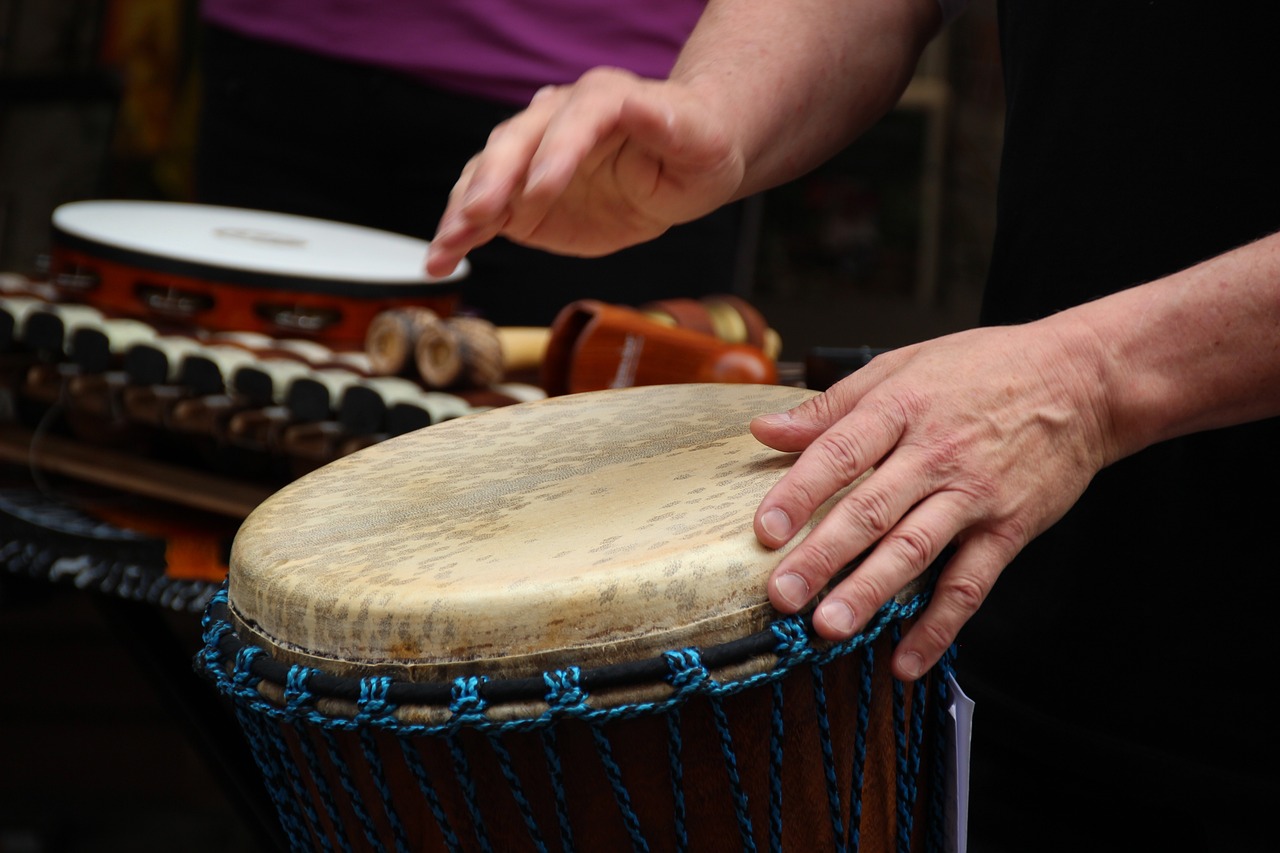
For the last 6 or so years I've played djembe, to which I am 95% self taught. I had always hoped I would have the opportunity to play djembe while I travelled South America but there never arose an opportunity, until during my third retreat in Ecuador, the idea was suggested and I took a risk and volunteered to lead my first drum circle. The concept was in no way foreign to me, I had the experience and knew I could do it, but rarely did the opportunity arise where I could orchestrate and initiate a group of eager beginners into playing with rhythm together. I also had a pretty unique method of practice that I had been introduced to less than a month before leaving for Peru. The method involves combining the syllables of spoken words with the hitting of the drum tone, in a fashion that almost feels like rapping, but according to the teachers who showed me this process is rooted in traditional African djembe practices. The example we use "Bringing in the Light", so you hit it twice for "bringing" once for "in", another time for "the" and once more for "light", matching the syllables with drum hits. Combining various sizes of djembe drums with little bongos, shakers, tambourines, and layering in some chanting, it became quite a beautiful event! I would encourage folks to speak Spanish as well, trying out words like "La Ceremonia" or "San Pedrito"! After doing this circle twice I felt so harmonized with the process of leading songs and feel confident that it's an experiential teaching that I will take with me back home as I sing songs with my close friends to help integrate the medicine from my travels.

At some point doing our second retreat my fellow volunteer Ryan and I decided to spend the 2 week break in between the second and third retreat travelling together and what an adventure that was! Ryan (who also lives in B.C) had just finished his Ph.D in Neuropsychology had come to South America to discover more about states of consciousness and expressed feeling disenchanted with his life in academia. But aside from his impressive academic career, Ryan has a huge heart and is a very emotionally intelligent, spiritually grounded person who I consider a dear friend!
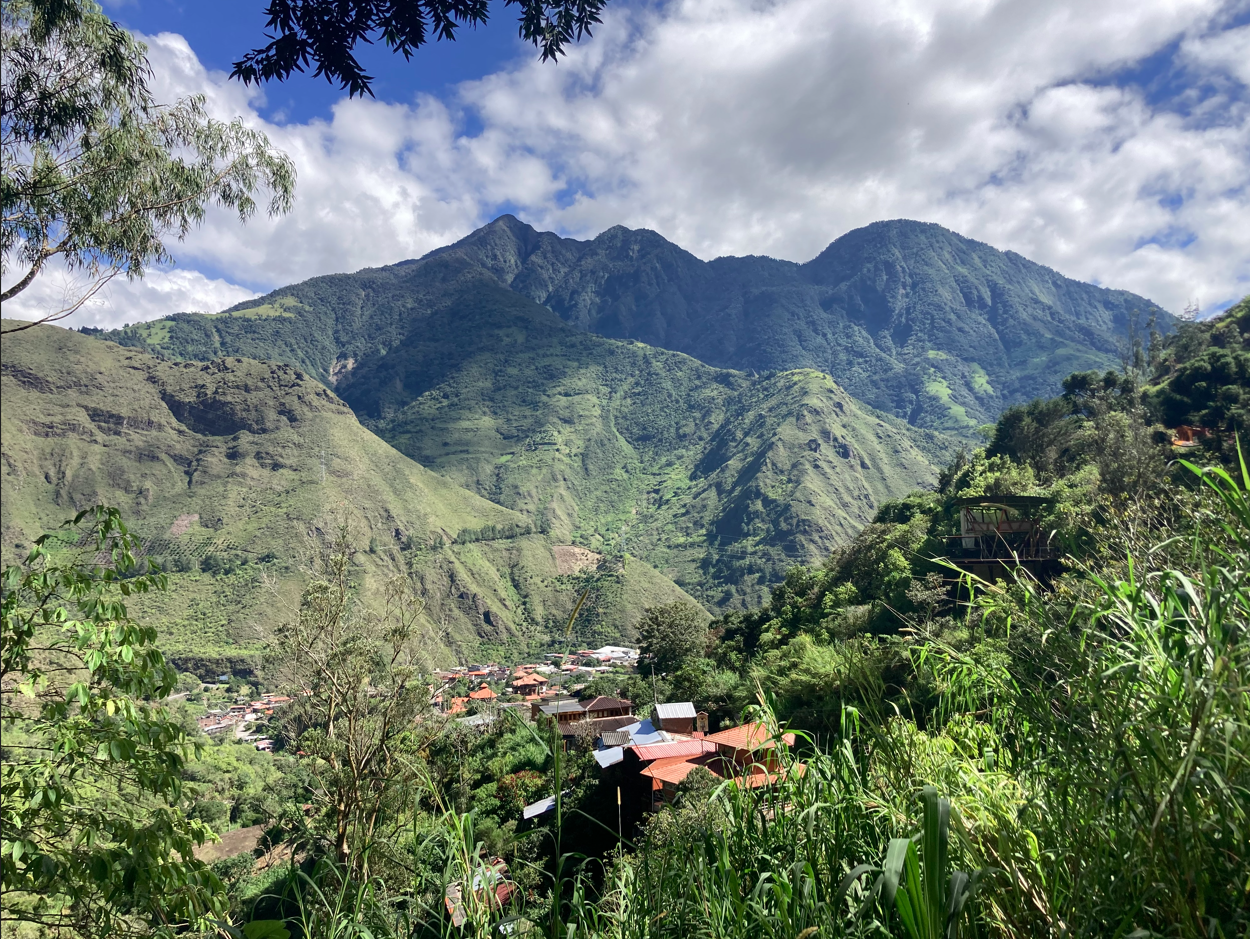
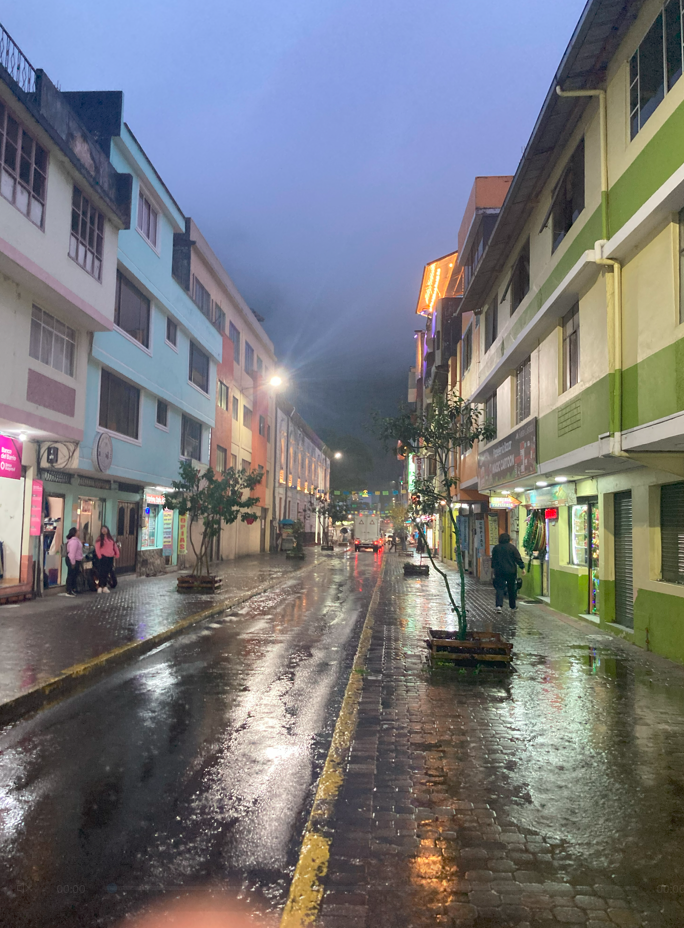
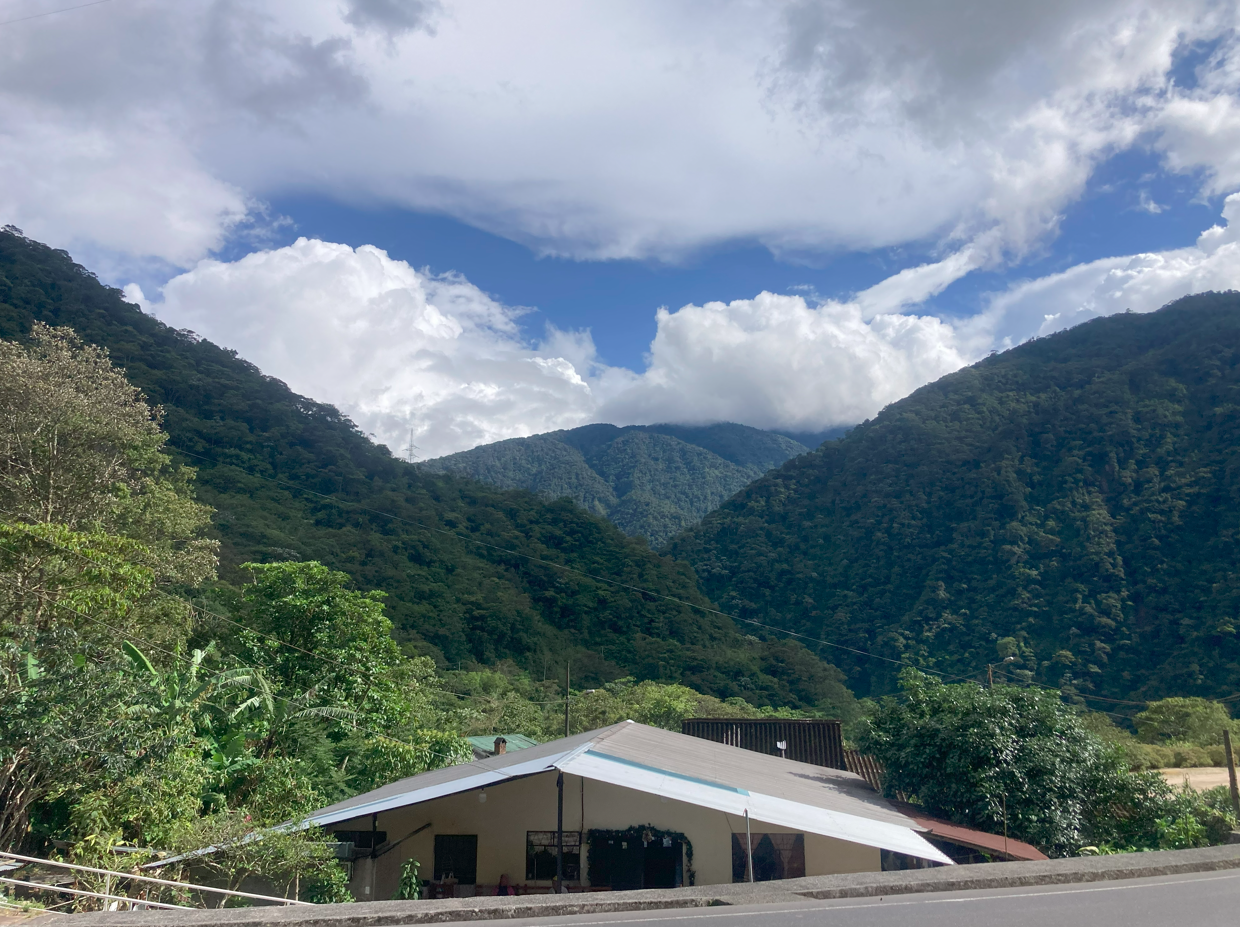
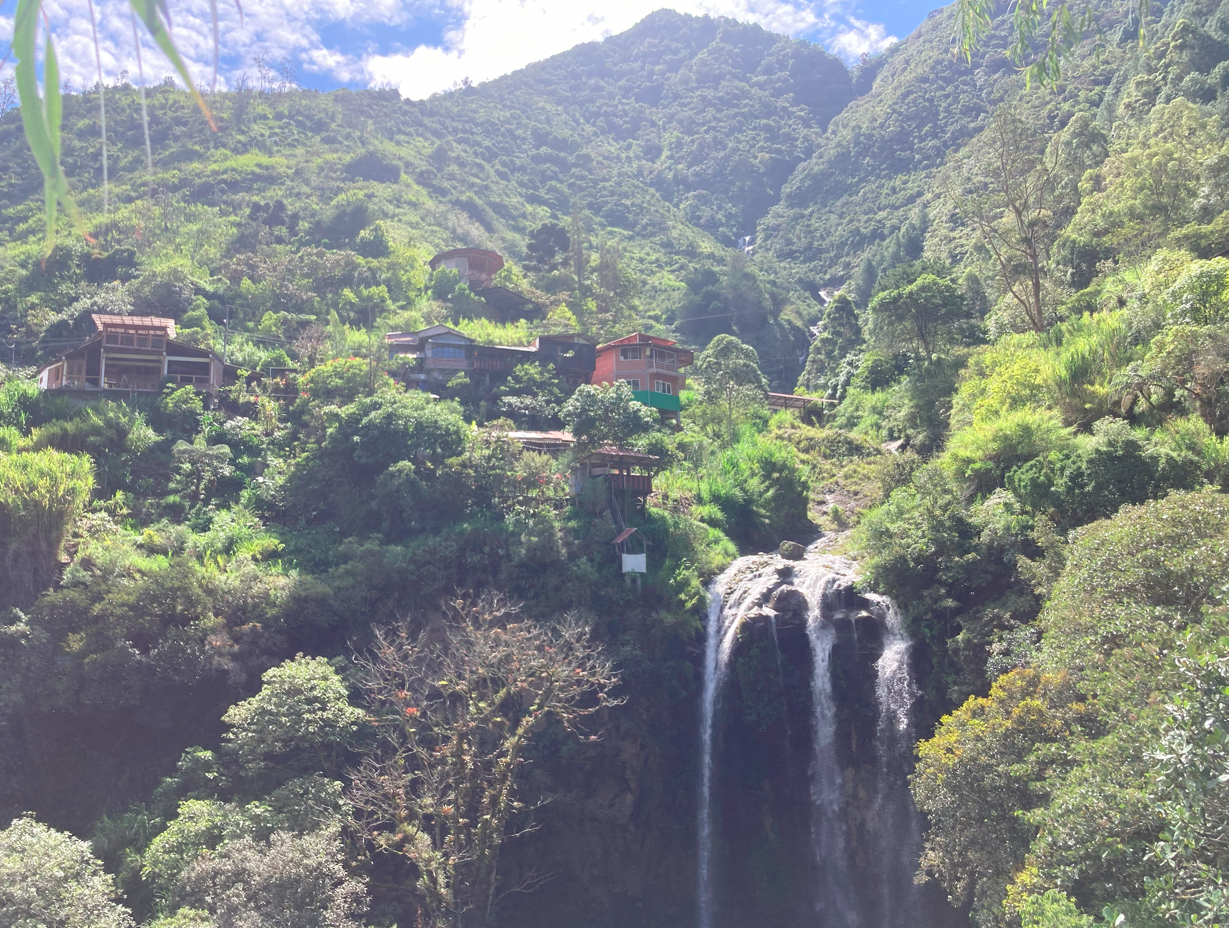
Our first stop was Baños! The northern mountain city of Baños (Spanish for "Bath") is an absolute gem. Baños is located at an elevation of 1,820 metres (5,971 feet) on the northern foothills of the Tungurahua volcano, which unfortunately I wasn't able to get a photo of. To get to Baños you must take an 8 hour bus ride from the bus terminal in Cuenca, which is an incredibly scenic trip that winds through the Andes gradually reaching remarkable altitudes. The first photo is a shot of the small town of Ulba a 15 minute drive from the city center.
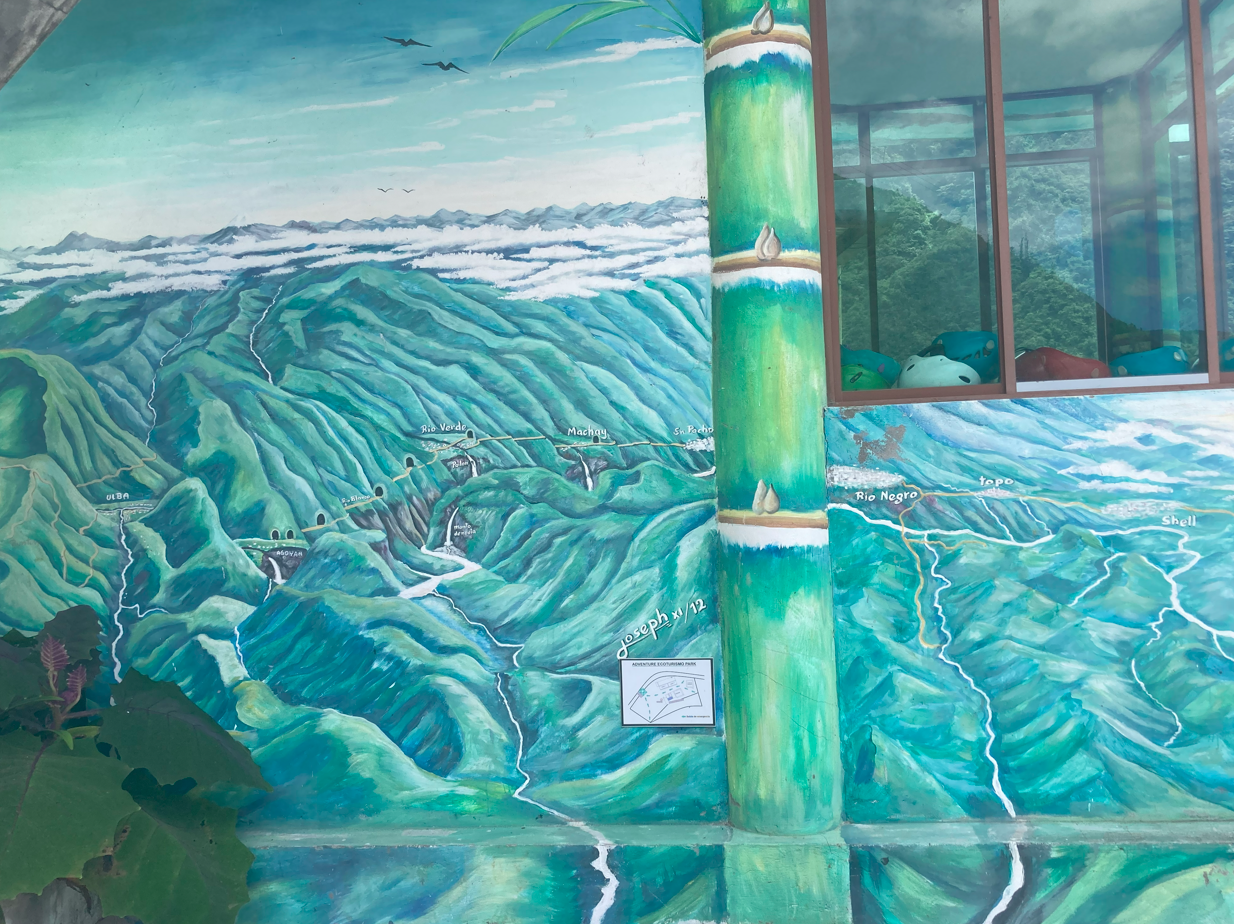
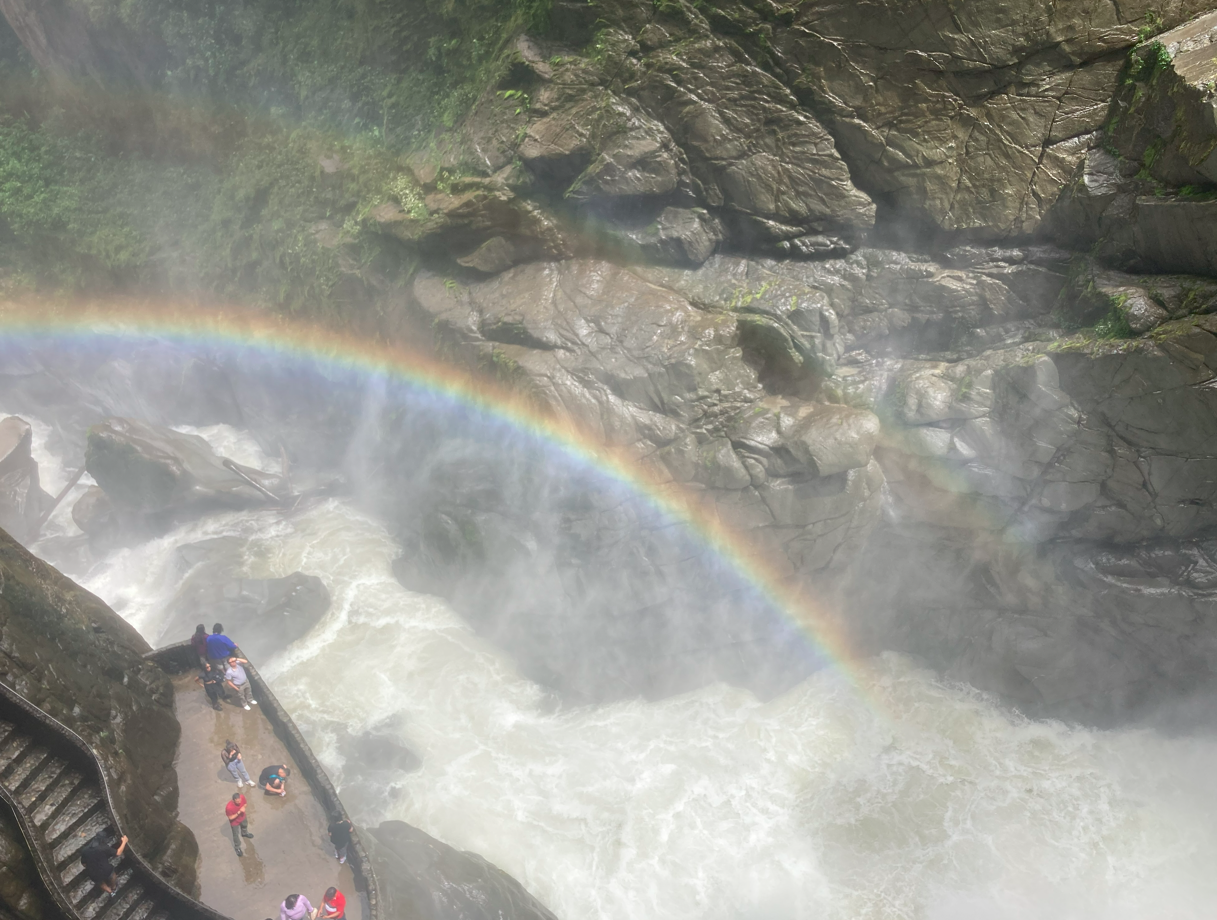
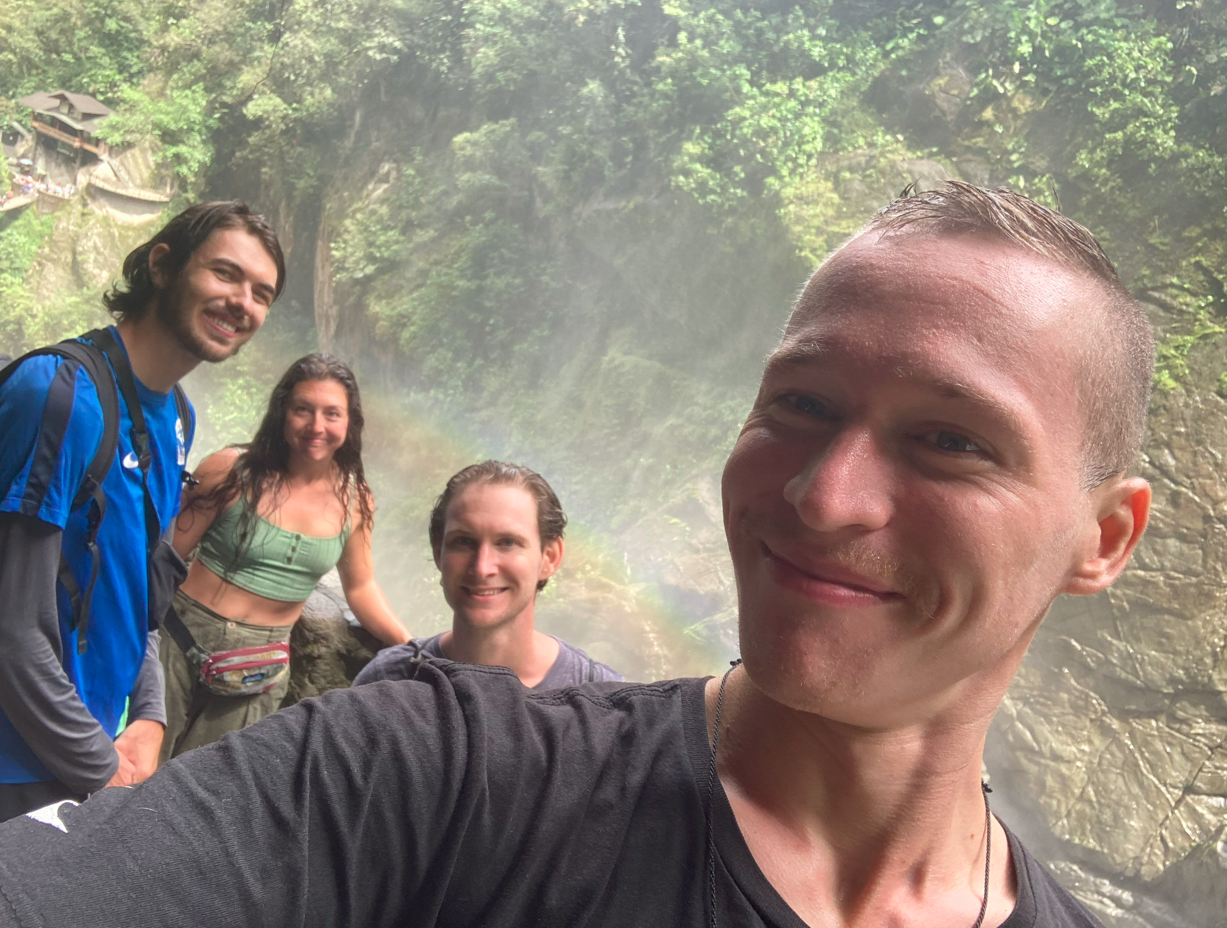
I spent a great deal of my time in Baños cycling with Ryan and our new friends Daniel and Kim, along the main highway between cities that connects some of the largest waterfalls I've ever seen in my life. The third photo is a mural/map of the bicycle route. I have incredible videos of "Pailon del Diablo", but no images to share in this blog, take my word for it... this waterfall (the last image shows it's rapids with a double rainbow) is an absolute behemoth.
Baños was an interesting "pitstop" on our way to Latacunga for a variety of reasons. For one, the look of the city was kind of like a combination of the jungle-adjacent structural decay and accompanying jungle fauna of Iquitos with the ancient architectural features I'd only ever seen in Ecuador. Certain downtown districts were more modernized but many of the surrounding natural features made it obvious just how far into the Andes mountais you really were. Some of the iconic features were the massive waterfall that had a colour-shifting light that illuminated the falls, or the "Mama Tungu" volcano.
Ryan and I had unintentionally arrived in Baños right before New Years, and in Ecuadorian culture they have some pretty wild celebrations downtown including giant bonfires throughout the city where they burn clothed dolls, and having men dress up as women to flirt/dance with passing drivers to gather funds that went towards their New Years celebration. To us Westerners, this cultural practice in particular may sound pretty bizarre, but to the locals these events were revered and the men who dressed up and danced were seen as upholding an ancient tradition which was widely recognized and celebrated throughout all of Ecuador.
When we were staying at the "Great Hostels Backpackers" (I always thought this name was backwards) we met this incredibly kind young German man, named Daniel (photo later on) who was fluent in Spanish (and German), and was a pretty intelligent engineering student. Daniel had agreed to travel with us until Latacunga, where we temporarily parted ways until after the hike.


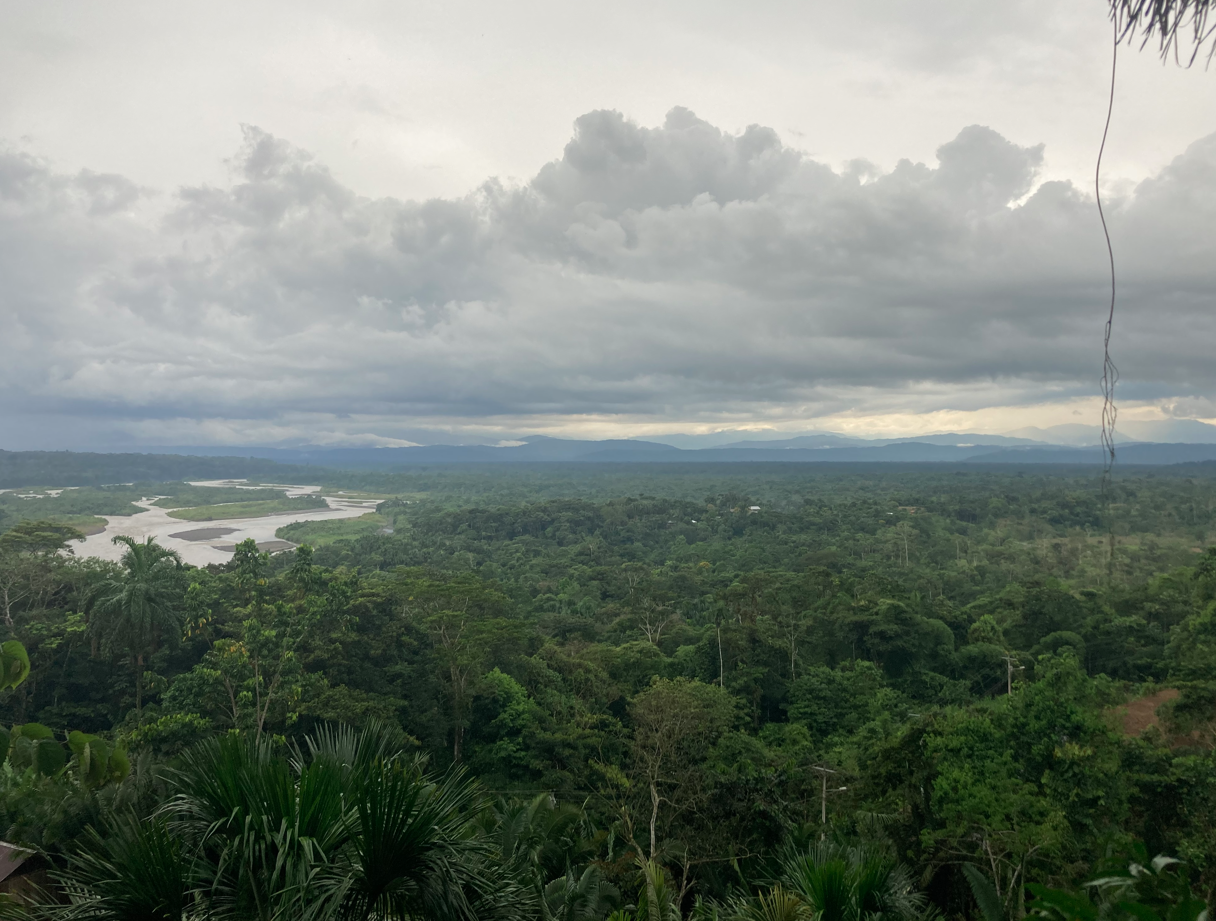
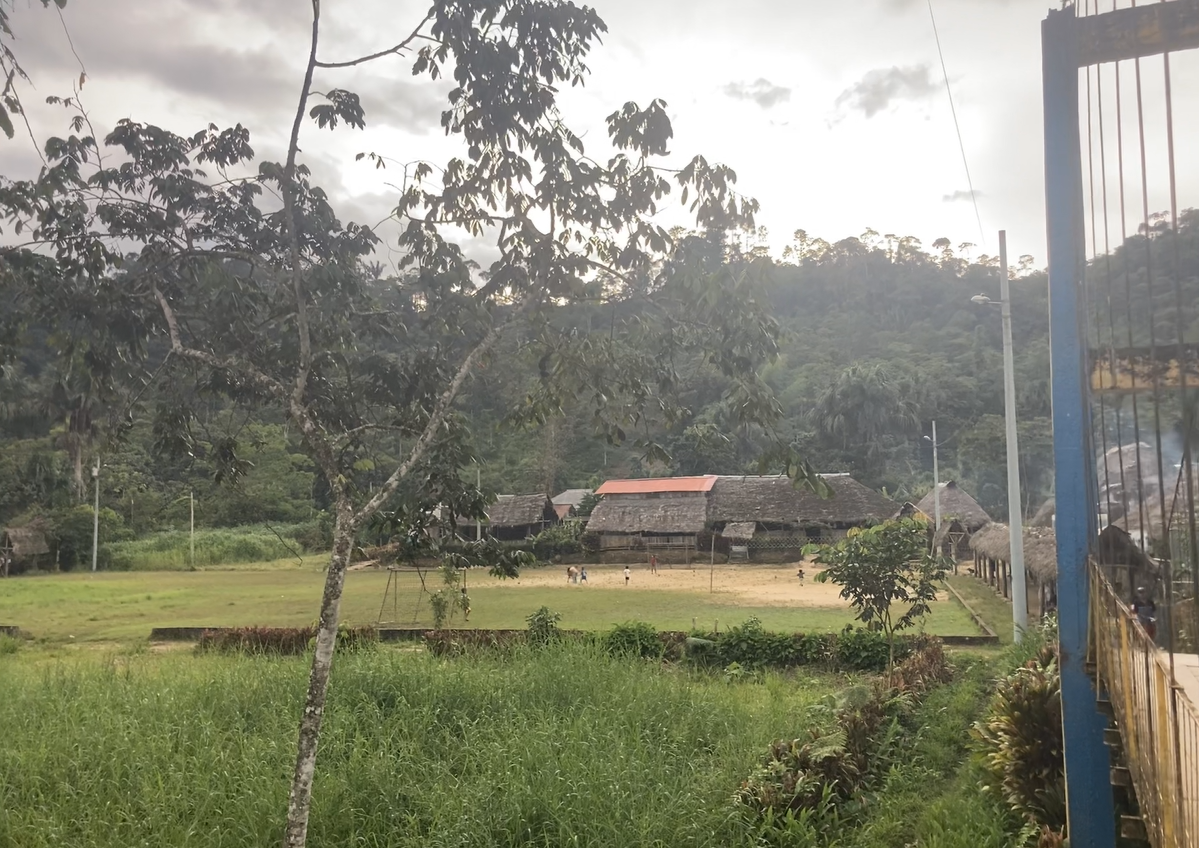
During the day of New Years Eve I'd booked a mini jungle tour which was an 11 hour day of tagging along with a group of Ecuadorian locals touring the sites near Puya on the edge of the Amazon jungle. The whole tour only cost me $20 USD! I was picked up around 7:30 am and it took us two hours to get to the edge of the jungle where there were signs and a rest stop where a lot of people were taking photos (first photo). Our first stop was at a beautiful waterfall that had a natural pool below where a big group of people were swimming and playing in the water under the falls. Before we reached the falls the tour guide scraped some sap off of a nearby tree and mixed it with some water. It turns out that this tree sap was used by the Kichwa people of Ecuador to clear the sinus, we would sniff the liquid and it burned our sinuses like crazy! I had a great time cooling off before we headed to our next stop on the tour, where they had canoes set up to take us on a short canoe ride down a nearby river. It was pretty fun, but brief and not overly eventful. After the canoe ride we had lunch, which was quite delicious and included with the tour, followed by a trip to the Kichwa village (second photo).
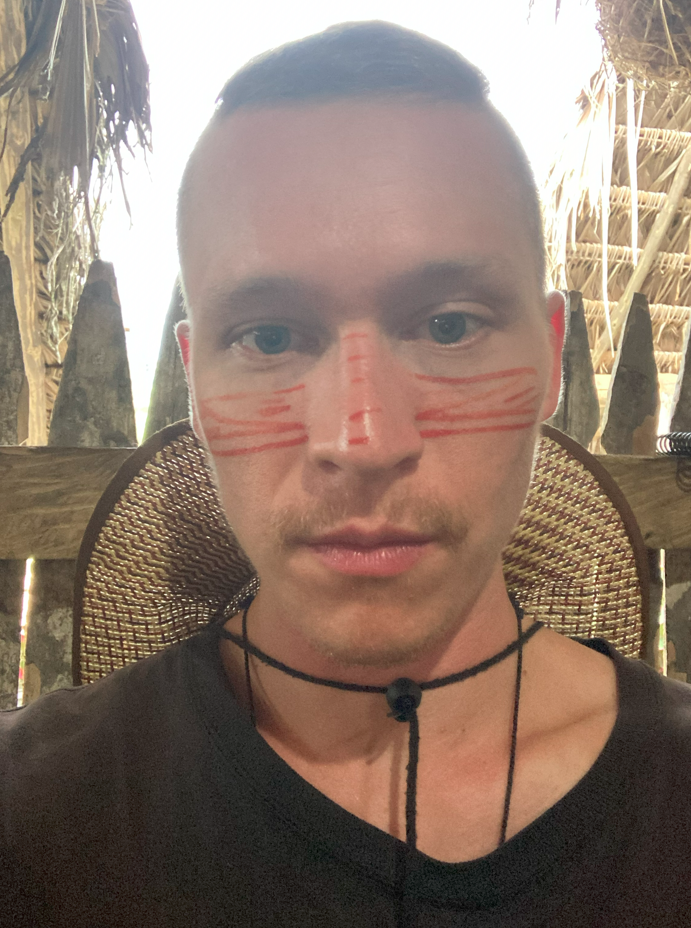
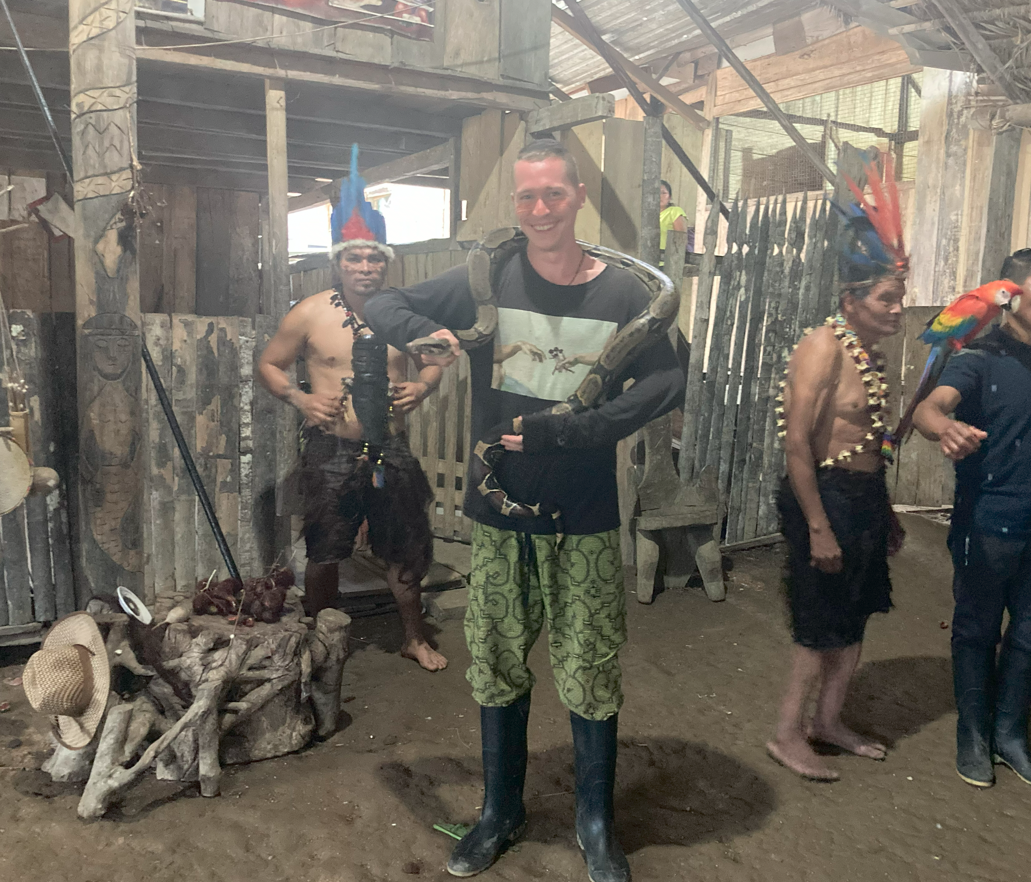
The Kichwa are the indigenous people whose traditions are connected to the land near Cuenca. Their traditions include face painting (third photo) for hunting and ceremony, ceremonial regalia made from colored feathers, drumming and using poison blow darts for hunting. The fourth photo shows me posing with a boa snake with a parrot nearby, both trained pets they bring out when tourists come through the village. They also had us drape ourselves with seed and bone necklaces , pick up drums/sticks, and dance in circle while chanting! At the end we had the option to purchase jewelry, medicines such as "dragon's blood", or clay cups with designs on them. I bought a couple of the clay cups, one with a black boa for myself and another with red and black patterns for my twin brother.
As we finished our tour with the Kichwa village the tour guide stayed in the village for a bit longer to bring some food/supplies and talk with the chief. I could tell he genuinely cared about this community and had strong relationships with the people he supported. He was praised like a celebrity by all the locals from the communities surrounding the jungle that we drove past. For his genuine compassion and passion for being of service to his community, I see this man as a pillar of integrity!
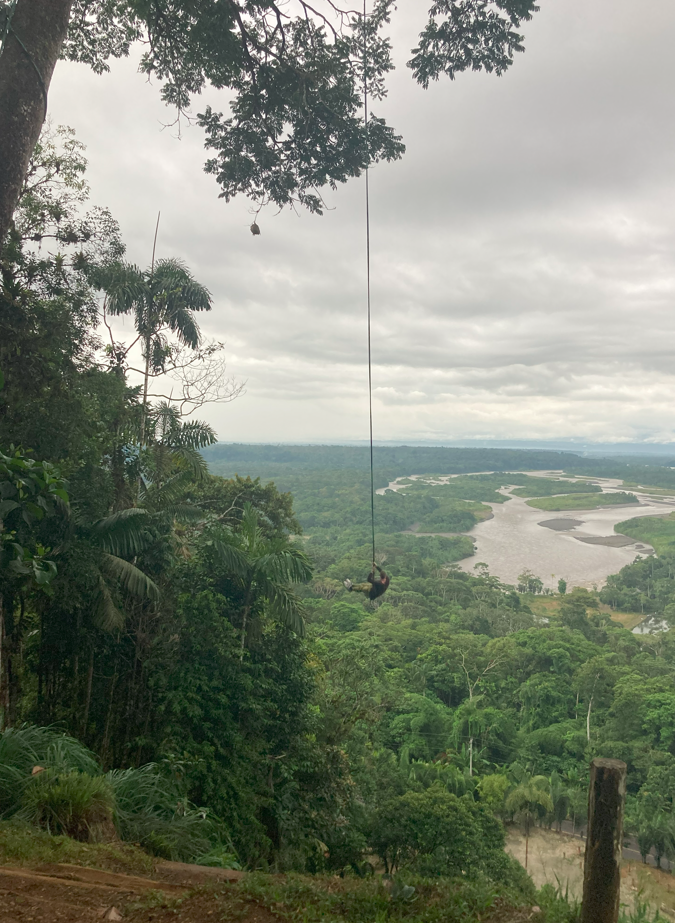
After we left the Kichwa village we were taken to the rope swing and given the option (for an additional cost) to swing on the rope swing which as you can see in the last photo, it was quite a long swing which hung over a massive drop off. Thankfully it was done very safely and I had a blast! The last stop of the tour was the cacao farm located somewhere southwest of Puya. I was quite excited about how many beautiful rooster feathers were scattered underneath a building next to the cacao plants and excitedly collected 4 feathers as soon as we'd arrived! The cacao plants themselves were surrounded by cinnamon bark, which smelled/tasted almost sweet when you pick it fresh. The quality of this Ecuadorian cacao is absolutely incredible, I still have a decent amount left and feel amazing every time I drink it. As a group we shelled the cacao beans, watched them roast them over an open-fire stove and I got to turn the crank myself to grind the beans into paste. From here, the paste was spread onto banana leaves and left to dry and then was made into hot cacao, and the shells made into a tea. I bought 3 of the banana leaves stuffed with fresh cacao for a total of $11 USD!


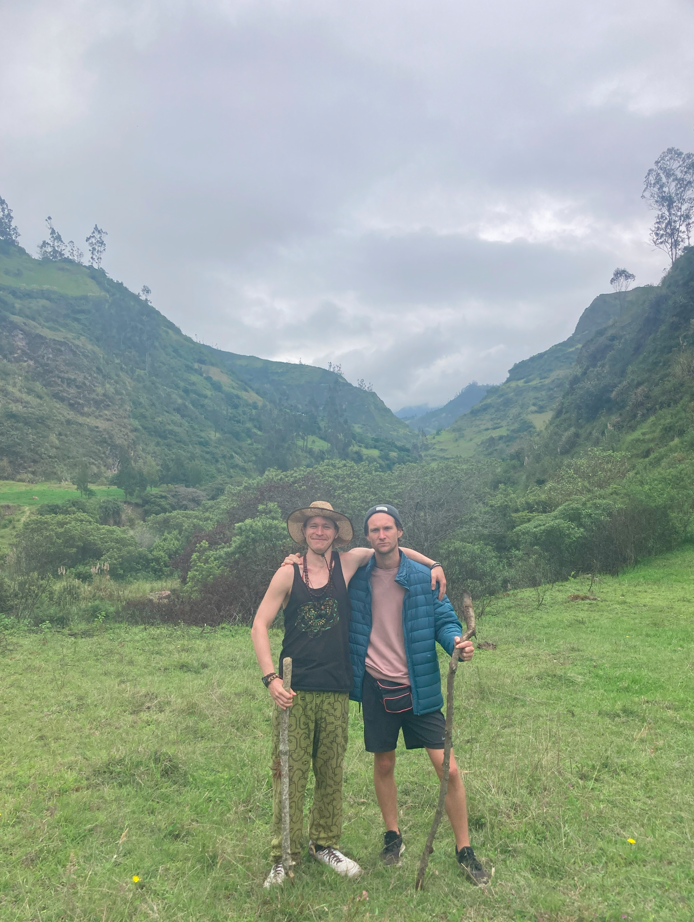
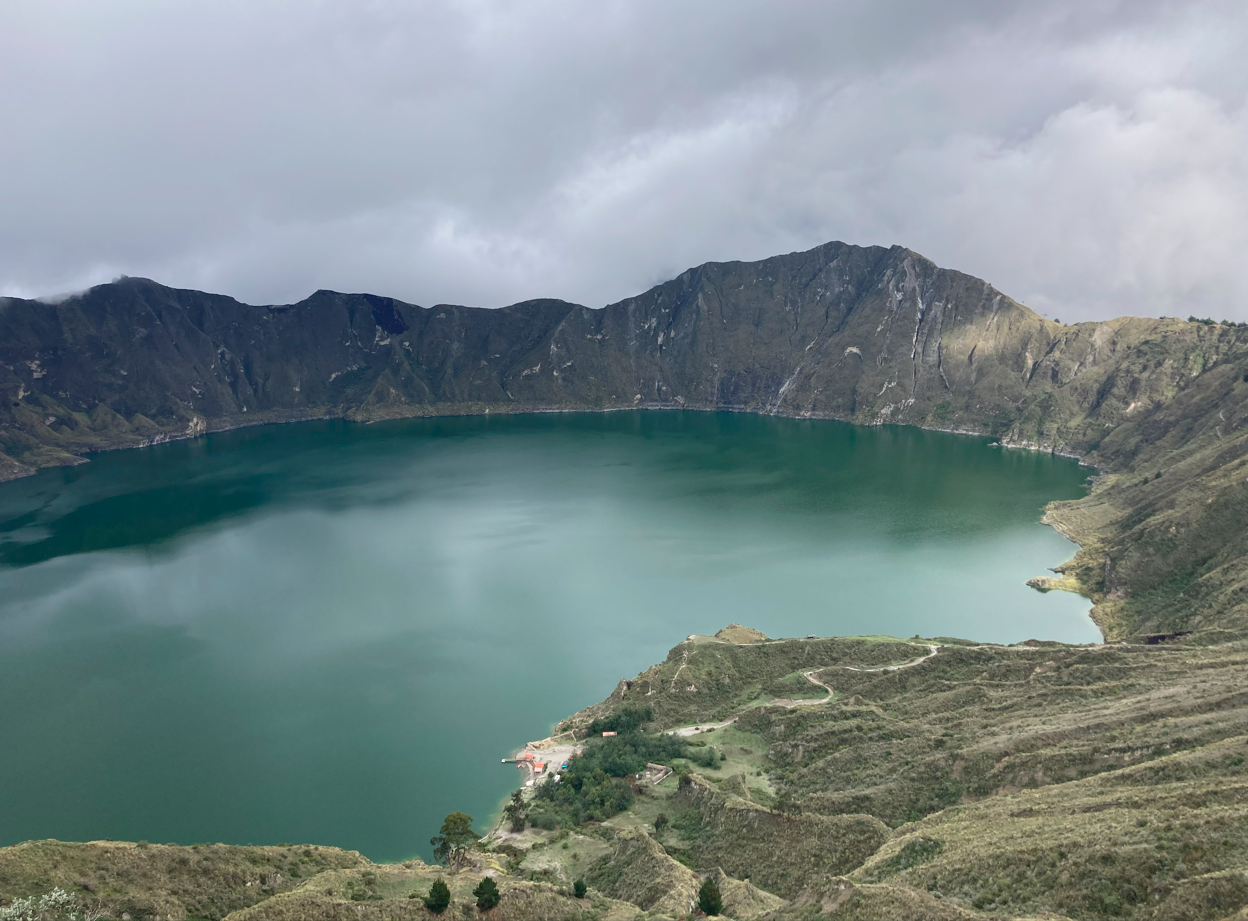
Ryan and I (second photo) decided to spend our 2 week break from Gaia Sagrada firstly stopping in Baños, and then after a long bus ride hiking for 3-4 hours from Latacunga to Chugchilan, for 4-5 hours to arrive at Sigcharos, and finally for about 6-7 hours to arrive in Quilotoa where there is a massive crater lake. (final photo in part 2) This adventure takes roughly 3 days of varying lengths (averaging at 5-7 hour long hikes) and is called the "Quilotoa Loop".
The bus ride from Cuenca was about 8 hours long, and for our first night in Latacunga we had Daniel hanging around with us (honestly that dude is a riot). Once we had paid the desk at the hostel to store our excess bags and said "adios" to Daniel, it was time to hit the road! The town itself was pretty small and I remember hearing rave music blaring from some place nearby around 8-9 am, as we searched for the start of the trail.
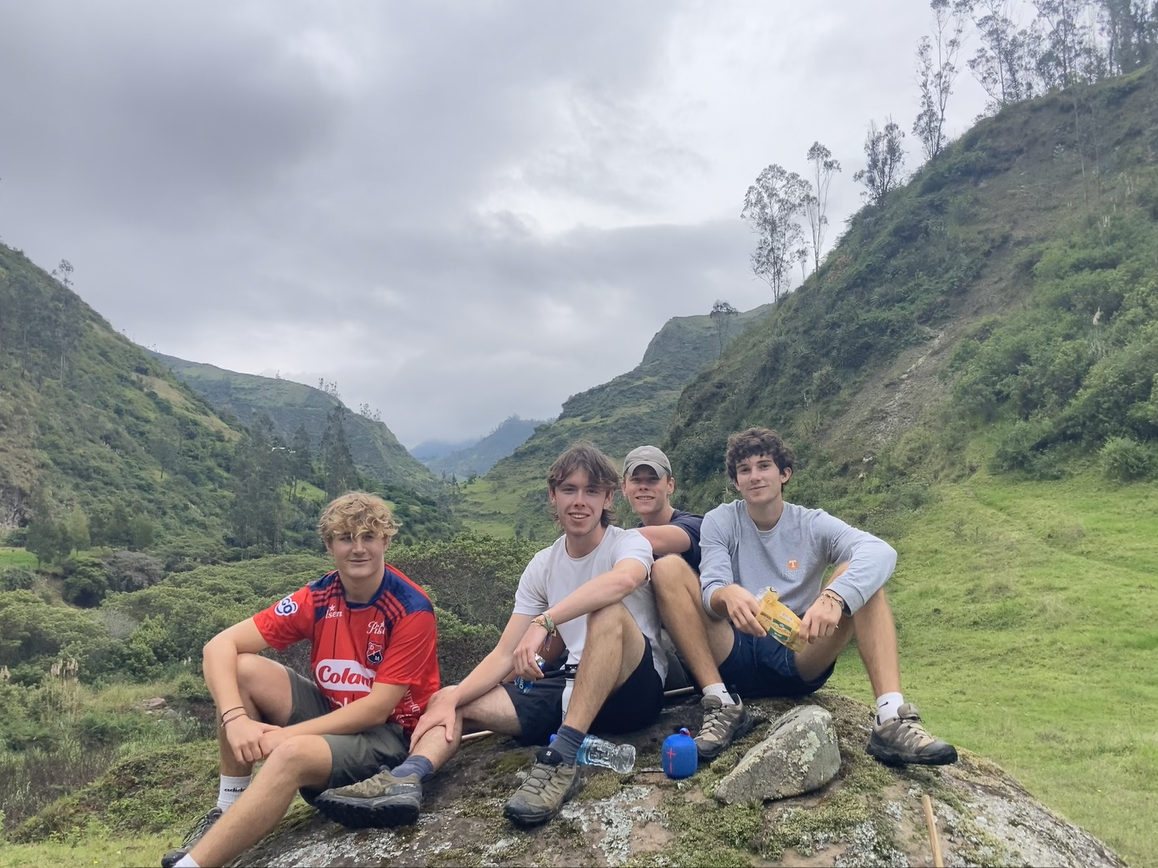
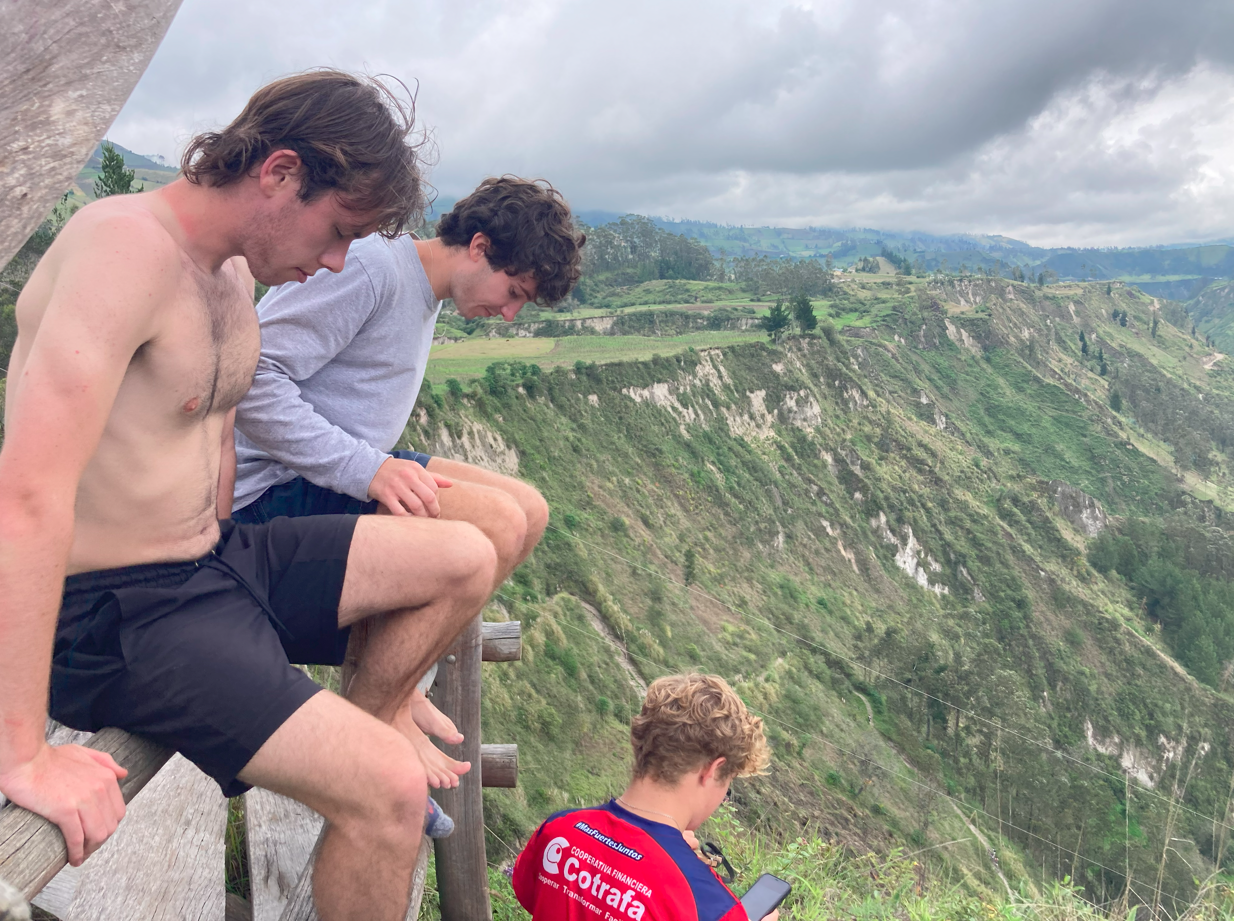
Earlier, while I was making breakfast at the hostel I saw these young guys who were kind of strange, playing with walking sticks pretending they were swords and being really loud and obnoxious. I could tell by their accents they were from the U.K. and sounded like teenagers, so I didn't talk with them. But once we had passed the "rave venue" we once again ran into the teens, whom I now refer to as "the lads". The lads were a group of 18-19 year old boys who had met each other somewhere in Peru (or Columbia), the one from England was named Harry (in red), two of them were from Ireland and the other one, Australia. They were pretty cool guys to hang out with, a lot more mature and laid back then I'd given them credit for, especially since they were so young. It was interesting hanging out with these youngsters, made me feel like an old man, but also found it was interesting to reflect on how different I am now from when I was 18 (you can read more about that in "My Path").
We'd been hiking for a solid few hours and decided to take a short break while the lads had some snacks. Ryan and I hung out and looked at mushrooms/took photos (third photo) with our walking sticks. This was a pretty interesting memory because one of the lads (Harry maybe?) was doing standing backflips to impress his buddies. I was pretty damn impressed myself, but also couldn't help but think about how insane it would be to try something like that and the risk of ending up in the a hospital in Ecuador, essentially ruining my trip. Right after the backflips the lads wanted a photo together so I took this shot of them (4th photo) and air dropped to them.
Hiking with the lads was pretty fun, they had good taste in music and weren't nearly as annoying as I'd assumed they'd be. We ended up parting ways with them once we reached the peak and it was uncertain as to whether we'd ever see them again. Ryan commented on how it was kind of sad that we didn't exactly get a final goodbye to our Quilotoa compadres.


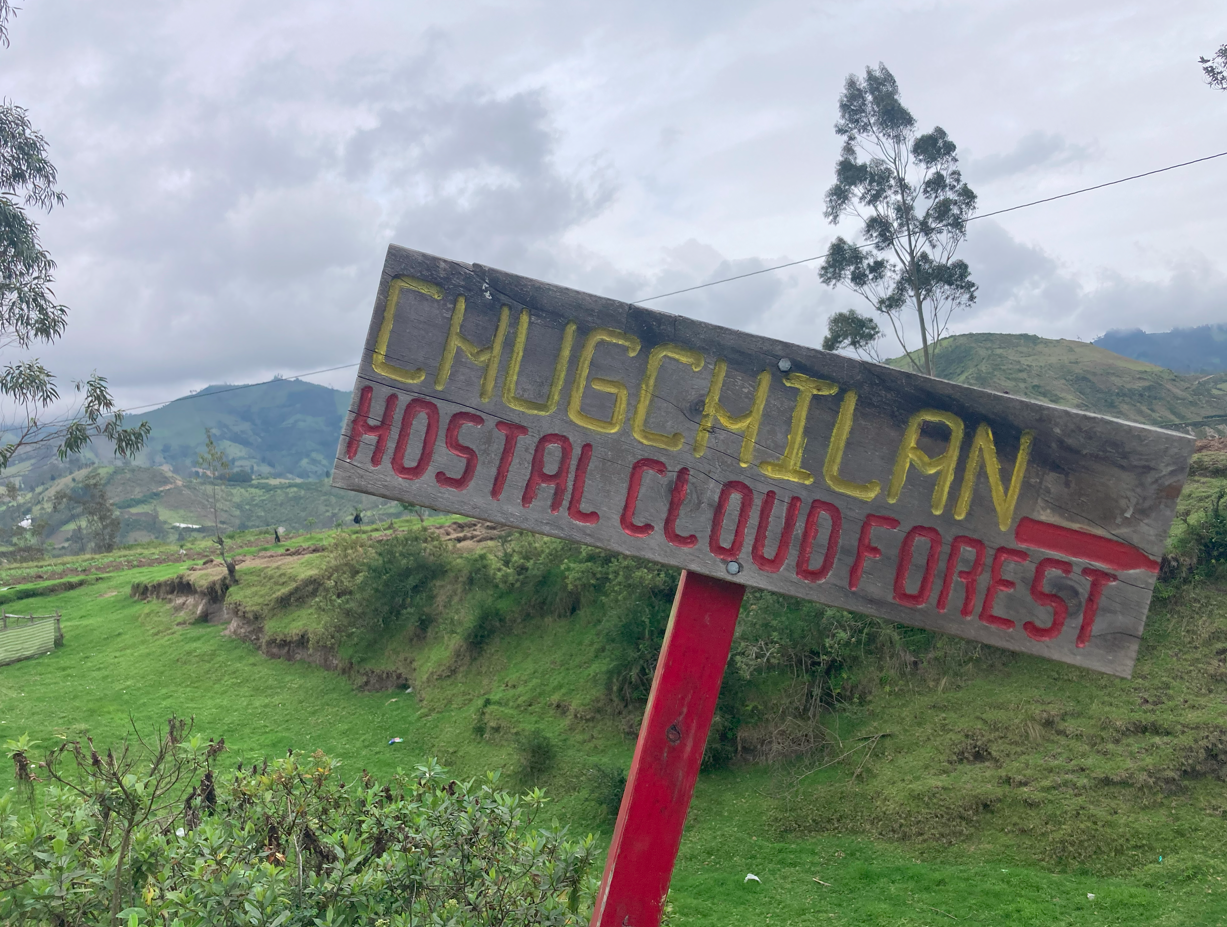
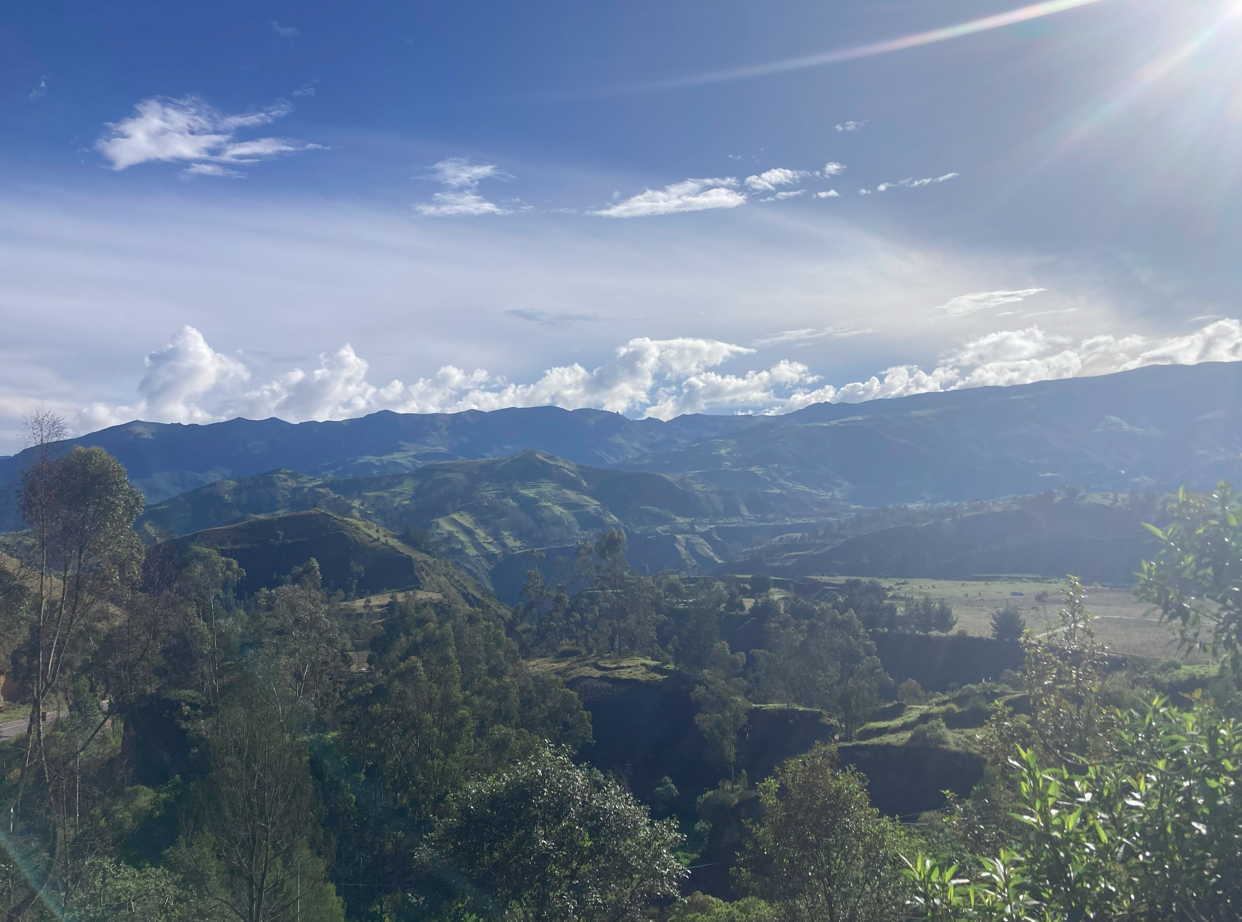
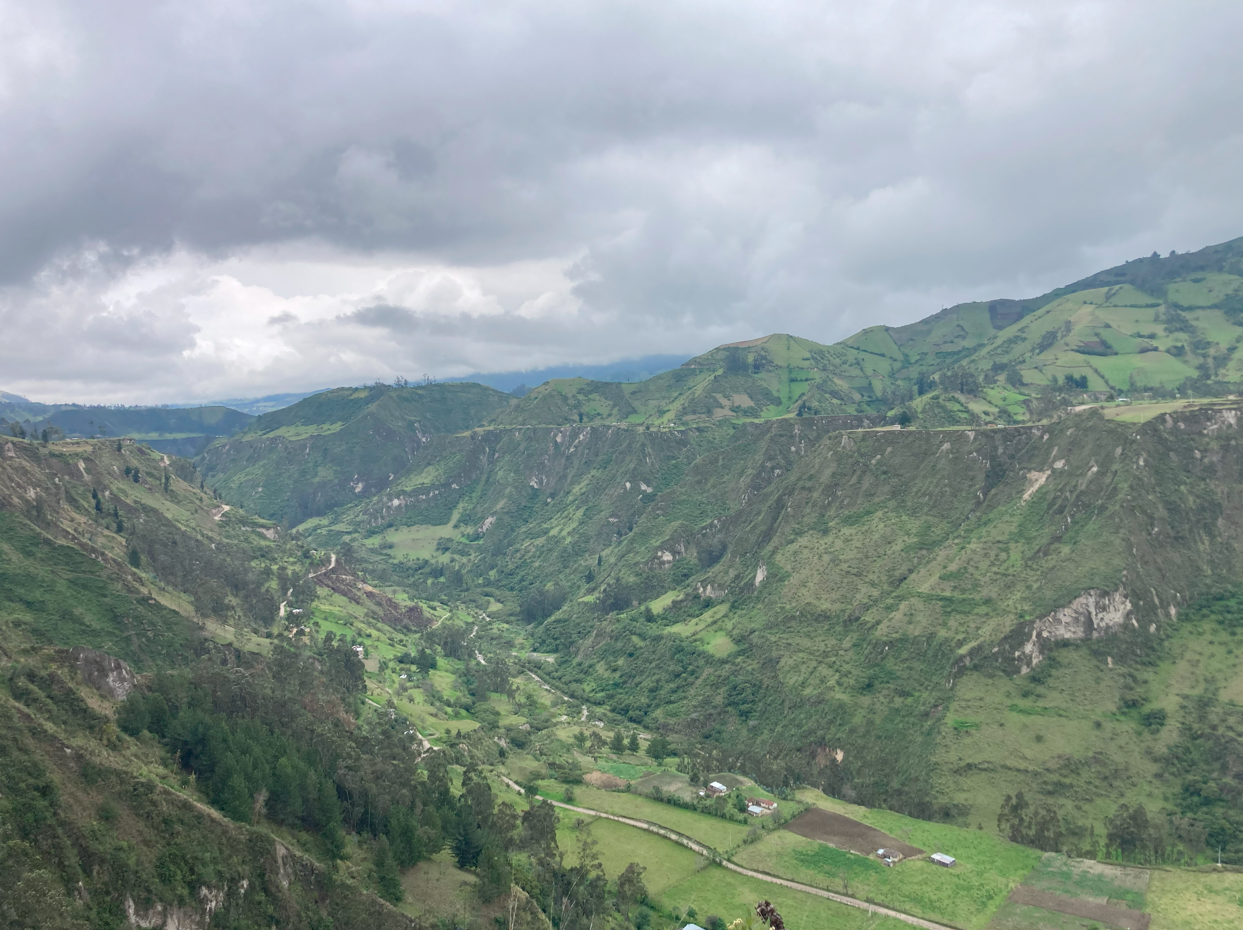
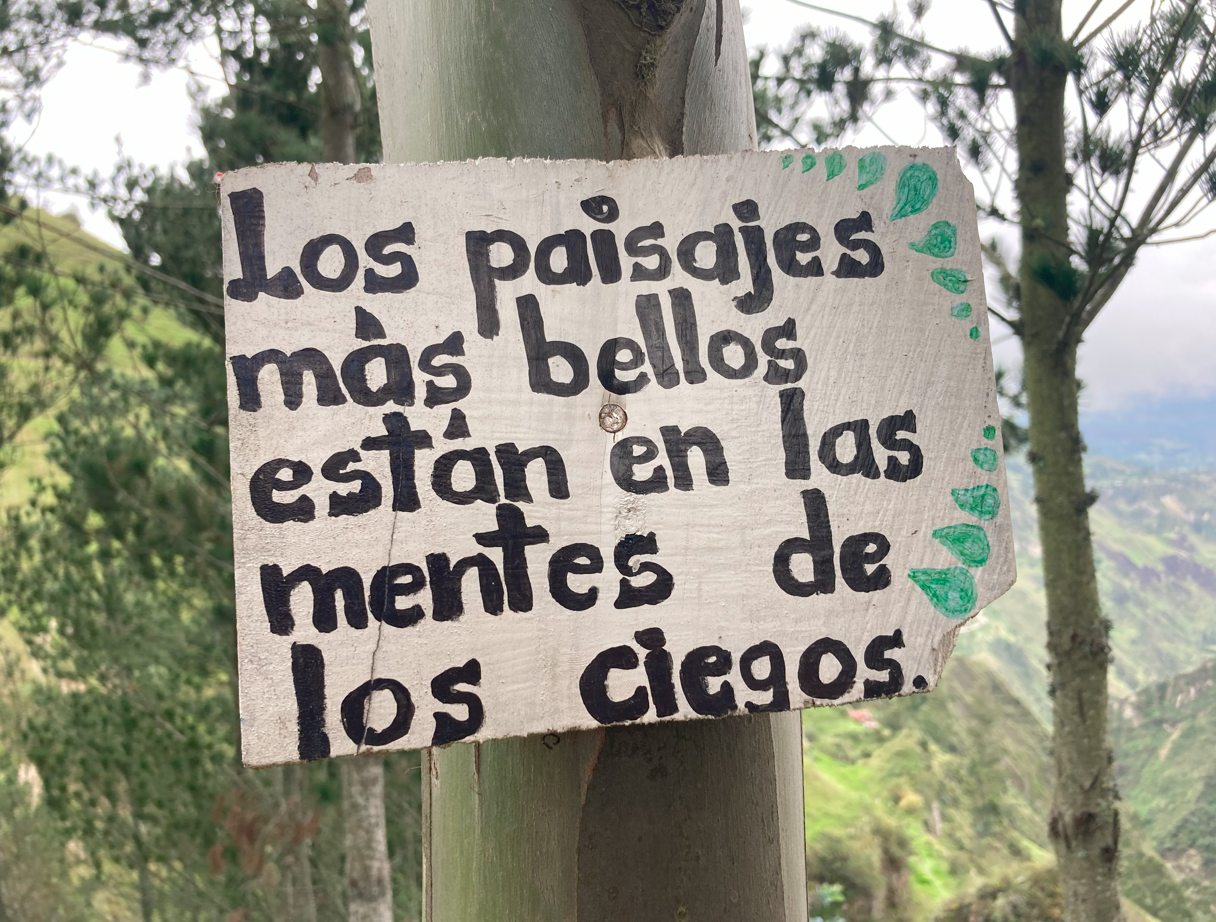
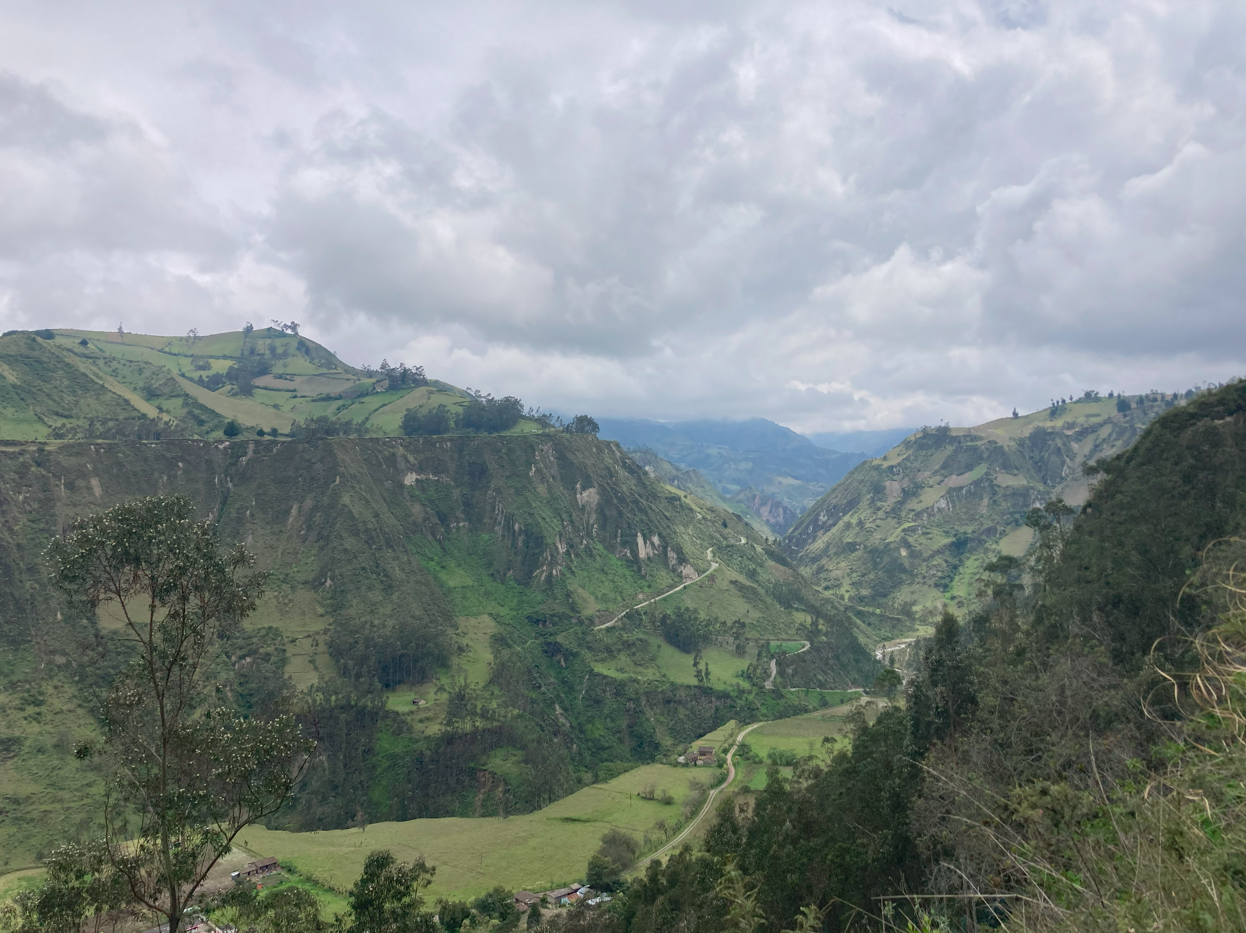
The first photo shows the view looking out from our hostel, the "Black Sheep Inn", which was the starting point for our third day of hiking. This higher-end hostel was a beautiful cabin-style inn with a sauna, a yoga room/balcony that overlooked the Andes mountains and complementary banana bread, cookies and coca tea. They even packed us a bagged lunch! Nestled deep within the foothills of the Andes, this beautiful lookout inspired us to leap into action unto the last leg of our quest. After about an hour of hiking we came across this sign (which I didn't know the meaning of until I later translated it). The sign reads " the most beautiful landscapes are in the minds of the blind" and was randomly posted nearby a lookout point. I'll never forget his moment, because 10 or so minutes before I took the photo I spontaneously decided to scream out triumphantly 3 times, as loud as I could as a way of releasing sadness, anger, disempowerment and even grief. Honestly, I was processing a lot and needed to release some of those intense emotions and what better place than atop a mountain in the Andes?
After another two hours of steep, intense hiking we'd arrived at the peak. Fortunately the rain didn't start until after we got to the top where there was a cozy, shed sized cabin with a fire inside. A couple locals lived atop this mountain and would shelter tourists and sell cups of coffee or any other snacks they could. Happy to find a dry place to rest and enjoy our bagged lunch from the Black Sheep Inn, we rendezvoused with the lads that we'd split off from about an hour ago. They were in good spirits! Thinking this was near the end of the trail, Ryan and I sped off excitedly, saying goodbye to the lads, hopeful to find the Quilotoa lake and soon be at the end of our long adventure. But fate had other plans! The peak of the mountain was covered in a fog so thick it was like being inside of a cloud. We couldn't tell which direction the lake was and ended up descending the wrong pathway (which in our defense was poorly marked) and due to exhaustion carried on for about an hour until we realized we needed to backtrack back up the mountain.
So we'd spent a lot more time than we ought to have, hiking incredibly steep mountain ridges and after about an hour we'd finally returned to the peak. There was a friendly dog there, which helped lift our spirits. Feeling like we were finally headed the right way we started to cheerfully quote "Lord of the Rings" in a kind of exhausted delirium. We felt like Frodo and Sam from LOTR, exhausted and atop a mountain, just wanting to go home. So we began our descent, for real this time, scaling what was progressively becoming a very narrow, sharply declining patch which even had some gaps we had to hop over. It was every bit as sketchy as it sounds. It was leading us far closer to the level of the lake than we wanted to be. Ryan had read that the exit of the Quilotoa loop was at an altitude almost level with the peak (not the lake). We hadn't realized quite yet, but once again... we were headed the wrong way!
"Mis amigos! You're headed the wrong way (translated)" shouted Joselyn, a 12 year old Ecuadorian girl who lived along these ridges with her 4 donkeys. At first we were like "why is this little girl screaming at us?", afraid we might have been trespassing or something. Eventually she gets closer and we try our best to understand her with our limited Spanish. Turns out, we had been hiking down the "animal path" designed for donkeys and other mountain animals who had far lower standards for what was considered a safe trail. So after a disgustingly steep ascent back to the main trail, lead by Joselyn, after a total of something like 7-8 hours, Ryan and I eventually made it to where this last photo was taken. Ryan paid Joselyn $20 USD and I gave her some cooked beans I had brought for a snack (I had no money), interestingly there were a group of other locals who witnessed the whole event and tried to get us to pay them, to which we had to persistently refuse. As we approached the town of Quilotoa, the local who worked at the hotel tried to convince us we'd missed the bus and some random man with a van was hoping we'd pay him to drive us the 4 hour drive to Latacunga. I was suspicious, so we politely declined and low and behold, the last bus came to the stop, and we celebrated our completion of the Quilotoa Loop!
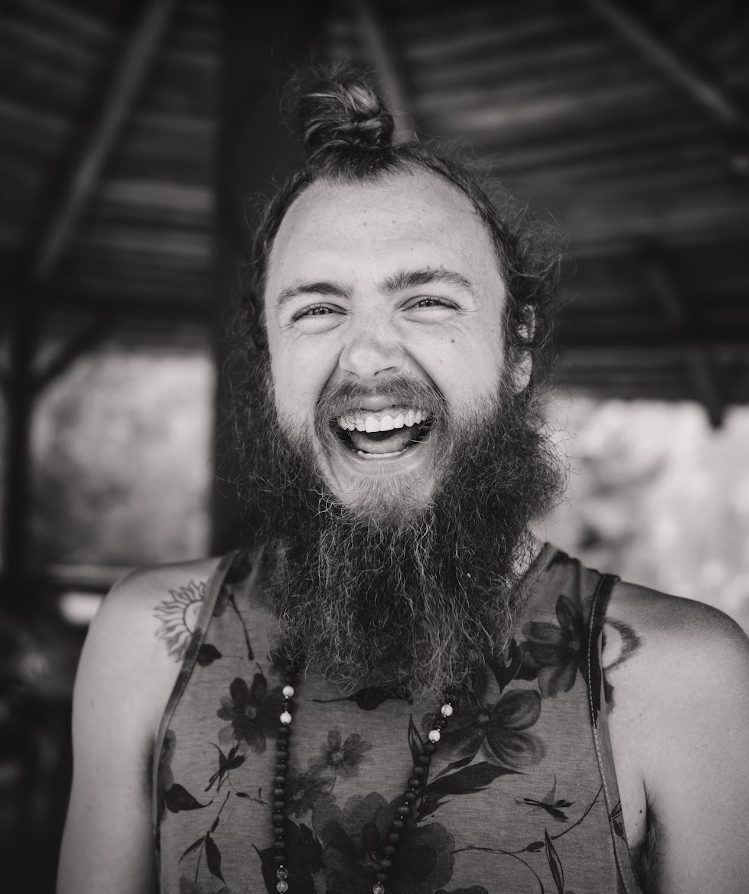
Here is shot of the Baños cycling squad in front of the rainbow while at "Pailon del Diablo" the massive waterfall, our second last stop of the waterfall bicycle tour! It was a seriously exciting moment we'd just seen the double rainbow and were still soaked by the giant waterfall which was shooting out massive bursts of water like a waterpark! The first two photo are from my first week in Baños, where this last photo is from my first day of my second week, the day me and Ryan parted ways while he travelled to Puya, we planned to meet back up in Baños before bussing back to Cuenca together for our third and final retreat at Gaia Sagrada.
I stayed in town to hang out with my friend Martina who was new to living in Baños, originally from Argentina. Have I expressed how much I love Argentinians? First Dylan in Iquitos, then Hermes, and then Martina, the few I've met have been so incredibly compassionate, friendly, and open-hearted people. I also met a really cool local to Baños who's a professional saxophone player and incredibly kind soul who taught me a little bit about the Kichwa and told me about how in Baños, they pray to the spirit of "Mama Tungu", the volcano. They treated me just like anybody else, with so much acceptance and genuine friendship. I really appreciated meeting them and hanging out at bars on New years, going to a cannabis/hapé cafe to listen to live medicine music/poetry reading, and going to see the "coloured waterfall up close"! Hanging out with locals is by far the best way to spend time in Ecuador (although, fellow travellers are cool too)!
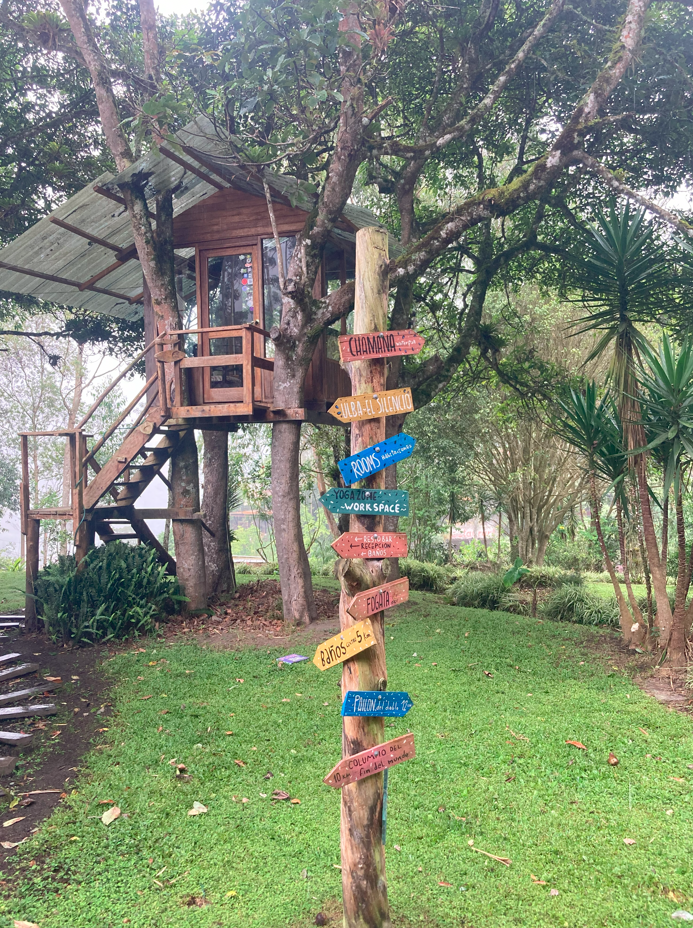
Here is a photo of a decorative art piece that stans underneath a massive avocado tree (directly above) outside the dorms of our hostel " Hostel Yakumama" which was surrounded by waterfalls and jungle with a hot tub/swimming pool but was admittedly more of a "party hostel" than I personally prefer. After a day at Yakumama I headed back to the "Great Hostels Backpackers" and low and behold who do I run into? Why it's the lads, from the Quilotoa loop!! I was so excited to tell Ryan, we hadn't seen them since the peak of the Quilotoa loop where we'd last parted ways. They were of course, in good spirits and were headed to do the Baños waterfall bicycle tour! I'm sure they had an incredible time.


I strongly believe everything happens for a reason. Every personal encounter is meaningful, including the experiences that cause us to suffer the most. Each lesson is instrumental to facilitating lasting and profound growth. Meeting Paulita was a incredible synchronicity which was admittedly challenging to let go of, mainly due to the fact that my time with her at the retreat was so limited. Paulita joined the Gaia Sagrada family for her first retreat when I had returned for my third and final retreat. This kind of "seniority" was a really interesting dynamic, because I remember the friendship I had with my "3 retreat mentors" and when she joined I felt I was passing on the baton. But I didn't anticipate just how close Paulita and I would become which was beautiful and healing, as well as deeply confusing at times.
Gaia Sagrada was an incredible place to meet like-minded souls on a similar path. Some of the strongest friendships I made on my medicine journey were at this beautiful retreat deep in the Andes mountains. That being said, it was also a highly ethical environment with a strict level of professionalism embodied by every volunteer and maintained by the utmost trust in each individual's personal integrity. I felt pretty comfortable keeping my desires and emotions in check, I deeply appreciate the familial connections and friendship that each person offered me. But I didn't realize until after I'd left Gaia Sagrada how much it weighed down on me to suppress my feelings around love, in all it's forms. So I am doing my best to appreciate and integrate the profound connection I had with Paulita while recognizing at times there wasn't a capacity to be truly authentic with my emotional experience.
But all that aside, what an incredible human! She studied her Masters in Counselling, and was the only other therapist to have volunteered at Gaia while I was there. We gradually bonded more, but I felt like our truest connection was around our mutual love for singing. She deeply inspired courage in me, and I'd like to think I, in her. Without Paulita I can say with the utmost confidence there is no chance I would have sang the song "Ramankaya" at the final ceremony of my third retreat. We also spent alot of time together singing/drumming, jamming while facilitating a cacao ceremony together, working ceremonies together, offering emotional support to each other and others, as well as spending a wonderful afternoon painting together. She was my best friend while at Gaia Sagrada, but sadly we had to part ways, which admittedly broke my heart. I had to get home and focus on my counselling and she is currently travelling South America.


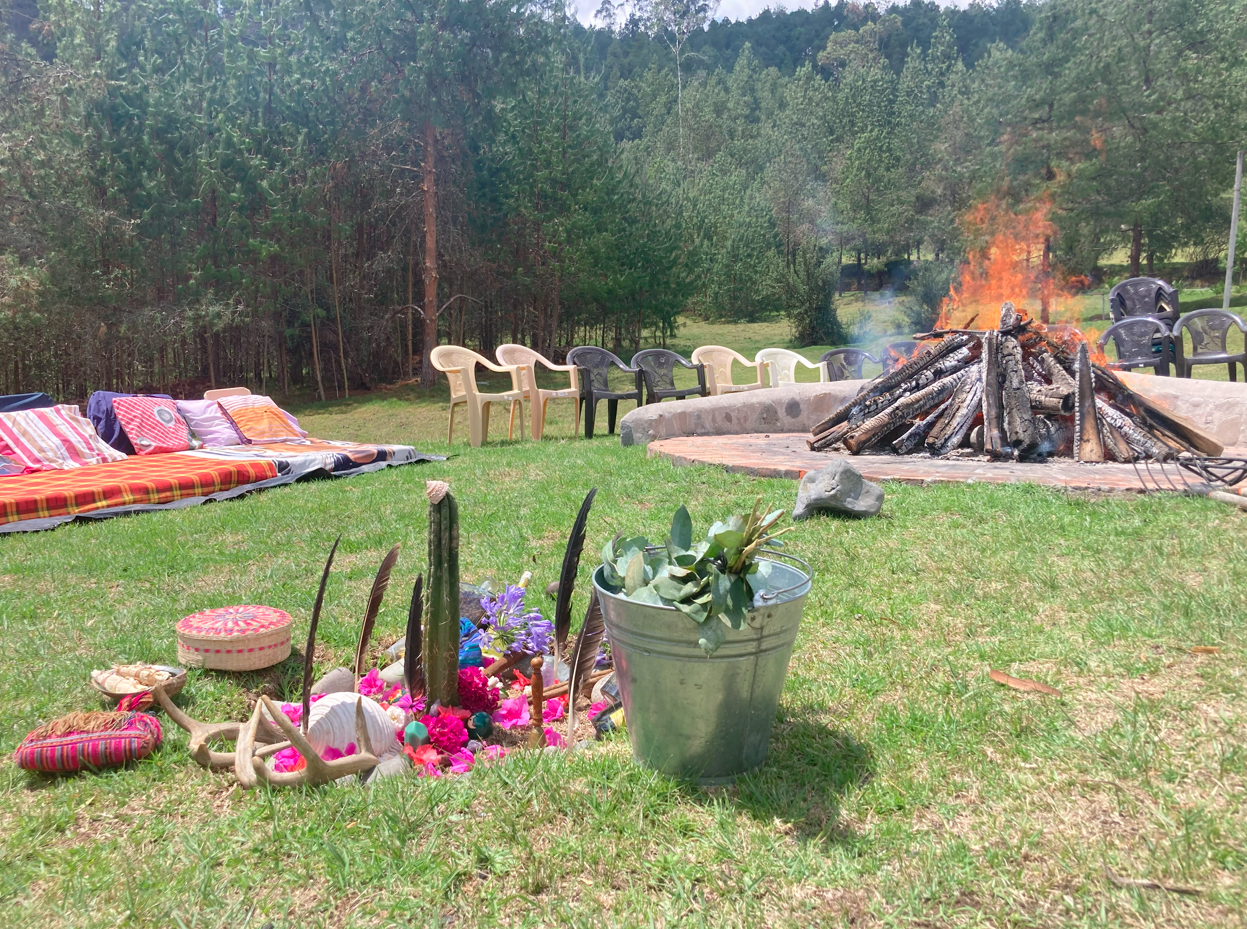
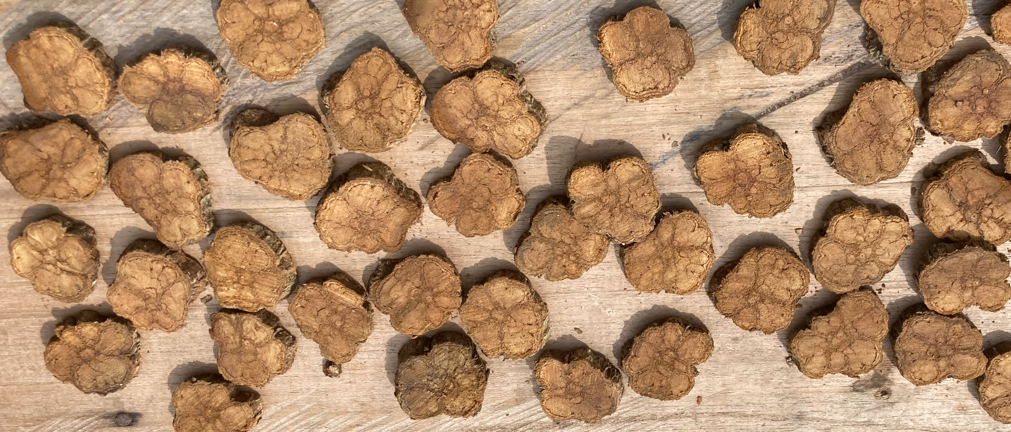
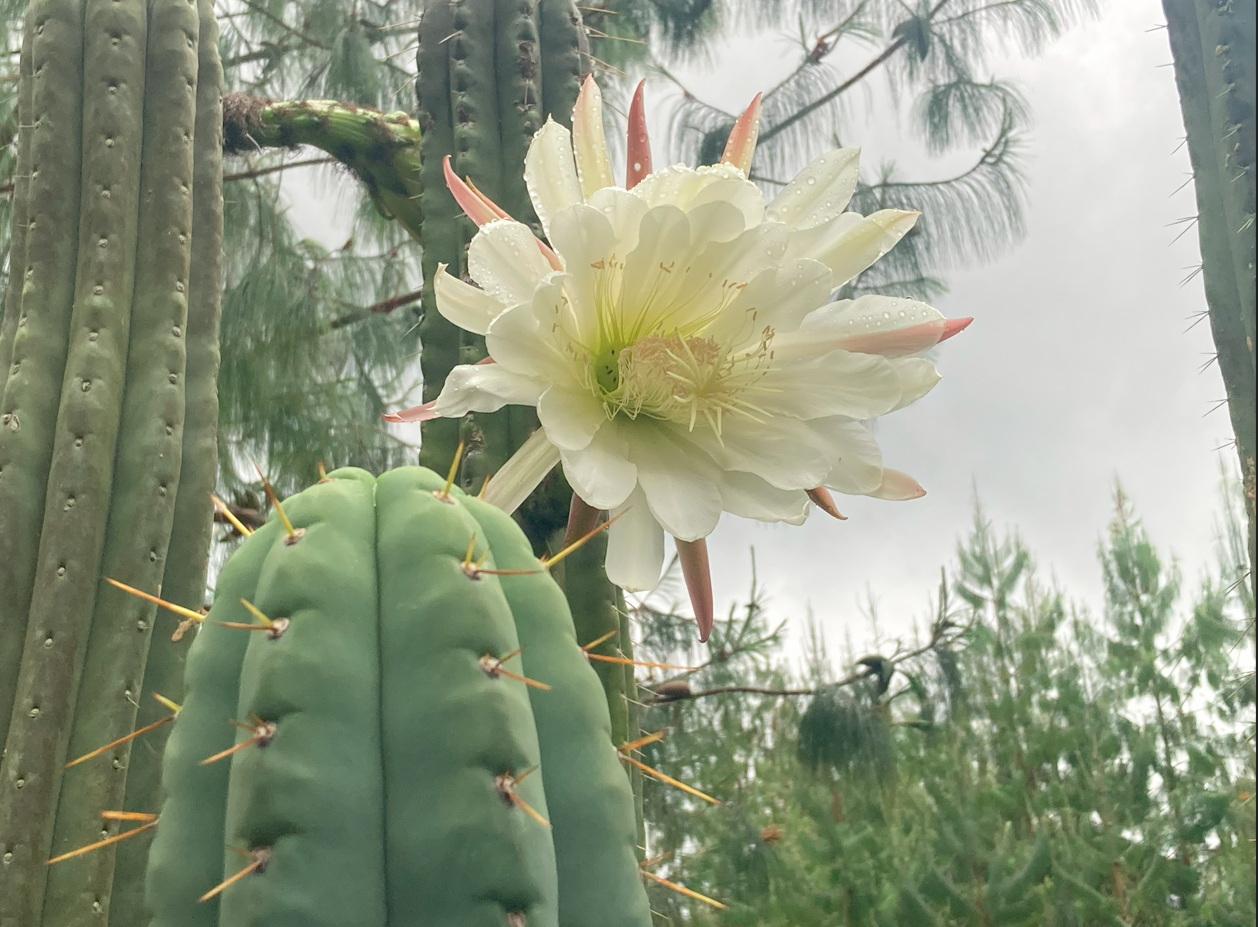
San Pedro, the grandfather medicine is a beautiful teacher of embodiment and action. The ceremony we participate in is hard to describe with words, but it's a 20-30 hour ceremony where we all take turns releasing what disempowers us to the sacred fire. Deep and profound healing takes place in these ceremonies and involves a group of roughly 25 people, courageously taking the plunge alongside each other. We have to name the trauma, the role we hold in our suffering and the moment we gave away our power, in order to truly release the pain and reclaim our power. The experience of this medicine is deeply personal, yet also incredibly healing for the "community wound" or "family wound" many of us struggle to recognize, heal, or integrate. Personally, I found the medicine to also help people lower their guard and feel more at ease connecting with others on an emotionally intimate level.
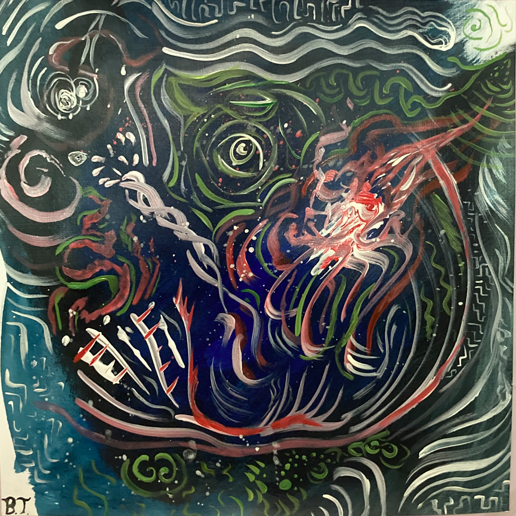
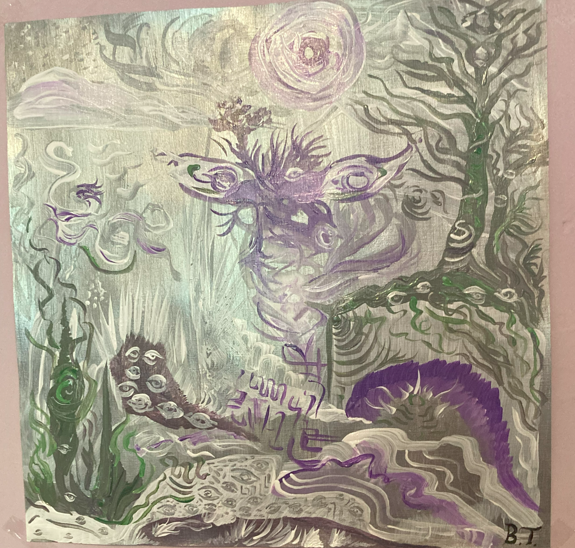
I created this painting soon after my San Pedro Ceremony, during a night of a full moon and my interpretation of this painting is that it was a culmination of the trifecta of Ayahuasca, San Pedro and the Full moon. Each of these energies had entered into my energetic vessel separately, but had intersected and fused during that night. I call it, "San Pedrito y Abuelita y Madre de la Luna" (Dear San Pedro, Dear Grandmother and the Mother Moon).


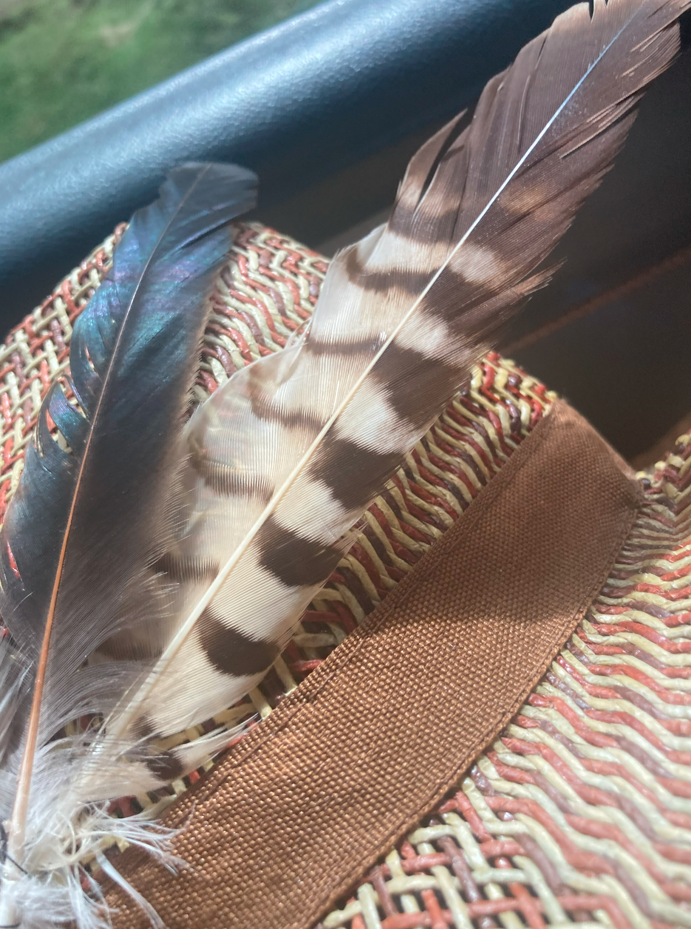
This photo shows the two feathers I brandished on my sombrero upon leaving the Quilatoa Loop, the feather on the right is the Harpy Eagle (from Iquitos) and the other feather is unidentified, but Fernando guessed it could be a Curiquingue, a "dancing bird" that's sacred to the Incas. Both of these birds are sacred, healing spirits and I felt the support of their energy while I practiced the Shipibo icaro "Ramankaya" by Maneesh de Moor.
"This Icaro is about calling in and connecting with the Spirit of Noya Rao, the Tree of Light. It's about being fully present in this moment, right now, right here. It sings about the Good Airs, and Strong Medicine, about Singing into the Medicine. About love and light appearing in this presence."
-Maneesh De Moor
I wholeheartedly dedicated this song to Paulita, for her loving support, believing in me and inspiring me to work hard at memorizing and learning to sing this song. It was a deeply empowering feeling, brandishing Namur's chacalpa (leaf rattle) and blessing the ceremony with the medicine of Noya Rao. That ceremony unlocked so much joy within my heart, divine courage and strength, that it truly felt like a dream. But that's the wonderful thing that happens when you start believing in yourself, you start to turn your dreams into your reality.
Irake Noya Rao (Thank you Tree of Light).

The love that I felt at Gaia Sagrada doesn't leave me when I left Ecuador, it simply grows like a seed. I water that love in my heart, each day when I feel my feelings deeply, and express love and gratitude to those whom I love. I love you all, and I miss "mi familia de sagrada", and I also feel like I was able to be truly present and offer loving service with each passing moment. I am incredibly proud of how I showed up for myself, for others and the courage I displayed when I faced hardships head on with integrity and an open heart.
And that's how we heal the family wound, we show up. We work hard and commit ourselves to healing ourselves and our relationship wounds so when the moment arises to be a loving, supportive family member we can face it fully and with every inch of our being. We lead with the heart! This doesn't require perfection either, no relationship does, but to simply lean in and give it all you got!

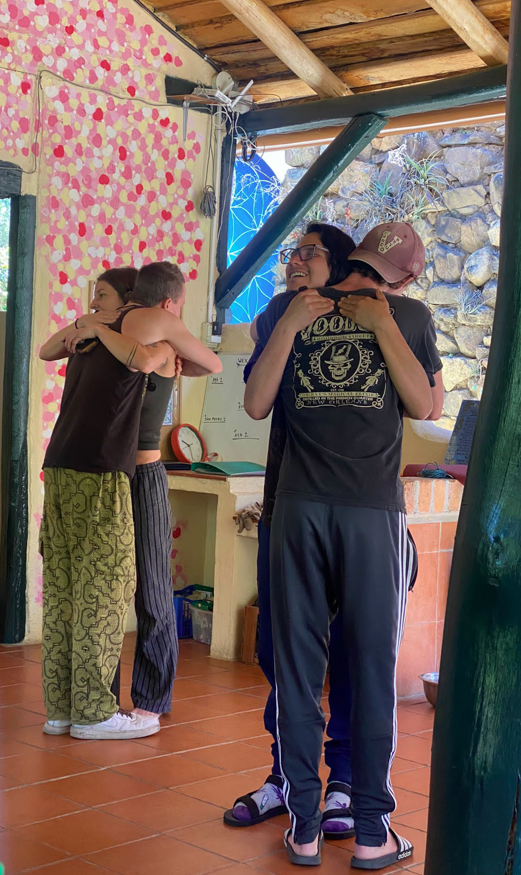
How does one put words to the experience of grief when one seemingly loses the connection to the heart facilitated by a community of beings who express unconditional love and acceptance so openly and so persistently that you feel connected by an invisible cord of light. "La Famlia De Sagrada". The Sacred Family, a community of spiritual seekers, brothers and sisters that are along side you for the journey, the good and the bad, the painful and the joyous. People who want to be in your life, and work hard to develop these relationships, who work hard to heal themselves so they can be a beacon of light in your life. This does not mean that you should give everything in order to be "apart of" a family. A family won't demand you sacrifice everything to prove your worthiness. A family will love you through and through, returning to love even when it's hard.
Leaving your family behind is a necessary part of the "hero's journey". We must learn how to love deeply, even while at a distance, to understand who we are outside of a family or community, to create healthy levels of dependence that leaves our family feeling nurtured and supported while not giving from an empty cup. We love because we want to, not because we have to. So farewell to my Sacred Family, for now. I feel like I will see many of you again, and not so far from now. The beauty of it all is that the love I am continuing to nurture, the sacred flame I continue to fan is something I can grow for myself and to bring that deeper, more developed, self-lead love into the communities that I feel called to.
Writing this blog has helped me accept all the pieces of my heart that it felt I had left behind in Ecuador. With each long, lasting hug with each "I love you", with each moment of singing together, praying together and healing together I didn't leave anything I wasn't wholeheartedly ready to give. What a joy it is to give our love to others who are so ready and willing to receive. And of course how that love will always return to us in some shape or form, whether it be another kindred spirit, another loving connection, a smile from a stranger or even the call of an eagle, the song of a hummingbird, or the warmth of Grandfather sun, reigniting the sacred flame within our hearts.
Aho Mitakuye Oyasin, we are all one.