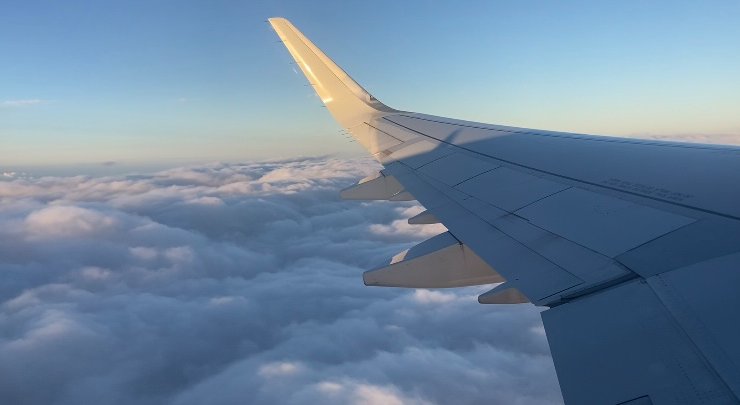
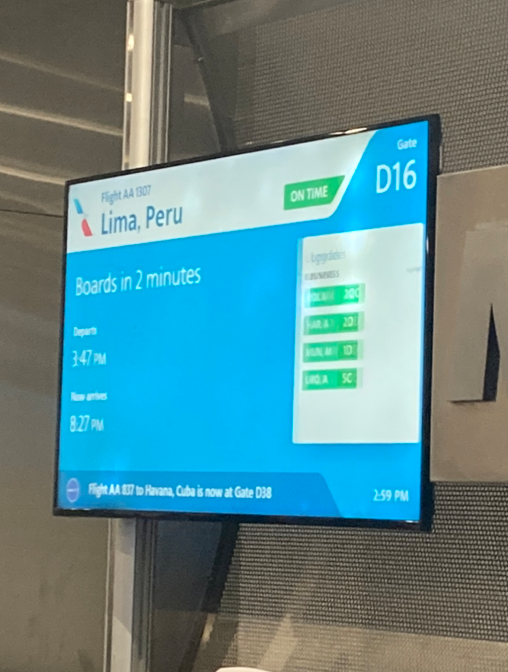
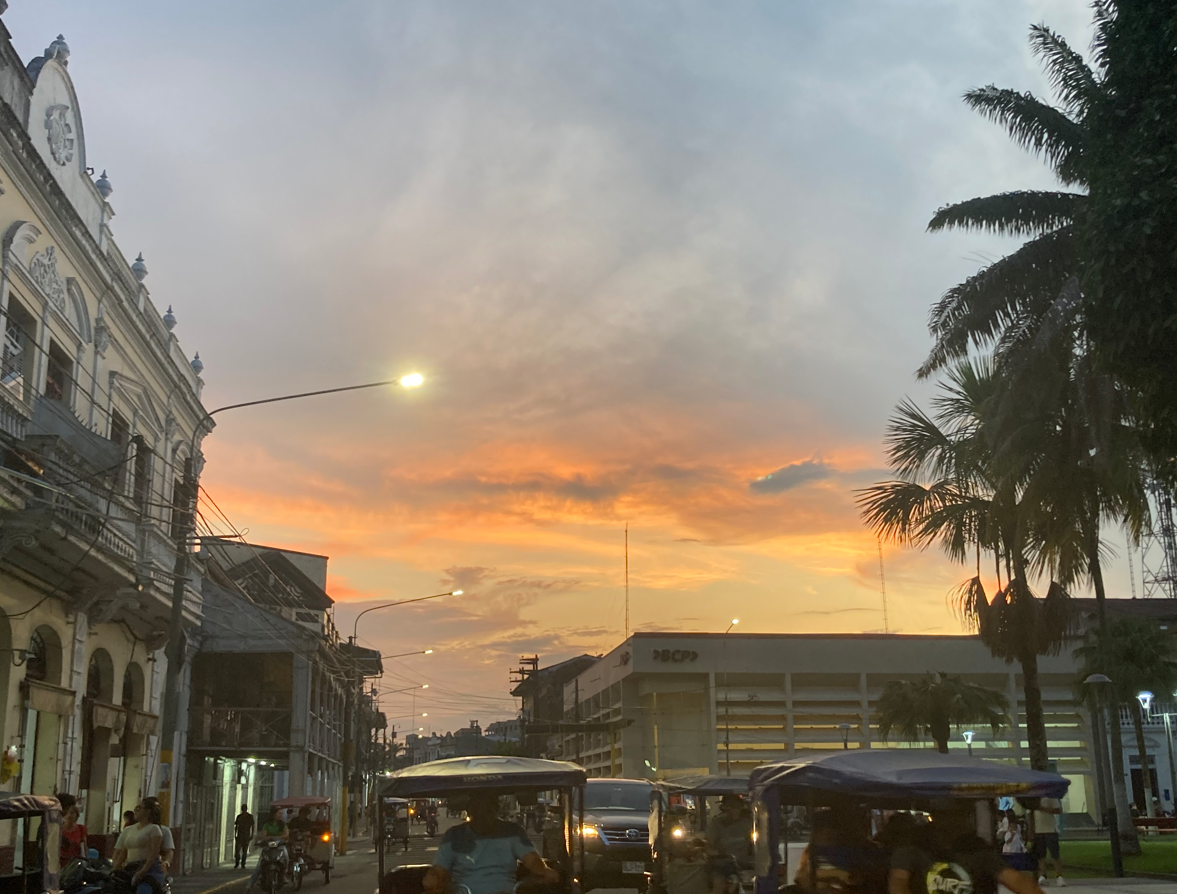
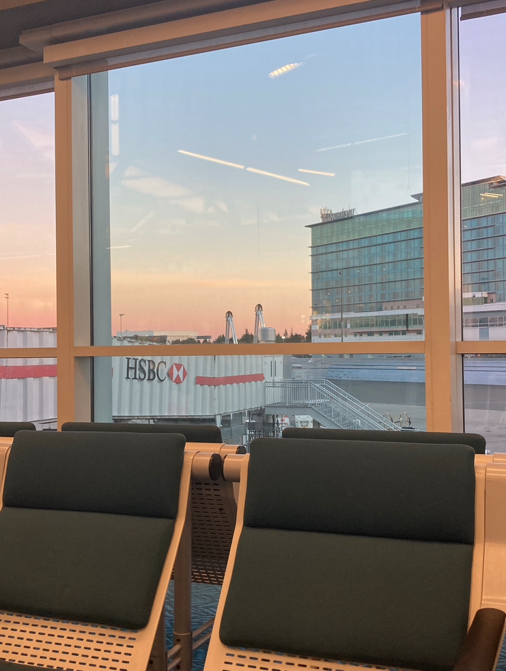
My brain was on autopilot as I filed through last minute preparations the day of my flight, October 7th, 2023. I think it took me about an hour to pack my medium-sized, moss-green, "Arc'Teryx" hiking backpack to the absolute brim, filling up a large grocery bag with anything I had left over. I was packing pretty light for such a long trip, but I didn't see the value in bringing extra baggage seeing as though I was spending a great deal of time at retreat spaces. So I hugged my mom goodbye and exchanged some Canadian dollars for half USD and half Peruvian Soles. I planned to go to the famous "Mercado de Belan" in Peru, the massive open market where you could find pretty much anything from the jungle, so I wanted to make sure I had some local cash. Soon after, I found my gate and that's where I took this first photo. This sunset at YVR signified the moment when it all started to sink in... I'm leaving North America for the first time to travel solo and drink ayahuasca, also for the first time. It's wild how little of this stuff really surfaces and crosses my mind consciously with all the preparations I had to make just to get here, to this chair, watching the sun begin to set and listening to medicine music to pass the time. Adios Canada, I'll see you in about 5 months.
A newcomer to the travelling scene, I was quite giddy just to be on an airplane. I was so excited to meet fellow travellers that I couldn't wait until I'd left YVR and eagerly sparked up a conversation with a young man close to my age who had the seat next to mine. I believe his name was Nick, he was from New Zealand and had just recently gotten married, this was his celebration trip to New York where he was going to see a theatrical rendition of "Harry Potter". It was just so interesting to run into someone who lived so far away, and was going somewhere I'd never been. Little did I know, that this was going to be an incredibly common theme throughout my continued travels. Until this point, I hadn't met many overly nomadic people in my life. I didn't realize how naturally nomadic we are as a species until I left Canada and saw travellers, literally everywhere.
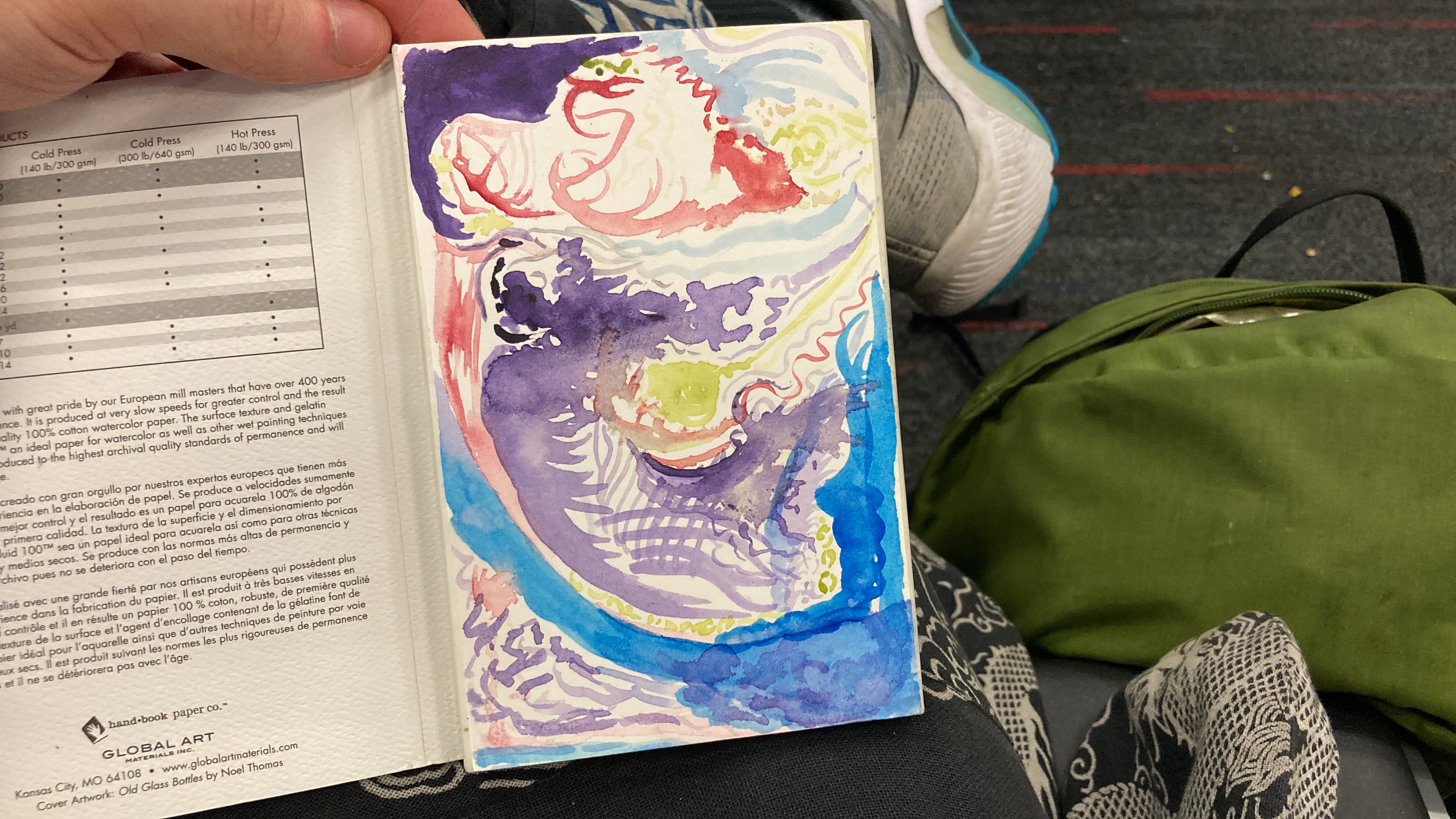
After a surprisingly short 35-minute flight, I arrived in Seattle, where I took an overnight flight to Miami. This too was a pretty interesting flight, I met a 30-something-year-old Swedish man who was flying to Miami where he worked as a professional childcare worker. His previous line of work was working with child protection services, and he travelled a lot for his current job caring for special needs children of selected families through some sort of program. We spent some time chatting about our favourite painters like Picasso or Van Gogh chatting for about 2 or 3 hours. Later on, I busted out my watercolour set and tried my hand at painting, it was around 1 am when I painted this "dragon" displayed in the photo to the right. I had a lot of fun listening to music and playing around with this newfound style of painting, letting the colours intuitively bleed onto the paper pad. Once we arrived in Miami he invited me to come have brunch and check out some of the local street art. However, the guy from New Zealand from the Seattle flight warned me that Miami had a lot of muggings happen and advised me not to leave the terminal so I decided to decline my new friend's offer. Losing all my cash at the start of my trip wasn't on the agenda, so I now had the misfortune of spending 8 hours in the Miami airport which was honestly complete hell at times. Thankfully, I found a quaint little bookstore where I skimmed a book about IFS, Marcus Aurelius, and some Carl Jung. It was a nice little place, all the employees spoke Spanish and they gave me some hot water so I could make myself some coca tea. After an 8-hour layover, 4 hours waiting on the plane and then another few-hour flight I had finally arrived in Lima, Peru. The flight itself was absolutely gorgeous, the flight departed around sunrise, and flew over the Caribbean ocean south of Miami. After about an hour we flew above the clouds into what looked like an archetypal "carpet of heaven" with clouds lining the space below the plane stretched out like fields of fluffy white and gold. It was honestly like something out of a movie. So many of the later events of my travels were in fact, like something out of a movie I began to lose count.


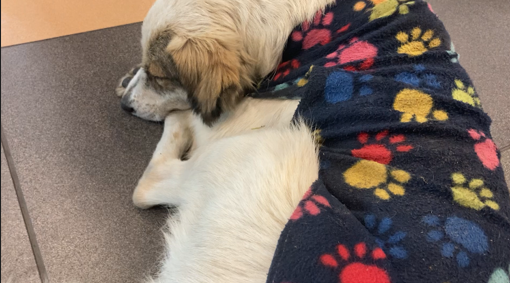
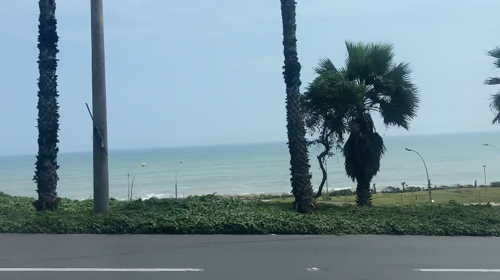
I arrived at the Lima airport around 9 or 10 pm Peruvian time on Saturday, October 7th, 2023. It was pretty noteworthy that there was this little dog in a sweater who I'm assuming lived at the airport. I was exhausted and quite nervous but little things like petting a random airport dog helped ground me a lot. It was also really comforting to talk with the Peruvian woman who worked for the airport taxi service, her English was really good and she was kind enough to give me a kind of history lesson about some of the sights in Lima. The buildings surrounding the airport were strikingly impoverished, many of which were skeletons of concrete homes that had no roofs or were half destroyed with indications that people lived within these abandoned-looking buildings. She told me how because of the climate, the sky was always grey with thick clouds which gave this part of Lima a kind of permanent "dullness" to the quality of natural light. She explained how there was a lot of wandering police in the area of Miraflores where I was headed for the night, which was good for me due to other parts of Lima being relatively unsafe for tourists. She often pointed to the greenery that wrapped along the highway explaining how it never rains in Lima and how any plants I see are required to be watered by city workers or they will die. In a normal context, I would find all of these unnecessary details about the city to be dry and somewhat mundane, but I was still so enchanted just being in South America that I hung on her every word. I pointed to and asked about a giant cross, that must have been the size of a skyscraper because I could make it out from a great distance away. She explained how this cross was related to a visiting pope and more interestingly (at least to me) it was also a symbol of "New Peru" erected after rebels had revolted some 50 years ago. Before the rebels had uprisen, the government had an oppressive level of control over its citizens, setting curfews and maintaining heavy surveillance along with various other atrocities I can't remember the specifics of. "We sure as shit aren't in Canada anymore", I thought to myself. And if it hadn't been clear up until that point, things got even weirder when I arrived at "The Selina" hostel in Miraflores. We pulled up to a small hipster-style restaurant and bar, where I checked in close to midnight. The entire district was partying, including the hostel/bar which was playing loud electronic music and everybody was partying in the room adjacent to the check-in desk. I was overwhelmingly exhausted from my travels and just wanted to sleep, which wasn't realistic with all the noise... and the unbearable heat. Even being 5 stories above the bar I soon realized that I wasn't getting any sleep and laughed at the absurdity of the evening, eating some cashew butter from a Tupperware I brought from Canada, unable to eat much anything else while on my "dieta" for my ayahuasca retreat which started in a couple of days. "So this is Peru. Interesting!", I thought to myself.


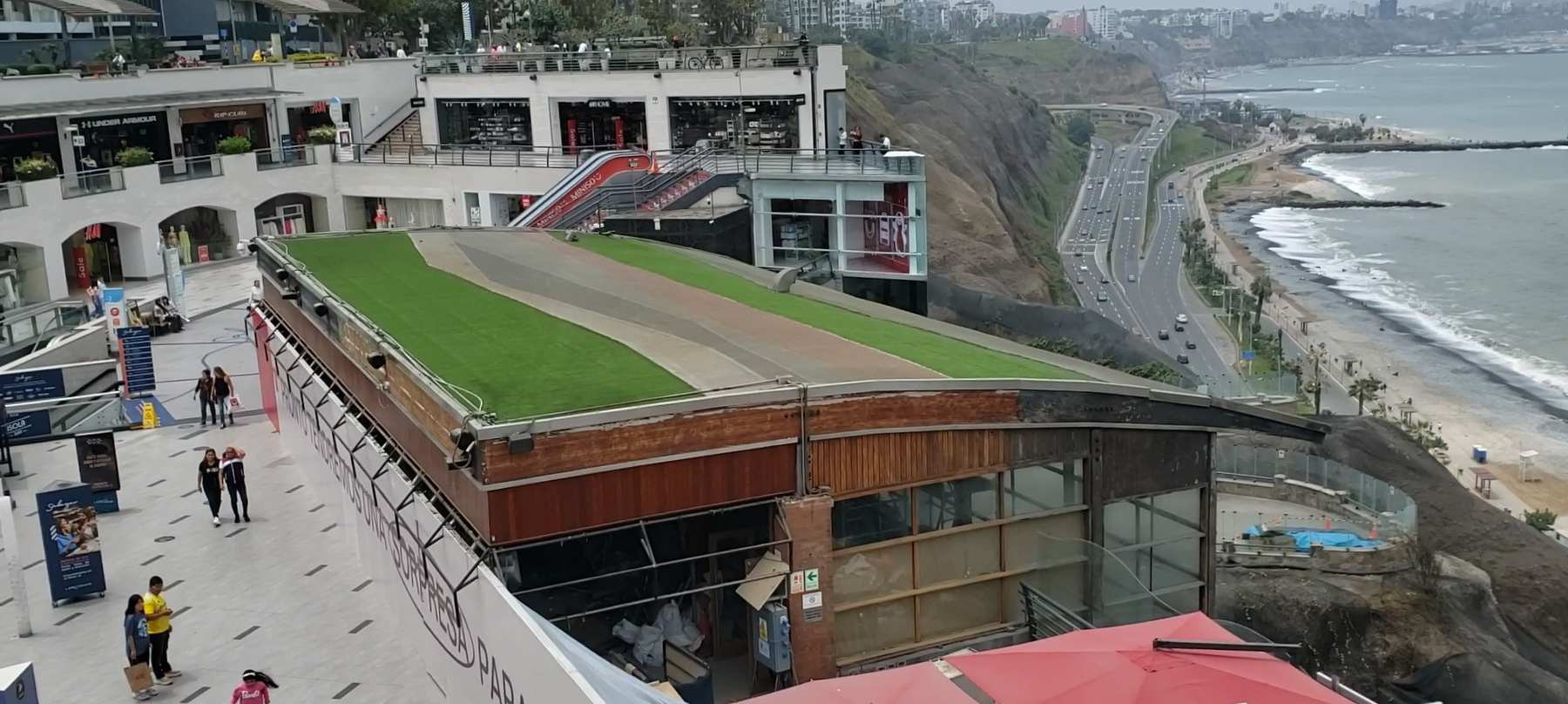
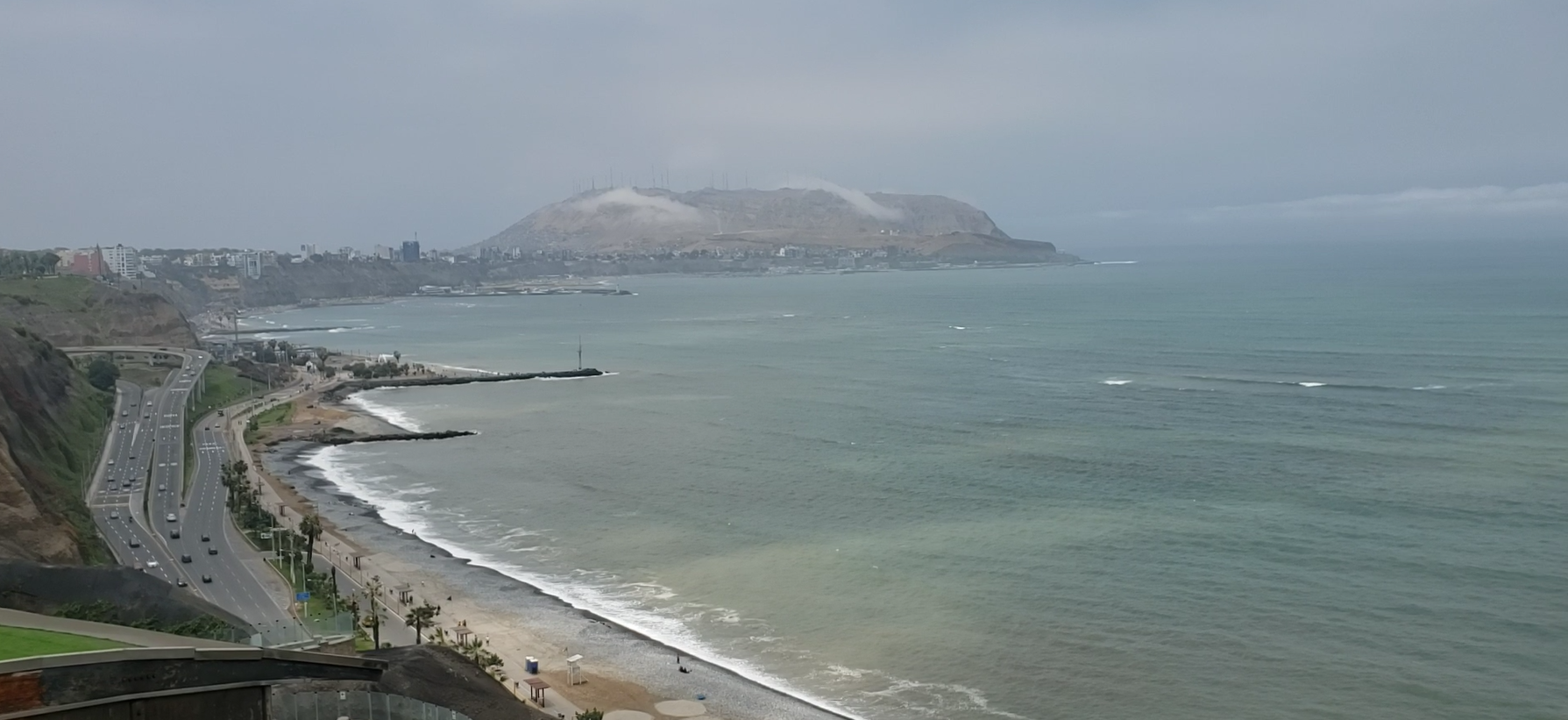
It's safe to say that I looked like a complete idiot in Lima, which was one of many instances where I tried to communicate in Spanish and failed dramatically. Thankfully there was the odd English-speaking person sprinkled throughout who aided me in my misfortune, but it was terrifying wandering the streets with no internet, no idea where I was and little to no ability to communicate. There were these outdoor malls that looked very different from any mall I'd seen in Canada. They were completely invisible from the street above, I had to ask locals where the mall was even though I was a minute's walk from the entrance. You would take a flight of stairs that appeared to be descending downward into the cliffs. This entire mall was tucked into the edge of what became a massive cliff which dropped a staggering distance below to eventually become the "playa" or beachhead meeting the Pacific Ocean.
After a bit of a panic and some aimless wandering around Miraflores I found my way back to the hostel and chatted with a couple from somewhere in Europe that was travelling together in search of remote and challenging Andean mountain hikes. They were very friendly and I could openly speak to them in English, which helped me feel more grounded. They gave me their Instagram (the_andescape) which I've followed for a while, they went on all sorts of wild adventures! Eventually, my airport pick-up showed up and took me to the Lima airport where I began to prepare for my flight to Iquitos but there was a problem... my flight had already taken off! Going from Canadian/American booking systems to a domestic flight made it unclear to my overwhelmed brain trying to book a last-minute flight in a flurry that I had booked a flight for 2 am the night of my arrival in Lima! So after panicking at the airport about potentially missing my first night of drinking ayahuasca I took a few hundred dollars loss and booked a new flight to Iquitos, which had my arrival time for around 9:30 pm. C'est la vie! Travelling creates a lot of opportunities for misfortune, confusion, or overall bad luck and let's be honest things could have been so much worse. A la ciudad de Iquitos (To the city of Iquitos)!


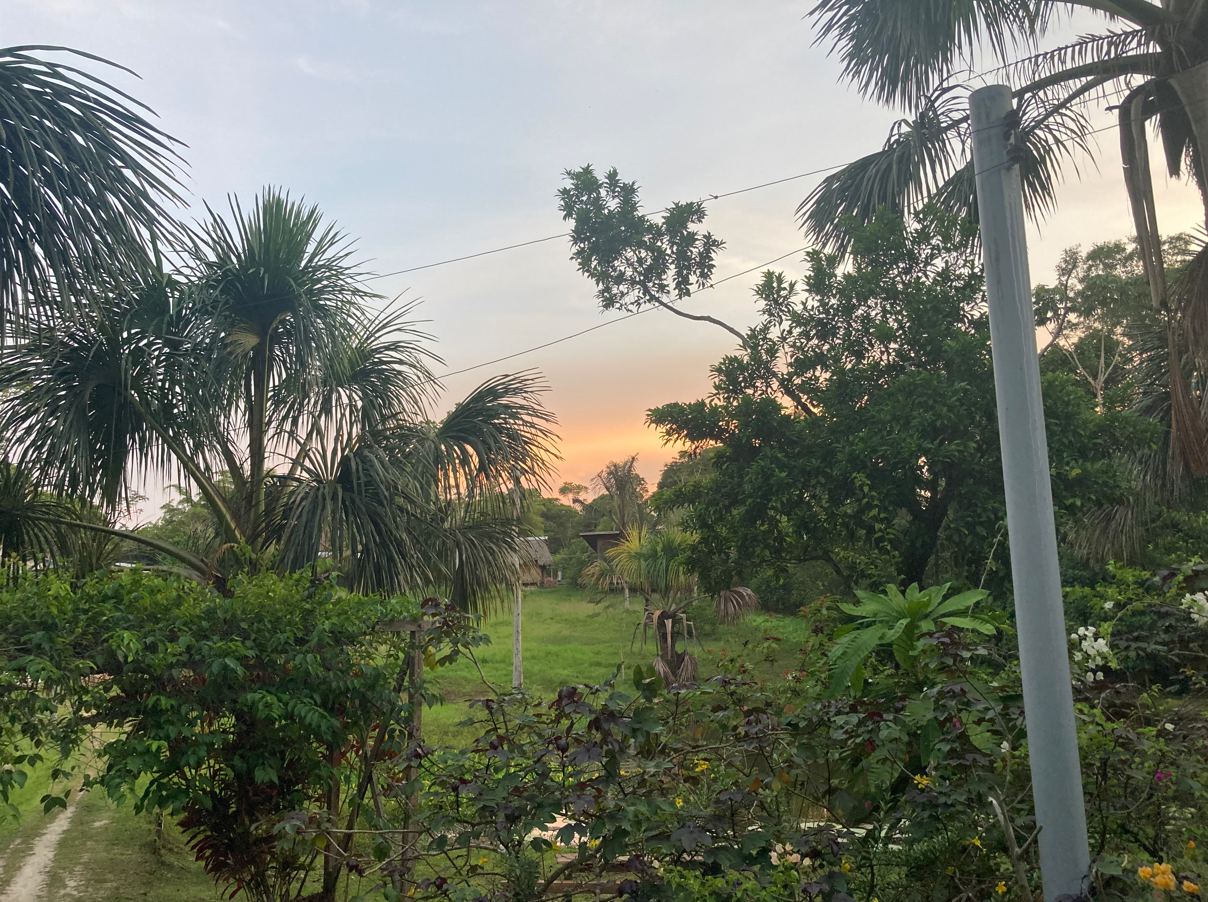
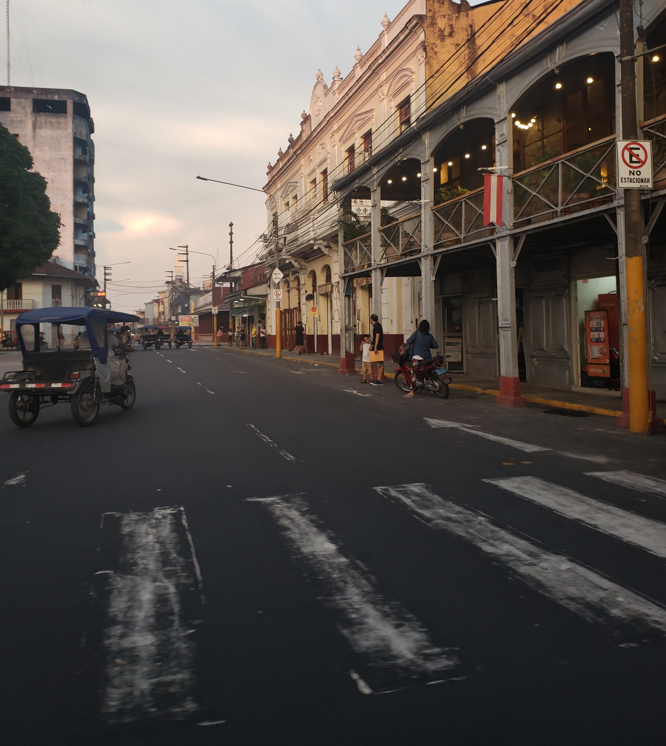
I arrived in Iquitos after sundown and had arranged for a driver from the retreat to meet me outside the airport. Similar to many other cities in this area, if you arrive at an airport your first interactions are likely with cab drivers who are trying to offer you a taxi. More experienced travelers know that at best you will be paying double to triple a normal rate, at worst you could end up kidnapped, robbed or extorted somehow. They were very friendly, calling me "amigo" and I was quite confused and unsure if any of these first encounters might have been my guy. Thankfully, after saying "Caya Shobo" the moto-taxi drivers knew exactly who I was looking for and pointed me in the right direction. It started to become clear to me that a good ayahuasca retreat has community ties, and is known and respected among the locals, this was one example of why. After I found my driver I climbed aboard the passenger seat which was fitted to accommodate multiple people and was excited for my first time riding a motorcycle. Every "tuk-tuk" as they are referred to is open air, there are sometimes wind guards but your ride feels similar way to a motorcycle driver's experience. It was really fun to fly through the night air, peering around at the jungle-worn buildings of "Loreto" and eventually the remote jungle-adjacent "Varillal", both tiny communities on the outskirts of Iquitos. Once we got closer to the compound the roads were getting sandy and uneven, the driver would often get stuck and had to push the tuk-tuk out while revving the engine. But in addition to the changing roads were the progressive shifts in the amount of jungle bushes, trees and especially at night, the sounds of the jungle. It was nothing short of a symphony, every bit as loud and majestic as I'd imagined it to be. Cicadas loudly sang alongside various other insects melodically whirring and buzzing. At night, it all reached a kind of crescendo with dozens of birds whistling and chirping, several species of frogs happily croaking, the occasional rooster or monkey, often met with dogs barking in the distance. I fell in love with the jungle sounds instantly and felt a deep sense of calmness upon arriving at the retreat's community kitchen space, a spacious cabin that instead of walls had mosquito netting with the occasional holes or broken netting.


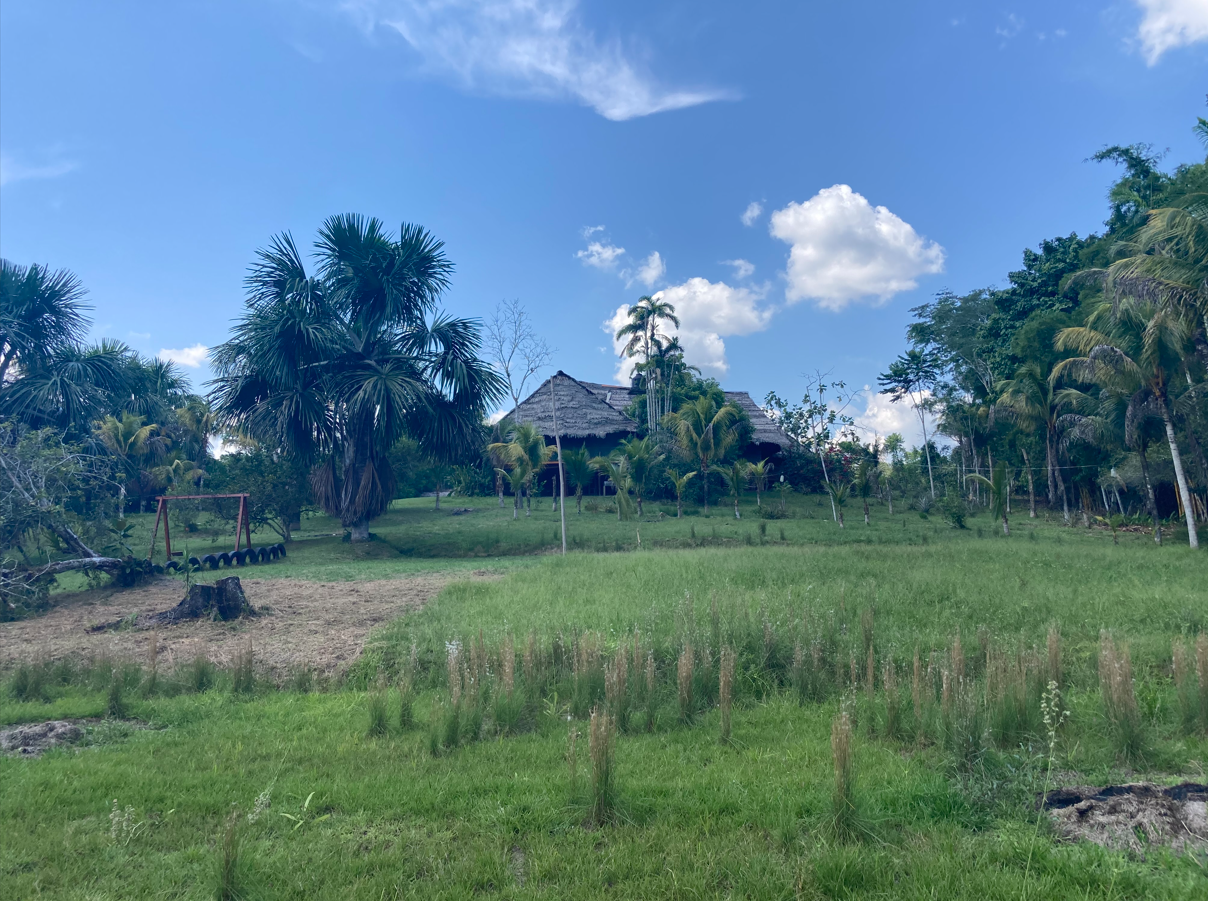
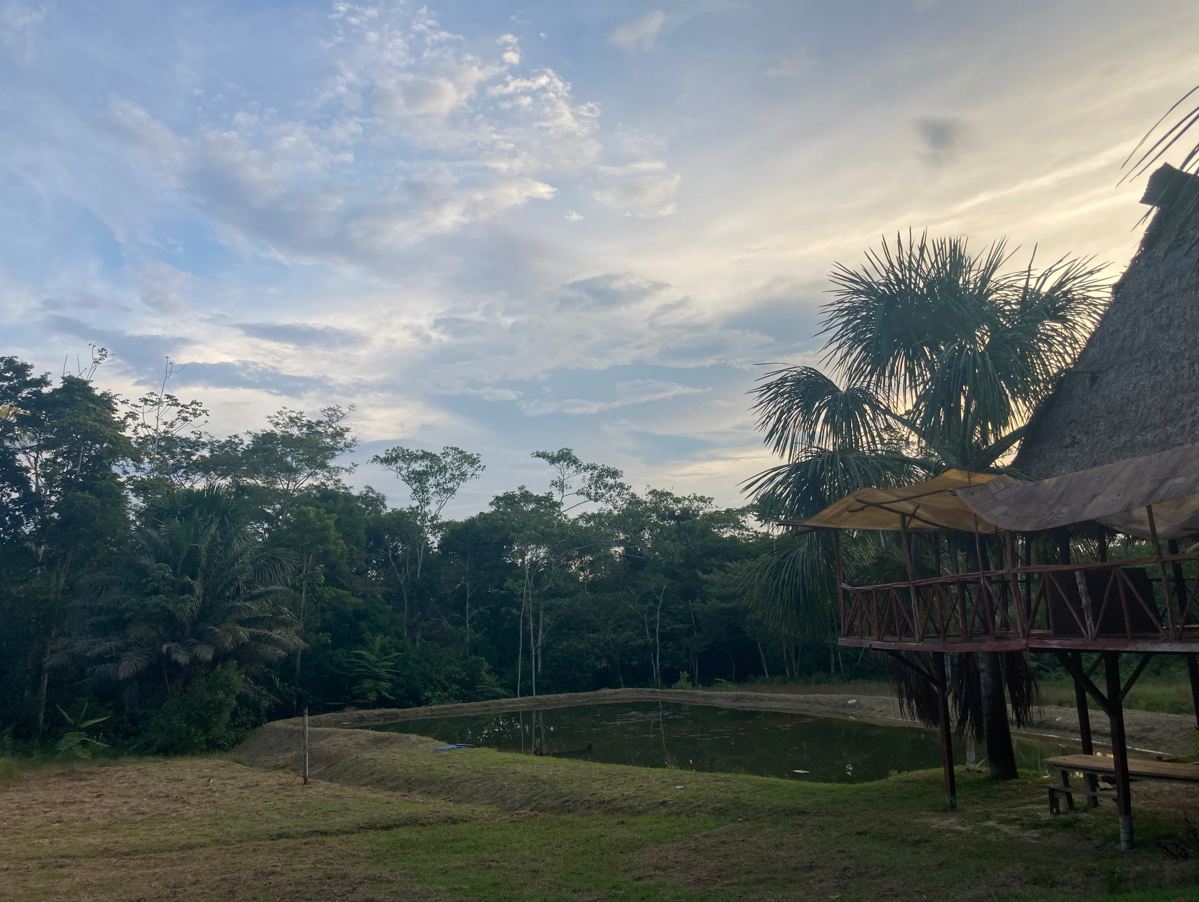
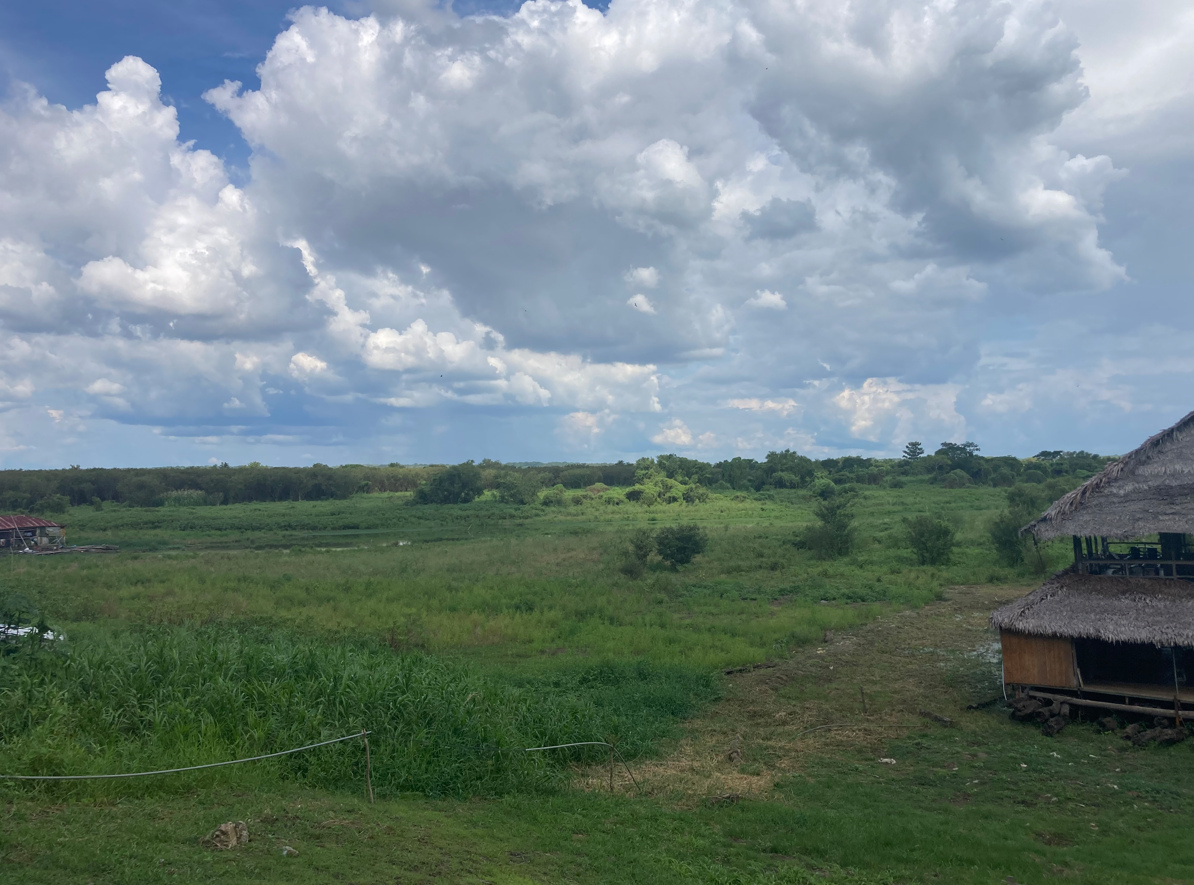
The moment I had first entered Caya Shobo I knew I was in the right place. However, there were certain features of this relatively remote jungle community that took time to adjust to. For example, the gates and adjacent jungle are patrolled by guards armed with hunting rifles to help ward off unruly wild animals, or how there was a resident caiman who frequented the pond next to the dining area and occasionally wandered into visible range. The whole compound was a kind of "mini jungle" where various jungle medicines, including the ayahuasca vine, were grown and harvested. The wide array of wild jungle birds was an absolute wonder to behold. In particular, I was enamoured with this one species of bird whose feathers were yellow and black and its bird call sounded almost like an "alien language". It clicked with a unique, robotic tone that was so mystical it's become stamped into my memory. My local friend Carlos later told me this bird is called "Paucar" which is Spanish slang for the "Yellow-Rumped Cacique", a bird which imitates other birds.
Caya Shobo was my sole destination for drinking ayahuasca because of the quality of the care offered, the traditional "dieta" protocol, and perhaps most importantly the traditional healing methods applied by reputable master Shipibo shamans. The feelings I felt inside the ceremonial "maloka" as Arturo and Walter sang ikaros in concert will not soon be forgotten. These types of experiences are imprinted into one's soul, to be brought forward through many lifetimes, with the relationship of grandmother ayahuasca being the gateway to entering into this sacred dimension of plant spirits.


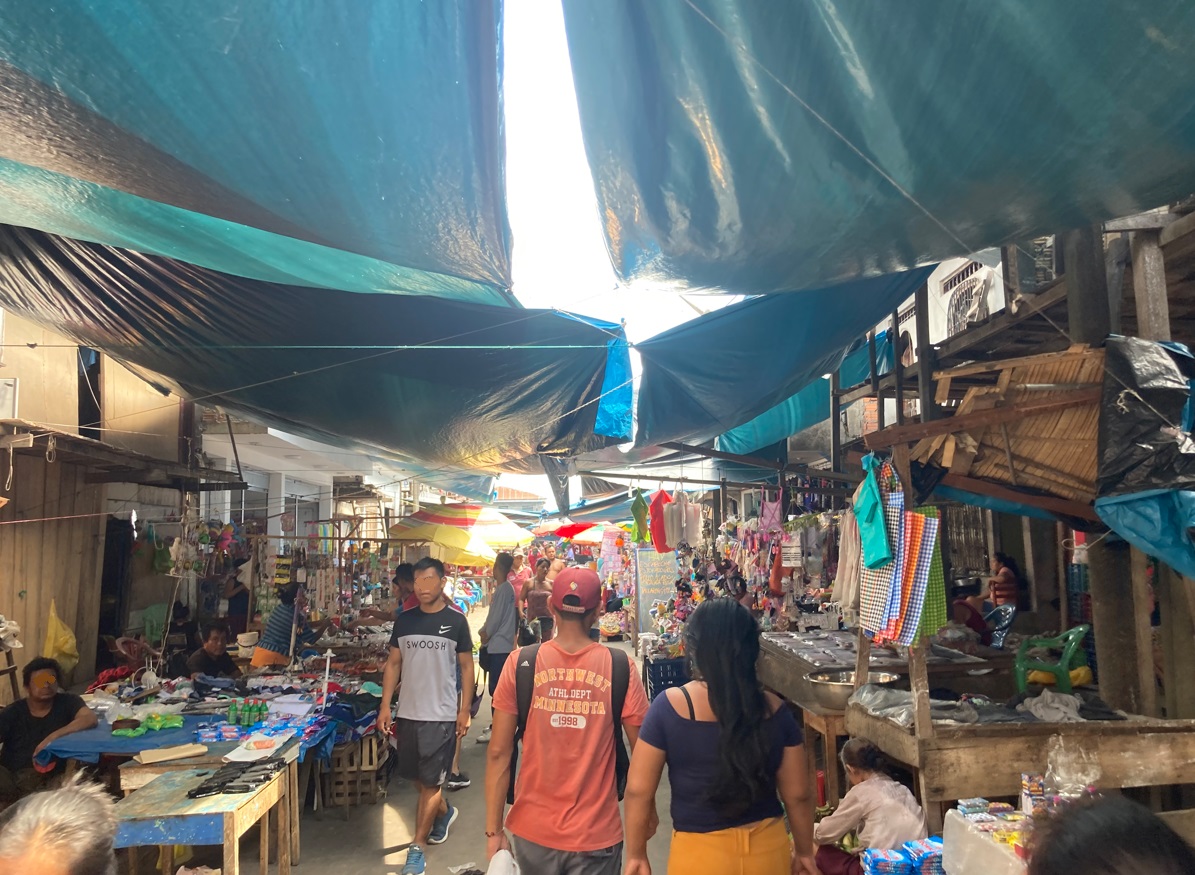
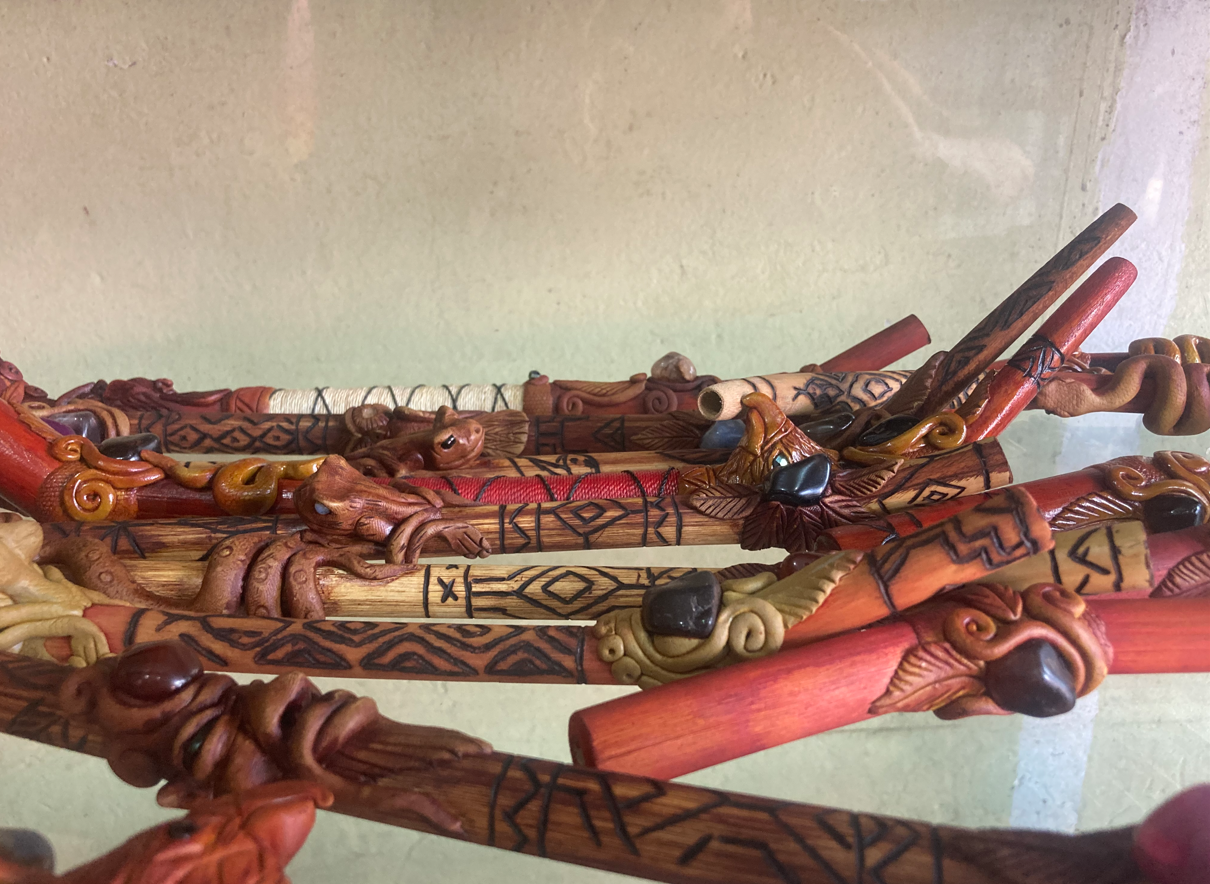
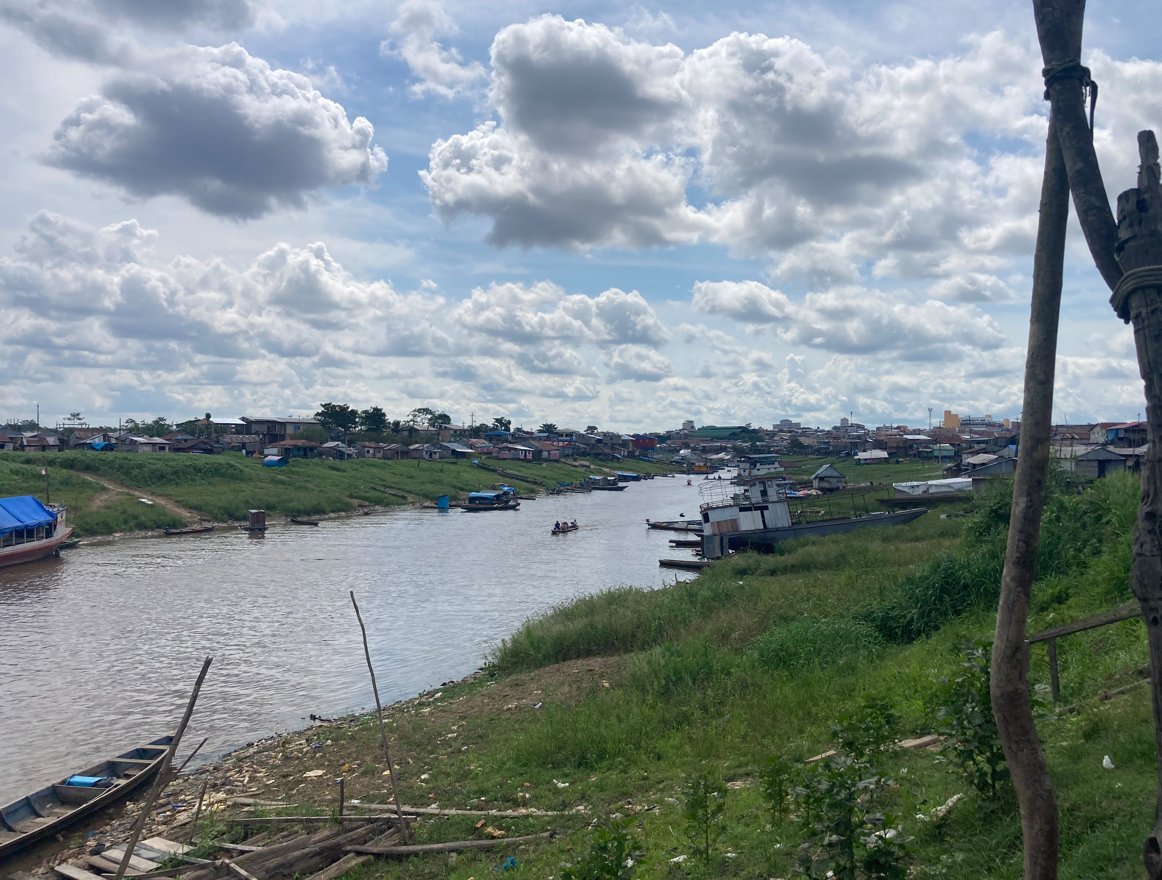
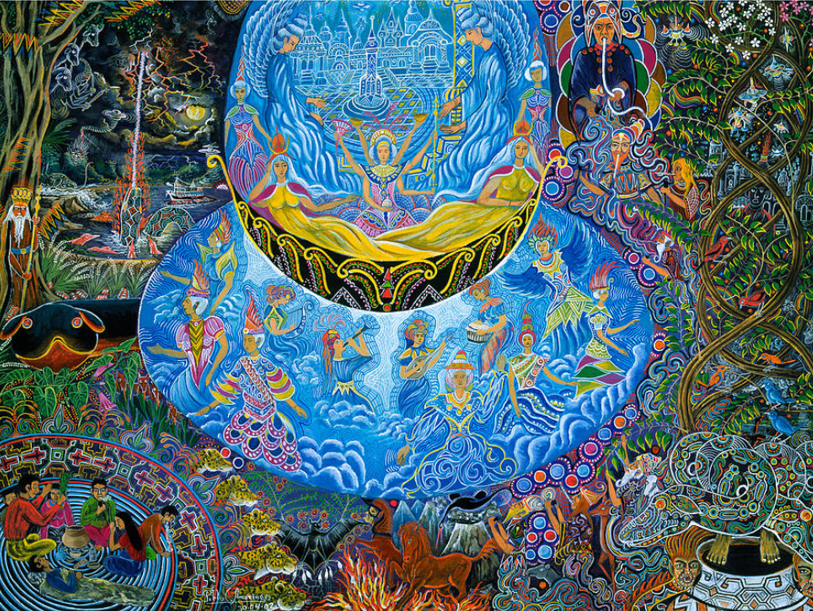
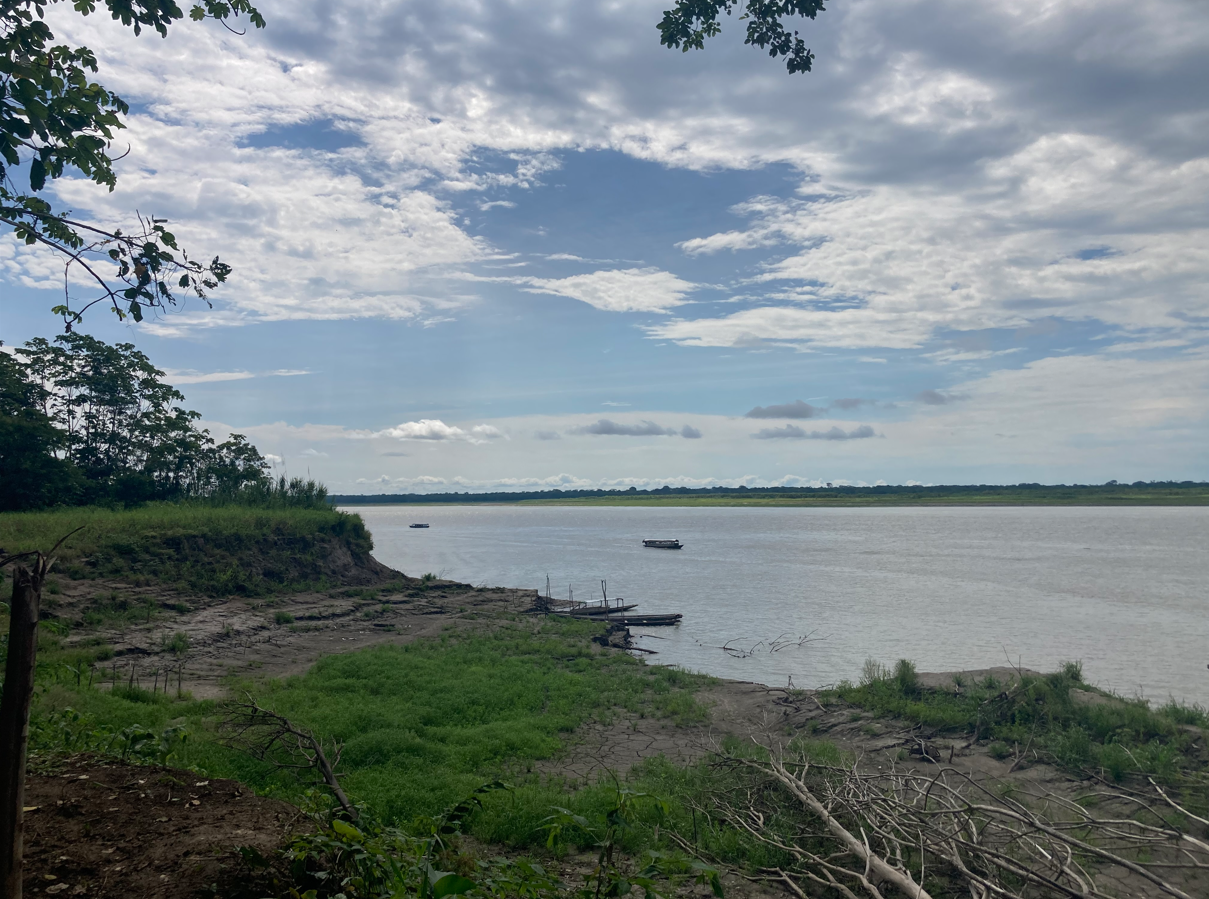
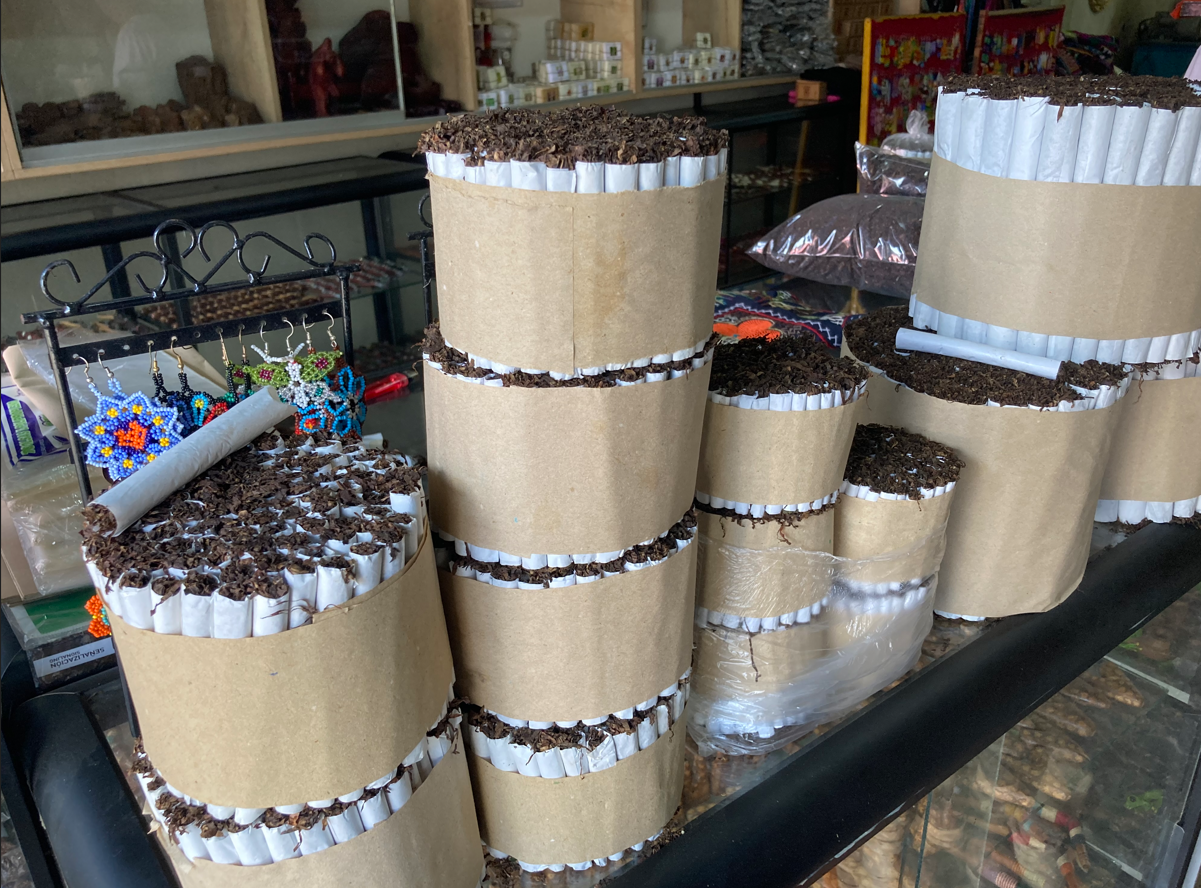
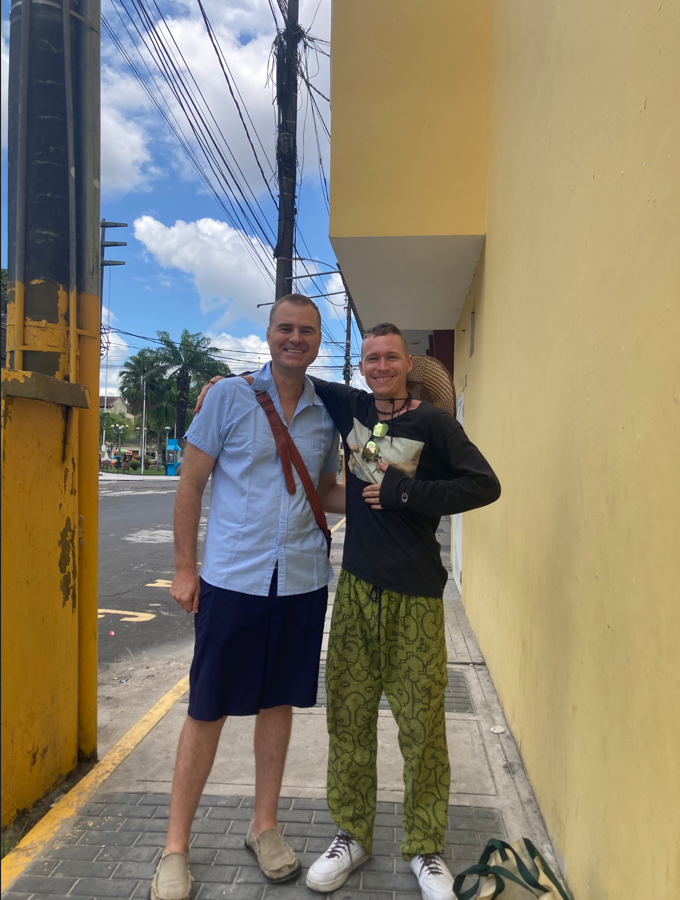
Since I had arrived to the retreat a day early, I had a chance to sneak into town before our first night of drinking ayahuasca where the following day we would start our "plant dieta" (I will go into more detail on dieta later). We were advised to leave the compound as little as possible, if at all, to reduce exposure to the outside world's energy, or even the inhalation of gasoline was harmful to the plant dieta process. I had planned to visit the famous "Mercado de Belen" to acquire "Mapacho" (very strong Peruvian tobacco) and a few other shamanic healing tools so I paid for a tuk-tuk and made my way into town around 7 am. Belen Market spans about a 5-block radius around the southeast corner of Iquitos, gradually transitioning into a small community alongside docks that wraps along a small river that feeds into the mighty Amazon River. My first time at Belen was quite overwhelming, but over time I grew to enjoy the hustle and bustle of this massive "wet market". During the rainy season, a large portion of the market is submerged underwater and the only way to navigate is by boat, however, I arrived during the dry season and managed fine on foot. As a Canadian who spoke little Spanish, it was inevitable I would be taken advantage of to some degree but thankfully I had the good fortune of being introduced to a local tour guide who became a good friend, Carlos (In an orange shirt in the photo to the right). This man, a father of three, a husband, a craftsman and artist, as well as a kind of tour guide to some, has a heart of gold. He has lived in Iquitos his whole life, spoke a little English, and knew almost every single person who worked at the market. I'm blessed to call him a friend and returned to Belen about 6 more times to search for "Sahumeria" (Shipibo floral baths), avocados, and tobacco snuff or other times to simply spend time with Carlos. Over my nearly month and a half in Iquitos, he eventually introduced me to his humble homestead, a part of a small riverside village within walking distance of the market. To the right are "Tepis" which are a small hollow wooden tube used to administer tobacco snuff.


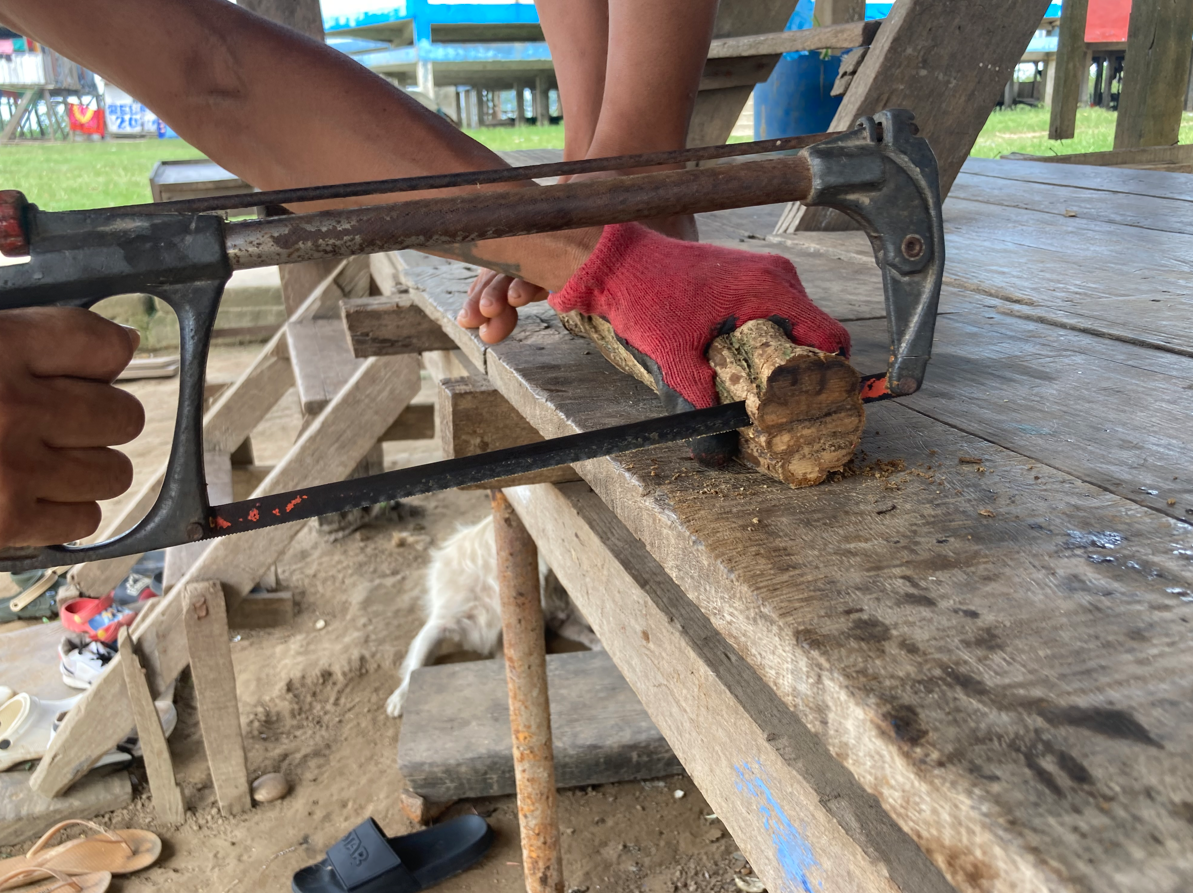
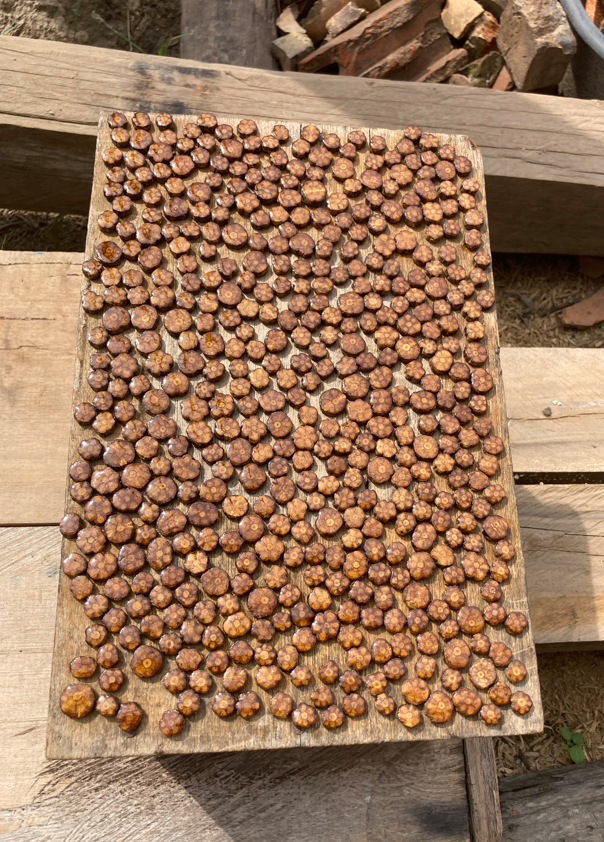
My very first interaction at Belen was with an old man who only spoke Spanish and sold me two seed rattles, one with a "picaflor" (a jungle bird), and another with a turtle. He was friendly but made me somewhat uncomfortable with how enthusiastically he was pushing his merchandise. He would do a silly impression of a shaman showing me how a curandero (healer) would shake and sing with the rattle which admittedly I found a bit condescending. I told him I was from "Caya Shobo", an ayahuasca retreat and he was kind enough to introduce me to Carlos. The first time I met Carlos I could tell he was different from the other vendors. Carlos makes a living by selling crafted jewelry and "ayahuasca hearts" which are small slivers of the "Caapi Vine" one of the ingredients of the ayahuasca brew. Later on, when I visited his home he showed me how he makes them, cutting the vine with a hacksaw and then coating them in a kind of resin. He is a short man, with a silver tooth, a warm smile and a confidence to his strut that was disarming in a way. He held a great air of respect and compassion to his tone, speaking English in a relatively fluent manner which helped me feel like I could open up to him more. I wouldn't describe our friendship as an instantaneous foundation of trust but over that month, returning to see Carlos continually, I felt rapport was built. He didn't ask for any support or exchange directly but instead offered help in any way he could with no clear expectation of what he might receive, if anything, in return. After meeting his wife and three young children, his pets, a little white dog and small yellow bird, I felt deeply called to support him in any way I could. Before leaving town I offered him a bit of money for groceries and left him some food my last day in the city. If you're ever at Belen market in Iquitos, and find yourself in "Medicine Alley", ask for "Carlos" and you will be very grateful you did! Muchas gracias por mi hermano Carlos (Thank you very much my brother Carlos)!


Jungle medicines such as ayahuasca or "kambo" will test your relationship to fear. I remember doing the "frog medicine" kambo in Canada a handful of times before I'd left for the jungle and it's very humbling. The frog venom strips you down to an almost child-like helplessness. At higher doses, you feel a mild form of paralysis, followed by waves of exhaustion and nausea which, now that I can compare the two, felt similar to ayahuasca. However, my mind was reacting much more dramatically. Our mind is quite dramatic when it reaches its breaking point, sending in its "big guns" in a kind of last-ditch effort at maintaining psychological dominance. This kind of fragile mental state, especially when influenced by a plant dieta, made my fears surface gradually as a kind of slow burn that ultimately left me in a deeply overwhelmed, borderline psychotic state. As horrible as this sounds, this was an incredibly beneficial experience of forcing anything that I wasn't facing directly to my conscious awareness and allowing me to face it head-on. I don't think I could have done this any other way, for years I was avoiding these feelings and some of the fears that arose I hadn't even consciously reflected on until that night. "The mind went down kicking and screaming" is how I described it, which made me experience many different versions of a "fight-or-flight" reaction sometimes continually in waves throughout the night. But on the other side of the darkness were tremendous releases of grief, sadness, opening to love, and joy, along with a range of spiritual events my mind had a hard time grasping as a part of my current reality. What made it all possible was the required discipline and presence that the retreat had sparked within me, the support of very powerful "ikaros" (shamanic Amazonian songs) and occasionally smoking "mapacho" which was a ceremonial aid recommended by the Shipibo to help with clarity of visions and focus throughout. Gracias Abuelita, gracias por la luz (Thank you Grandmother, thank you for the light)!
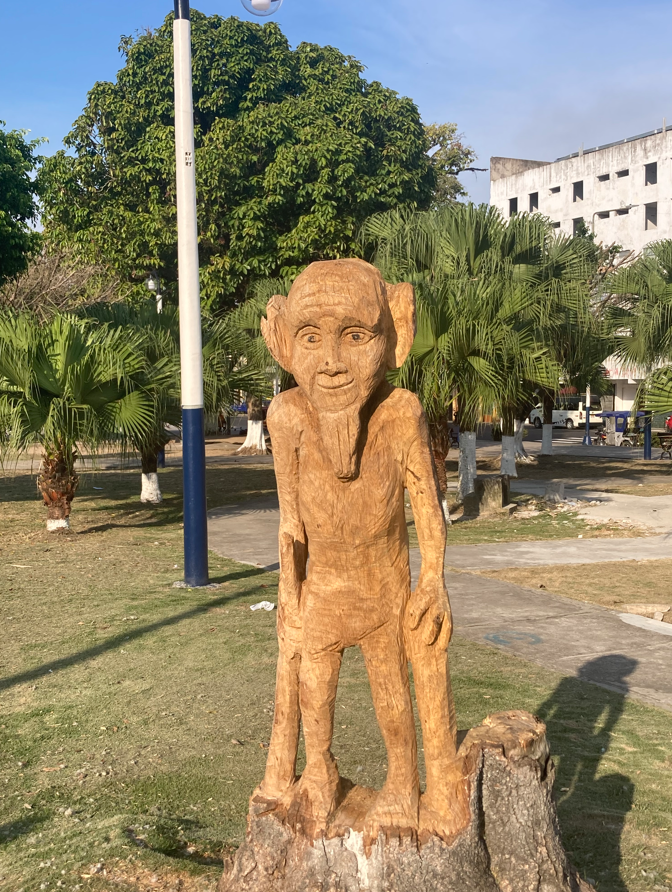
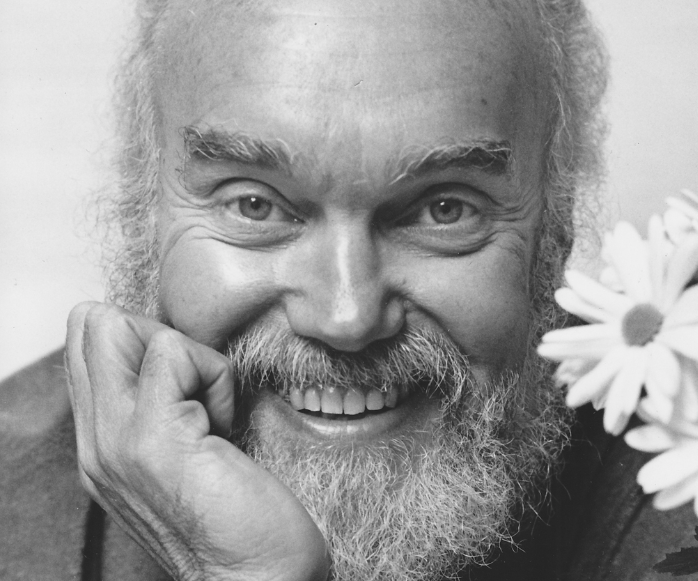
I leave you with a couple quotes by Maestro Miguel, our esteemed shamanic facilitator and owner of Caya Shobo, "Do not believe all of your visions", and "Where is the light? On the other side of yourself."


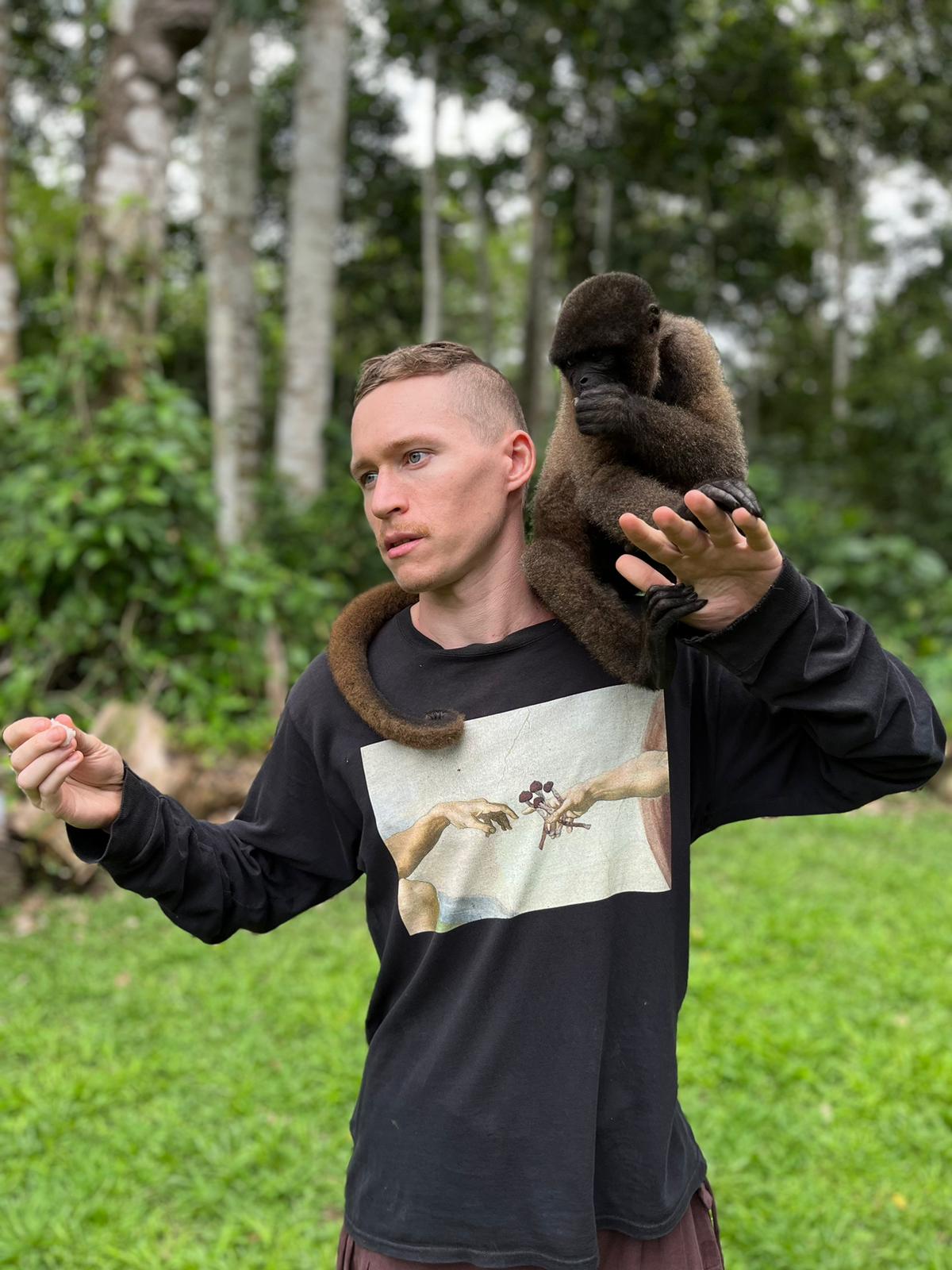
On the Saturday of our first week of dieta it was suggested by a fellow retreat participant that we should all pool together our resources and visit "Monkey Island", a nearby wildlife rescue operation that saved monkeys from the illegal monkey trade where they are trafficked and sold as pets. After a lengthy rehabilitation process, the monkeys are released into the wild to live happily and freely in the Peruvian jungle. I was quite interested in the idea but also felt conflicted to leave the retreat due to them recommending we stay on the compound to work with our dieta and meditate as often as possible. But I ended up succumbing to the social pressure and quite enjoyed the experience which for many I could tell was a much-needed relief from the first 4 ayahuasca ceremonies. For the majority of participants, this first week of ceremonies caused immense physical distress. Getting to the island was quite an adventure, we paid to rent out a motor boat and crossed the Amazon river travelling north to a remote jungle landscape where after a small hike we were surrounded by friendly monkeys of all kinds! On my way to Monkey Island, I was approached by a sombrero merchant who sold me a thatched sunhat for 20 soles (6$ CAD)! On Monkey Island I met Karena an Australian woman who was volunteering as part of a work exchange, living there for a couple of weeks After I completed the ayahuasca retreat Karena and I spent a week together in Iquitos where we had the pleasure of going on trips to Belen together and over that week we'd spend pretty much the entire week at each other's side.
For those who don't know, "dieta" is the Spanish word for "diet", but refers to an experience that is far more specific than strictly abstaining from a range of foods. Where the dieta does require cutting out a vast majority of "flavour enhancers" it also requires us to clear the mind of anything that alters our energetic state such as aggressive or sexual thoughts, and even requires a person to refrain from physical contact entirely. So technically, leaving the retreat to hang out with dozens of monkeys wasn't breaking the dieta, but having any kind of sexual experience (including thoughts if you can believe it) is considered disrespectful to the plant spirits and will lead to some kind of reaction when drinking ayahuasca. Take into consideration, our version of the Shipibo dieta was far less extreme than the traditional methods where the process was a lot more dangerous and strict. I go into more detail about the Shipibo traditions on the next page. Considering we are all on different stages of the healing path I believe many of us are unwilling to endure these types of conditions. So I recognize the value of giving oneself grace if we break self-imposed agreements. Having the capacity to forgive ourselves, have acceptance for the needs we desire to have met (visiting monkeys for stress relief for example) and allow ourselves to learn what we can from the experience.


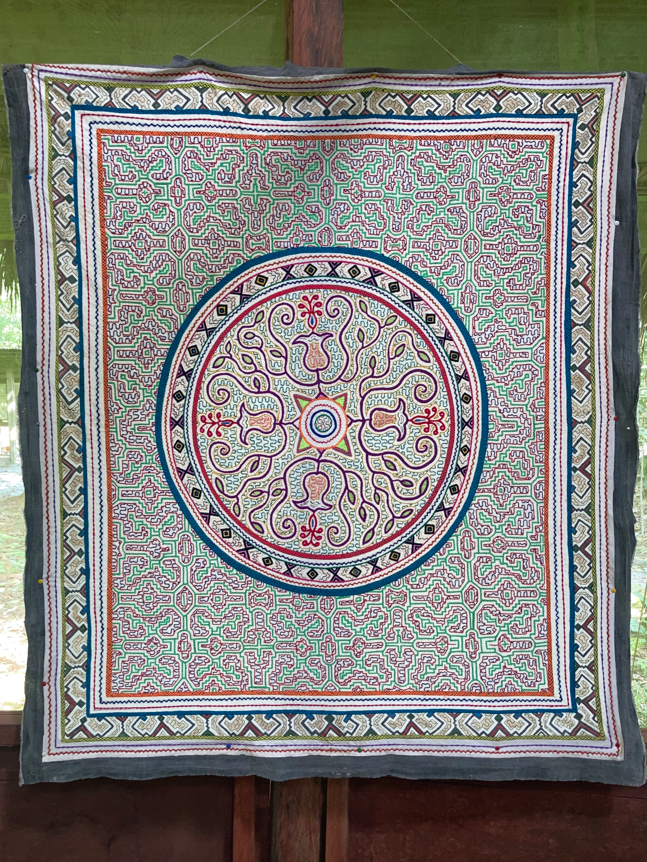
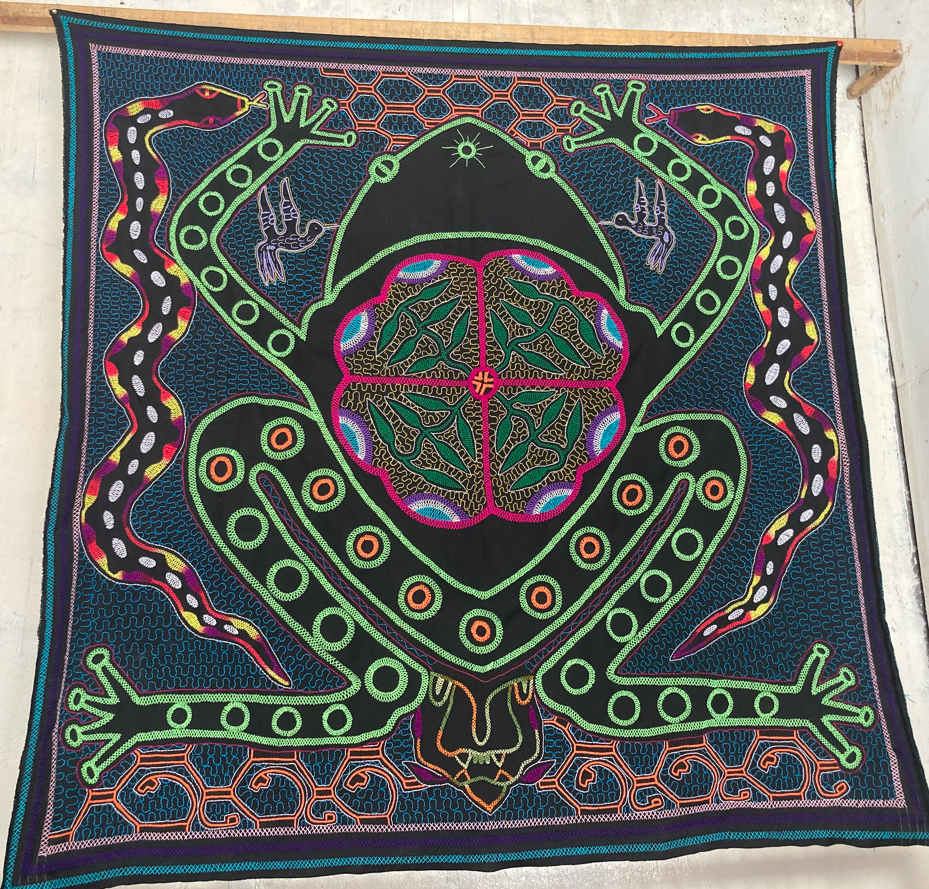
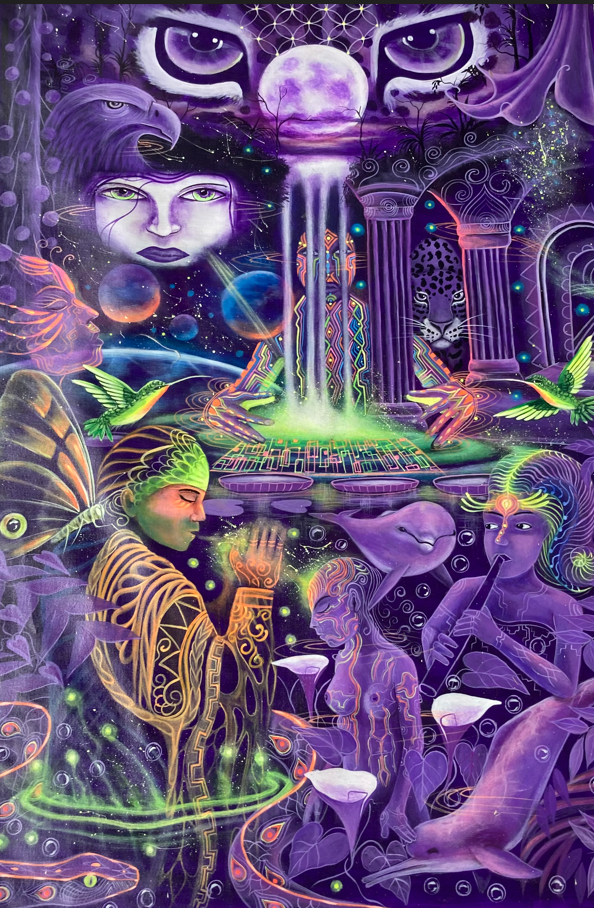
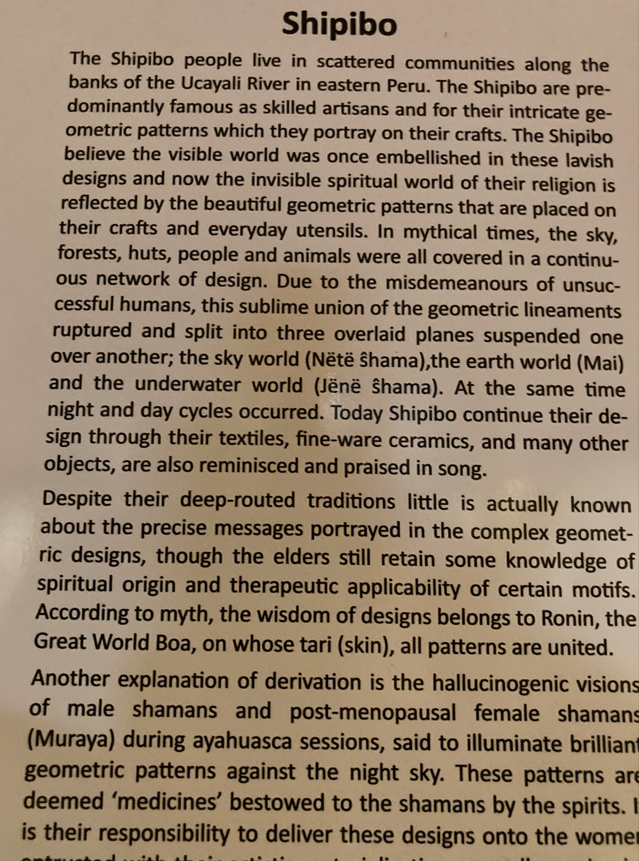
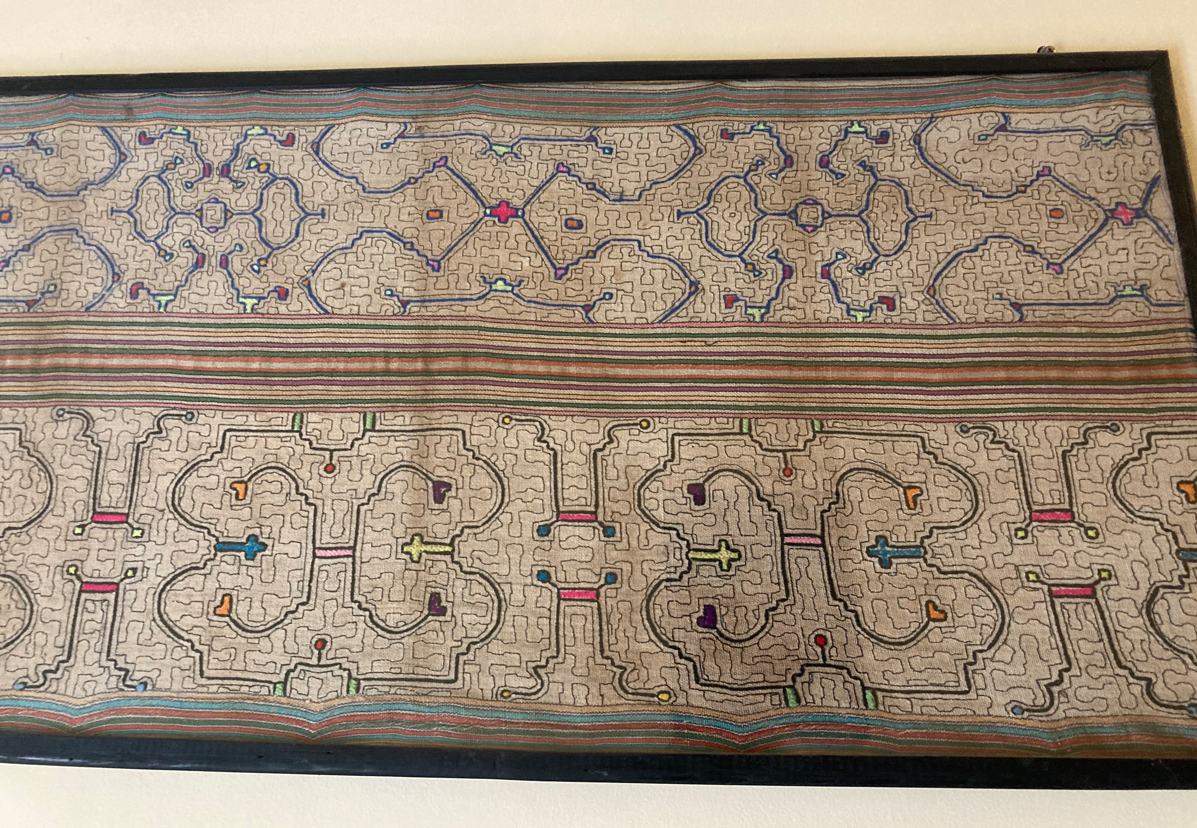
Near the eastern edge of Iquitos, in a district known as "Malecón Iquitos", there is a museum called " Museo de Culturas Indigenas Amazonicas" ie. the Indigenous Culture Museum, a beautiful exhibit that displays a range of rare artifacts and even houses a painting from the famous shaman painter Pablo Amaringo. Karena and I were eager to check out the displays of various traditional regalia, artworks and tools that were on display. The exert on the right is from the exhibit for the "Shipibo-Conibo", and I felt compelled to share its invocative message. The cut-off portion describes how the women of the Shipibo culture have the social responsibility to portray these patterns (for various reasons) through clothing, tapestries, pottery and various other hand-sewn artwork. The designs of the Shipibo are known worldwide and are a proud and honourable expression that shows the pride of these traditions which were resistant to colonization. To this day, many of the ancient traditions of the Shipibo remain intact and are practiced by skilled shamans and artists who often live adjacent to, or fully immersed within, the Amazon jungle. A traditional Shipibo run ayahuasca ceremony can be characterized by a few unique practices such as: the "plant dieta", involving the routine ingestion of non-psychoactive plant medicine, the use of "ikaros" in the ceremony, and the use of "Mapacho", strong Peruvian tobacco which is smoked and blown over the body of participants. According to these traditions cleaning of the spirit body is practiced by blowing Mapacho smoke into and around the "crown chakra" or the crown of the head. From having partaken in these traditional ceremonies I feel a profound love and deep appreciation for the priviledge of having access to these methods of healing the body and the spirit. In memory of my time at Caya Shobo I proudly hang two Shipibo tapestries in my bedroom, one dedicated to my plant dieta "boahuasca" and the other which depicts a figure in a meditative posture, a homage to the pure, meditative concentration required to receive the teachings from the medicine.


After finishing my ayahuasca retreat at Caya Shobo, I had arranged to stay nearby at an "Air Bnb" neighbouring the compound called "Villa Chachyta", later deciding to leave this place for a cozier and much cheaper apartment in the northern city district near "Jiron Trujillo". As wonderful as the villa was at first, I gradually began to feel deeply unsettled by the circumstances surrounding the person hired to look after the property. I was the only person staying here aside from the groundskeeper who was staying with her young son and daughter and she spoke very little English but I could use a translator to communicate when I needed to. I was trying my best to settle into this place after a very challenging last week at Caya Shobo, the medicine had tested my physical and psychological well-being leaving me questioning aspects of my sanity and feeling deeply exhausted. Over about a week I recognized I was in the middle of a conflict between the owners (who were currently in Mexico) and their employee who wasn't being paid. After speaking with the neighbour (A very friendly French Air Bnb host himself) I learned these kinds of conflicts happened a lot and I was simply at the wrong place at the wrong time, however, I empathized with the single mother who was struggling to feed her children and gave her some food. The nature of the conflict was stressful and progressively escalated, leaving me feeling emotionally depleted after about a week so I decided to cancel my remaining time and went to stay in an apartment in the city. My advice is that you shouldn't trust the reviews on Air Bnb (they can't be taken down and are often unrepresentative), and that in a small community it's important that you get to know the neighbours, and always have a few taxi drivers as friends because you might need an emergency exit strategy. It wasn't all bad though, I had Karena visit the cabin a few times, we went for a swim in a natural pool, made a lot of incredible food, painted sometimes, I would often hang in my hammock, smoked mapacho, and enjoy the sounds of the jungle which were identical to the retreat. So this summary more or less describes my first three weeks in Peru. A pretty eventful introduction to South America, and I wholeheartedly accept the good, the bad, and everything in between. It's all a part of the unfolding journey!


One of my most memorable experiences was sitting on the second floor of "Dawn of the Amazon" cafe overlooking the Amazon River surrounded by a magnificent jungle landscape, the sun reflecting off of the water, dozens of mighty jungle birds circling overhead, enjoying pumpkin soup and conversation with my friend Karena. She and I met up for lunch after I'd left Villa Chachyta, and she was departing Peru on her way to Bolivia. Here I met a local named Dylan, who moved to Iquitos from Argentina and worked at the cafe/restaurant as a bartender and server. He spoke fluent English and was great company while I waited for my Air Bnb host to provide me with the location of the apartment I would be staying at.
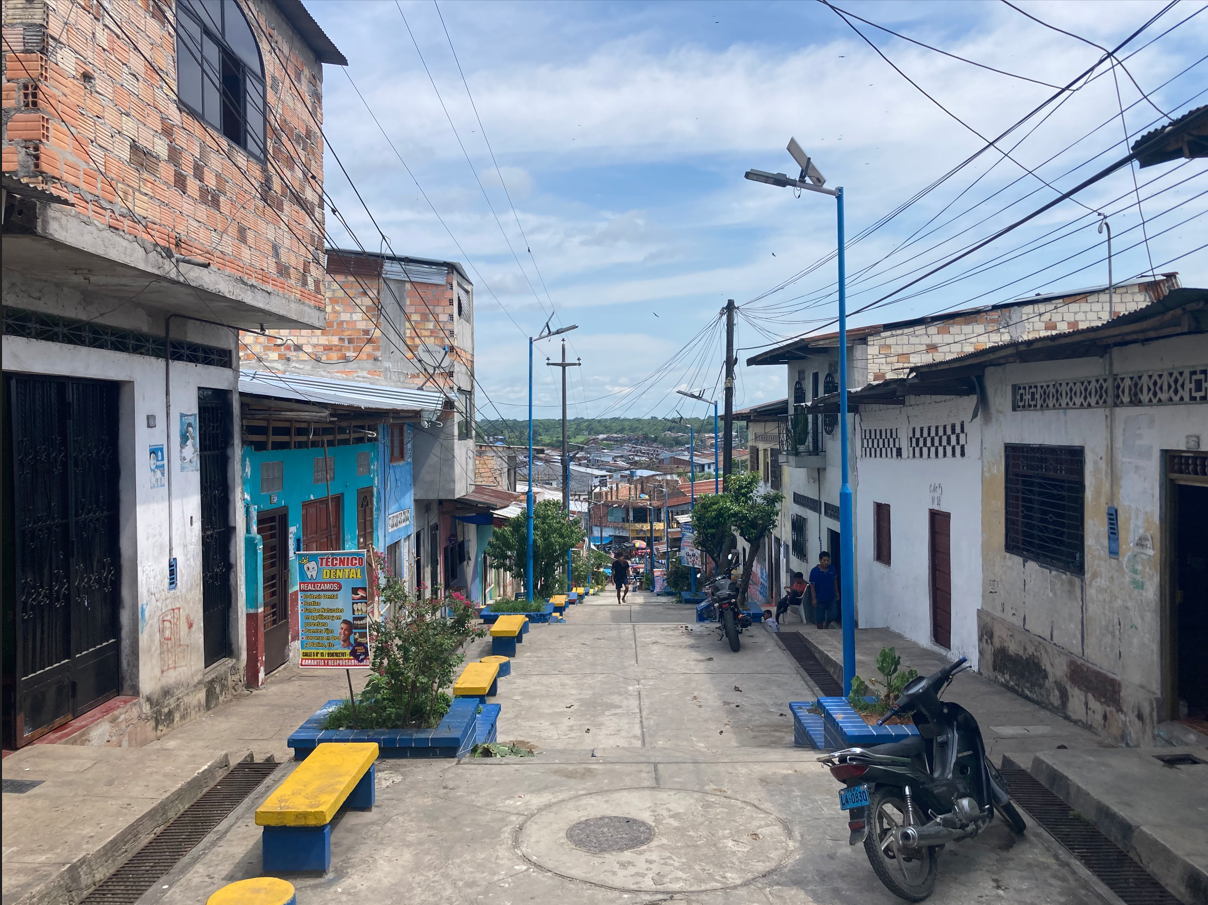
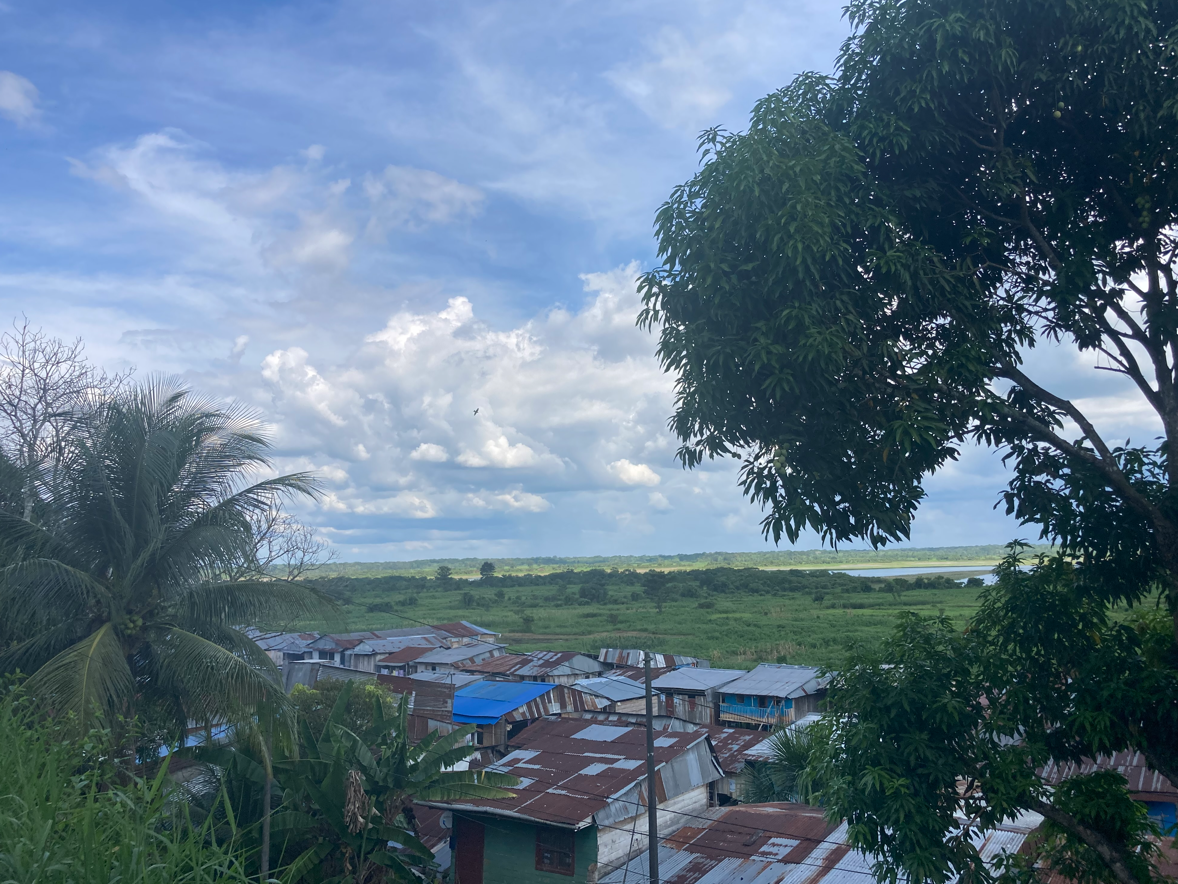
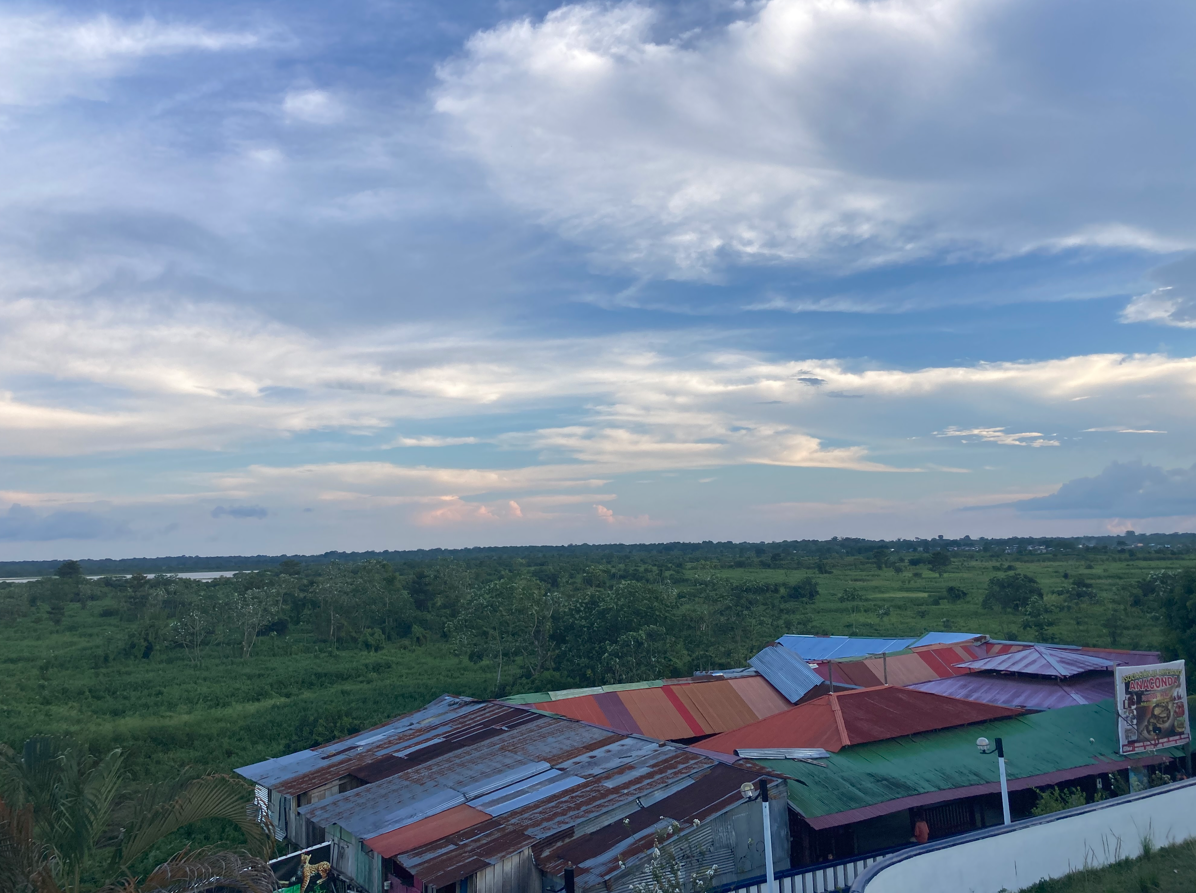
Dawn of the Amazon became a kind of hub for me, where I'd stop by and visit Dylan and enjoy the beautiful view of the Amazon River. A few times I decided to walk back from Belen market and walk along the Malecón, where I took these photos of the kind of shanty village that emerged next to a tall stone walkway that wrapped around the edges of the city that gradually became marshy and eventually, once you'd crossed the river, lively jungle terrain. Sometimes I would be stopped by locals who wanted to chat and sell me art, or other times solicited various jungle medicines or psychedelics to which I would politely decline and wish them a good day. From the street artists' unique and marvelous trinkets, the breathtaking views of the Amazon river and accompanying jungle, and the beautiful calls of the yellow-rumped cacique in concert with the cicadas and frogs, which I dearly missed being away from Varillal, this area soon became a "little slice of the jungle" to me.


Sometimes the universe puts you in the right place at the exact right time and something magical happens. This was my experience during my last week in Iquitos where I had the good fortune of meeting an idol of mine, Maestro Hamilton Souther. I had returned to Dawn of the Amazon to see Dylan and ran into a Shipibo man who had tried to sell me a beautiful "harpy eagle-feather" ceremonial fan (which I wish I had bought to be honest). I remembered him because his friend named Angel wanted to sell me a massive harpy eagle feather for 200 soles, an insane price for a feather but to be fair this feather was half as long as my arm. I liked Angel, he speaks good English and invited me to his ayahuasca retreats he runs with local Shipibo shamans which I am considering checking out if I'm ever in Iquitos again. However, I was quite broke after spending so much money on Shipibo art at the retreat and had to politely decline the purchase of this behemoth feather, but I desperately wanted a much smaller harpy eagle feather for my hat. I had run into Angel a few times prior and every time he insisted no small feathers were for sale, which I'd assumed was the end of that, until his friend who had shown me the fan told me to come with him to his store at the Mercado de Indigenia, i.e. the Shipibo Market. He had insisted that these feathers weren't the result of the hunting of this endangered bird, and based on him being a jungle tour guide I trusted his story of receiving these feathers as trade from a local tribe who honors the lives of the harpy eagles. It was my final week in Iquitos and I had my heart set on attaining this feather, so I followed him for a few blocks to his store, which was at a nearby location I was quite familiar with. On the way we passed these two tall Caucasian men, whom he greeted and I politely said hello to, not knowing why he introduced me to them. I'd naively thought that it was him trying to display that he has foreign friends from around the block as a way of building trust but as he asked "Do you know of Blue Morpho?" I was stunned. I said yes, it's a highly reputable ayahuasca retreat in Costa Rica, I had learned about Blue Morpho Healing Centre from a podcast interview with their resident shaman and founder, Hamilton Souther. "Yes, that is Hamilton," he told me, and my eyes widened, I was dumbstruck. This man was one of the very first American citizens to train under traditional shamans at a time when nobody in the West even knew what ayahuasca was. I idolized this man for his display of trust in the divine, unwavering dedication and courage to walk the path of service. I had never in my wildest dreams thought I would walk down the same street as this man, one of the few people on this entire planet I consider a hero and a role model. And onward I went, to acquire my harpy eagle feather (of modest size) proudly brandishing this symbol of divine alignment and feeling proud of the courage I'd shown myself drinking ayahuasca 8 times with the Shipibo, facing my demons and moving through the experience with discipline and dignity.

After meeting Carlos, a few taxi drivers and a friendly bartender named Dylan from Argentina, I felt a lot more comfortable talking to locals in my broken Spanish. I even tried to ask for directions or make small talk when I was out and about walking back from Belen market or exploring the streets near Dawn of the Amazon cafe. Mostly men, artists trying to sell something or the odd fellow "gringo". In Peruvian culture, gringo is a non-derogatory term which simply refers to anybody from outside that city. I wasn't meeting a whole lot of women my age which was quite fine with me due to the dieta imposing a disciplined approach to my sexual energy. I do remember being flattered when I went to get a SIM card at a local phone store where the entire female staff were quite interested in how different I looked but aside from spending time with my Australian friend Karena I chose to prioritize resting at my apartment or running errands.
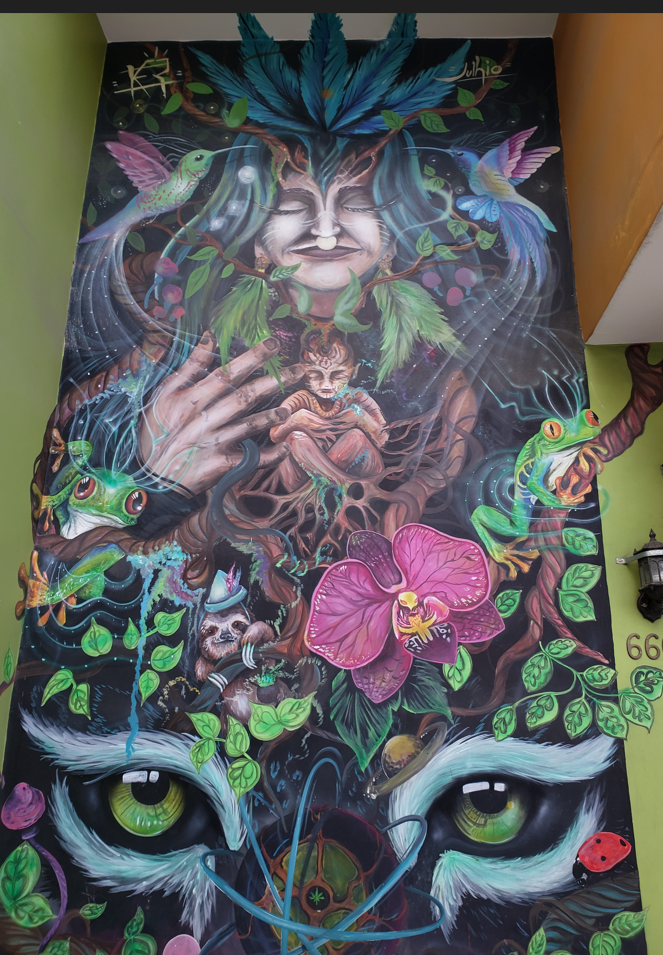
But some interactions left a lasting impression on me, one of which was meeting an old Peruvian man named "Jonah". Jonah lives with his wife a few blocks away from Malecón right next to this beautiful mural displayed in this photo to the right. I spent a few minutes marveling at this masterpiece and he looked at me and said "Ayahuasca", and "Madre de selva" along with some other words in Spanish I didn't know. He explained to me what the artwork meant, and told me that he lived right next to this mural and how much he loved the street art in the city. He told me worked as a tuk-tuk driver and prompted me to come with him, calling his friend to let him borrow a moto-taxi. I was hesitant at first, this wasn't something I would do in any circumstance, but I didn't have anything worth stealing with me and the entire interaction was very wholesome. My trust was well-placed, and he drove me around the town center bringing me to his favourite local spots where the street art I saw was strikingly beautiful. He was such a humble, proud and compassionate Peruvian man and after driving me to my apartment asked for nothing in return. He simply wished me well and told me his name was "Jonah, like the bible" and in that moment it all made sense to me. This wasn't a man with an ulterior motive like almost every other person I'd met, this was simply a good Samaritan and fellow art lover who had love in his heart and felt called to engage in a random act of kindness. My heart felt very full after this interaction.
A week later I left Iquitos, Peru with feelings of promise mixed with subtle grief. I won't soon forget all the loving people, the incredible sights, the jungle sounds, the powerful healing from the plant spirits, and the compassion of the Shipibo people. As I'd arrived at the Iquitos airport that night the excitement began to boil over as I imagined the start of the next chapter of my journey in Ecuador. Here, high within the Andes mountains, I began volunteering at a non-profit Ayahuasca retreat near Cuenca where I met incredible people and various shamans. Gracias Madre Tierra, gracias Abuelita, gracias espiritu de Shipibo (Thank you Mother Earth, thank you Grandmother, thank you Shipibo spirit)!
If you want to read about my trip to Ecuador and my work exchange at Gaia Sagrada, click the button below!